
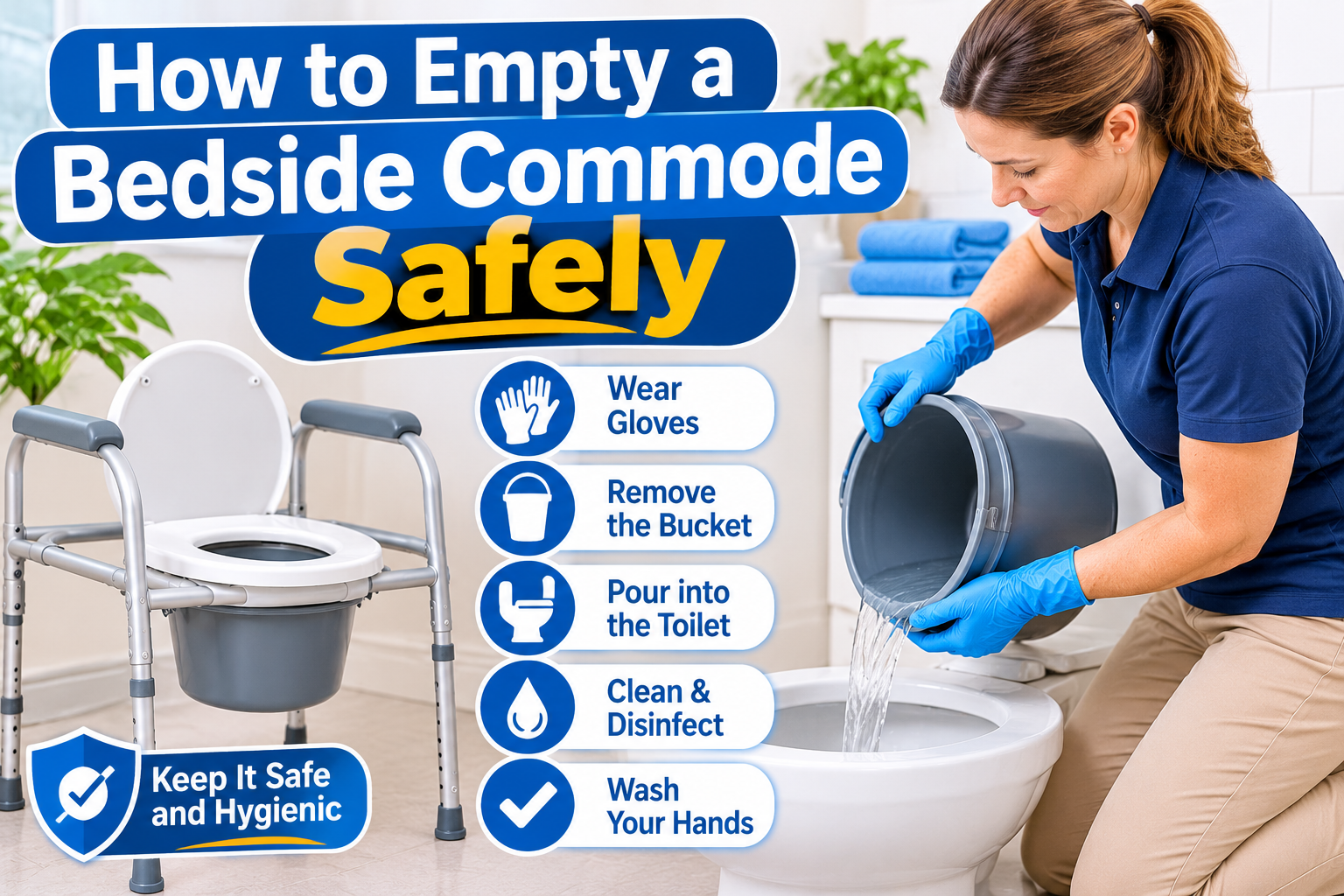
Knowing how to empty a bedside commode safely is an important part of everyday care for seniors, people recovering from surgery, and anyone with limited mobility. A simple, consistent routine can help prevent spills, reduce unpleasant odors, and make commode maintenance easier for both users and caregivers.
The process involves more than simply pouring out the bucket. You also need to handle waste carefully, protect yourself from direct contact, clean the bucket properly, and make sure the commode is ready for its next use.
The 6 Essential Steps
- Put on disposable gloves and prepare the bathroom.
- Secure the commode and remove the bucket carefully.
- Close the compatible lid and carry the bucket upright.
- Pour the contents slowly into the toilet.
- Clean and disinfect the bucket when appropriate.
- Reinstall the bucket, remove your gloves, and wash your hands.
In this guide: supplies, step-by-step instructions, odor prevention, disposable liners, common mistakes, and caregiver tips.
What You Need Before Emptying a Bedside Commode
Gather your supplies before removing the bucket. Preparing the area first means you will not have to search for gloves or cleaning products while handling waste.
Disposable Gloves
Help reduce direct contact with waste and contaminated surfaces.
Clear Bathroom Access
Keep the route clear and make sure the toilet is ready for disposal.
Cleaning Supplies
Prepare detergent, water, and a compatible disinfectant if needed.
Disposable Towels
Keep paper towels or suitable disposable cloths nearby for spills.
Caregiver safety note
If the person using the commode needs help transferring, make sure they are safely supported before you begin. Never leave someone in an unstable position while handling the bucket.
How to Empty a Bedside Commode Safely: Step by Step
Follow these steps each time you empty the bucket. The exact removal method may vary by model, so check the product instructions before using a new commode.
STEP 01
Prepare the Area and Put on Gloves
Wash your hands and put on disposable gloves. Clear the route to the bathroom and remove anything that could cause you to trip.
- Make sure the floor is dry and well lit.
- Keep children and pets away from the work area.
- Place cleaning supplies within easy reach.
- Use a designated cleaning area rather than a kitchen or food-preparation surface.
STEP 02
Secure the Commode and Remove the Bucket
Make sure nobody is sitting on the commode. If the model has wheels, engage the brakes before handling the bucket.
Lift the seat or splash guard if required by your model. Hold the bucket by its designated handle or lifting points, and remove it slowly to avoid splashing.
If the bucket will not come out
Check whether the seat, splash guard, or frame is obstructing it. Do not force a stuck bucket, because sudden movement can cause spills or damage the commode.
STEP 03
Secure the Lid and Carry the Bucket Upright
If the commode includes a compatible bucket lid, fit it securely before carrying the bucket. A lid may help reduce odors and splashing during transport, but it is not guaranteed to prevent leaks.
- Keep the bucket upright throughout the trip.
- Avoid swinging or tipping it while walking.
- Do not carry a bucket that is too heavy or difficult to control.
- If necessary, ask another caregiver for help.
STEP 04
Empty the Contents into the Toilet
Position the bucket over the toilet bowl, remove the lid carefully, and pour the contents slowly. Keep the bucket close to the bowl to minimize splashing.
DO
Pour slowly and keep the bucket close to the bowl.
DON’T
Tip the bucket suddenly or allow waste to splash onto nearby surfaces.
Flush the toilet after disposal. Do not empty commode waste into a sink, bathtub, or kitchen drain. If the bucket contains a disposable liner, follow its disposal instructions rather than assuming it can be flushed.
STEP 05
Clean and Disinfect the Bucket as Needed
Clean the bucket according to the manufacturer’s instructions. If permitted, rinse away residue and wash it with a suitable detergent and water.
Pay special attention to the rim, handle, underside, and areas around the lid. These areas can be overlooked during a quick rinse.
When disinfection is appropriate, use a product compatible with the bucket material. Follow the label directions, including the required contact time.
Never mix cleaning chemicals.
Mixing bleach with ammonia, acids, toilet cleaners, or other products can release dangerous gases. Use one product at a time and follow its instructions.
For the full cleaning routine, see How to Clean a Bedside Commode Safely.
STEP 06
Reinstall the Bucket and Wash Your Hands
Allow the bucket to dry as directed. Check for visible residue, damage, or buildup before placing it back in the commode.
- Return the bucket to its correct position.
- Make sure the bucket sits securely under the seat.
- Reposition the seat and splash guard correctly.
- Remove gloves carefully and dispose of them appropriately.
- Wash your hands thoroughly with soap and water.
If waste spilled outside the bucket, clean and disinfect the affected surface using an appropriate product before the area is used again.
How Often Should You Empty a Bedside Commode?
For most routine home-care situations, it is best to empty the bucket promptly after each use when practical. Leaving waste in the bucket for an extended period can increase odors and make cleaning more difficult.
AFTER EACH USE
Empty Promptly
Remove waste when practical to limit odor and reduce the risk of overflow.
WHEN CONTAMINATED
Clean Immediately
Clean spills and visible contamination rather than leaving them until later.
BEFORE REUSE
Check the Bucket
Make sure it is clean, properly installed, and ready for the next use.
The exact routine depends on the user’s needs, the type of commode, and whether a disposable liner is being used. Follow any care plan or product-specific instructions from the manufacturer or healthcare team.
Should You Use Disposable Bedside Commode Liners?
Disposable liners can make waste handling more convenient for some users and caregivers. Certain products include absorbent material intended to contain liquid and help reduce spills during removal.
What to Check Before Buying Commode Liners
- Compatibility: Confirm that the liner fits your specific bucket.
- Capacity: Choose a product suitable for the expected amount of waste.
- Absorbency: Check the product’s stated absorbent design and intended use.
- Leak resistance: Look for clear information about leak-resistant construction.
- Disposal: Follow the instructions for discarding used liners.
Do not assume that a disposable liner can replace cleaning. The bucket may still need to be cleaned, particularly if waste has leaked or contaminated its surfaces. Avoid using ordinary plastic bags unless the commode manufacturer specifically permits them.
OPTIONAL SUPPLY
Bedside Commode Liners
Compare liner dimensions, absorbency, and compatibility with your commode before purchasing.
Common Mistakes to Avoid
Carrying an Overfilled Bucket
An overfilled bucket is harder to control and more likely to spill. Empty it before it reaches its recommended capacity.
Moving Too Quickly
Sudden lifting or pouring can cause splashes. Use controlled movements throughout the process.
Skipping Hand Hygiene
Gloves reduce direct contact but do not eliminate contamination risk. Wash your hands after removing them.
Mixing Cleaning Chemicals
Never mix bleach with other cleaners. Use compatible products according to their labels.
Ignoring Small Spills
Clean and disinfect affected surfaces promptly with a suitable product.
Reinstalling the Bucket Incorrectly
Check that the bucket fits securely before the commode is used again.
Tips for Caregivers: Make the Routine Easier
Caregivers may need to empty and clean a bedside commode several times a day. Organizing supplies and choosing a practical commode design can make routine maintenance easier.
1. Choose an Easy-to-Remove Bucket
Look for a bucket with a usable handle, a compatible lid, and a design that can be removed without awkward movements. Check whether replacement buckets are available.
2. Keep Supplies Together
Store gloves, detergent, paper towels, and compatible liners in one designated location. Keep these items away from food and food-preparation surfaces.
3. Consider Weight and Grip
If a bucket is difficult to lift safely, ask for assistance. Do not risk a fall or spill to complete the task alone.
4. Check Stability and Fit
Consider frame stability, seat height, weight capacity, and bucket removal when selecting a commode. A higher weight capacity does not automatically mean that the bucket is easier to handle.
For help choosing a model, see our guide to Best Bedside Commodes for Seniors or compare options in Best Heavy Duty Bedside Commodes.
Frequently Asked Questions
Can you pour bedside commode waste directly into a toilet?
Yes. Contents from a standard bedside commode bucket can generally be emptied into a household toilet. Pour slowly to minimize splashing, and follow any product-specific and local disposal instructions.
Should you put the lid on before carrying the bucket?
If your commode has a compatible lid, secure it before transport. It may help reduce odors and splashing, but keep the bucket upright and do not carry it if it is too heavy or unstable.
How often should a commode bucket be emptied?
Empty it promptly after each use when practical. This helps limit odors, reduce the chance of overflow, and make cleaning easier.
Can you use bleach to clean a commode bucket?
Use bleach only if it is compatible with the bucket and permitted by the manufacturer’s instructions. Follow the product label and never mix bleach with other cleaning products.
Can bedside commode liners be flushed?
Do not flush liners unless the specific product instructions explicitly permit flushing and local plumbing guidance allows it. Many liners and absorbent products should be discarded in household waste or another designated disposal stream.
What should you do if waste spills on the floor?
Keep people and pets away. Wear gloves, remove visible waste with disposable materials, and clean and disinfect the affected surface with a suitable product according to its label. Dispose of contaminated materials appropriately and wash your hands.
Can a caregiver empty a commode without gloves?
Disposable gloves are recommended when handling waste because they reduce direct contact. Handwashing remains necessary after the gloves are removed.
Final Thoughts
Emptying a bedside commode safely comes down to preparation, careful handling, proper cleaning, and consistent hand hygiene. Put on gloves, remove the bucket slowly, pour its contents into the toilet without splashing, and clean the bucket according to the manufacturer’s instructions.
For caregivers, a commode with a removable bucket, a comfortable handle, and a secure lid can make daily maintenance more manageable. Emptying the bucket promptly and cleaning it consistently also helps control odors and maintain a more hygienic environment.
Explore More Commode Guides
Find practical advice on commode selection, fit, maintenance, and safe everyday use.
Affiliate Disclosure: HeavyDutyChoice may earn a commission from qualifying purchases made through Amazon links on this page, at no additional cost to you.