
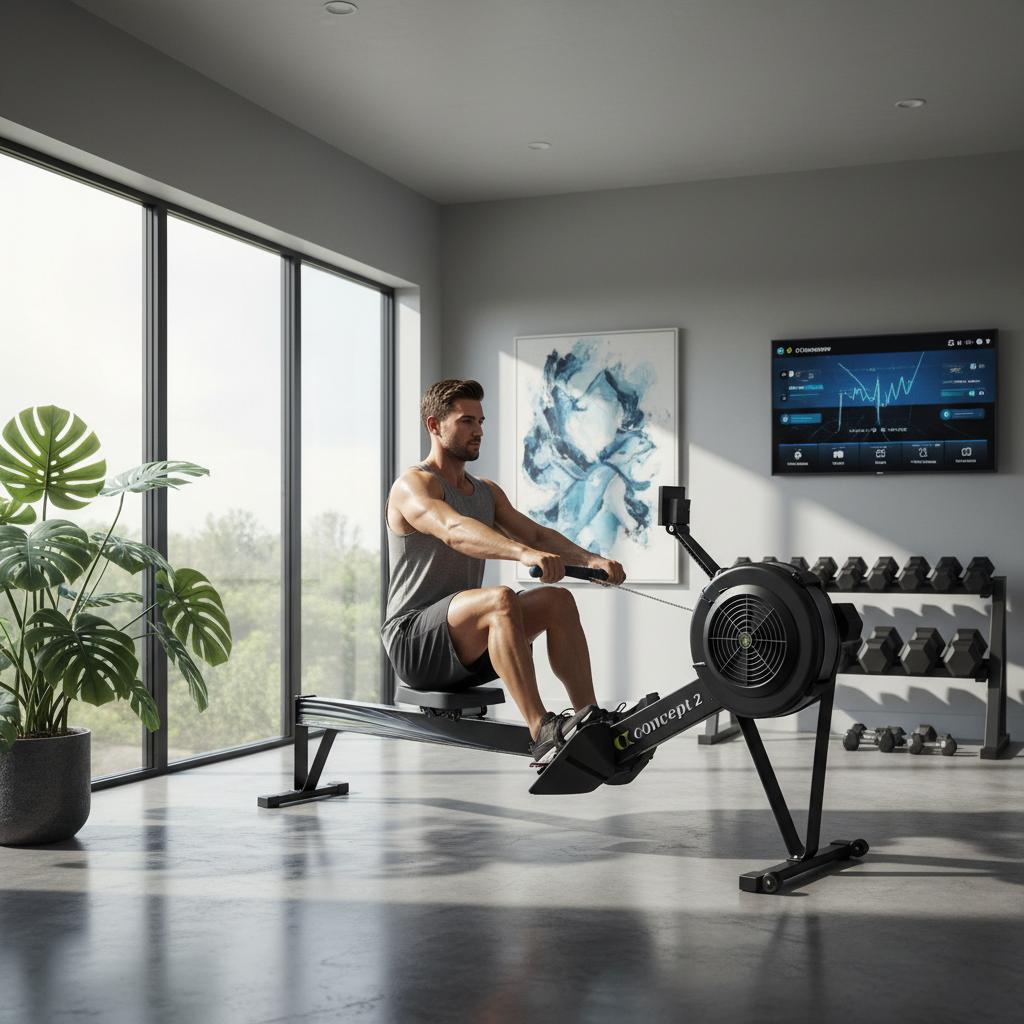
Rowing Machine Weight Loss Guide
Can Rowing Help You Lose Belly Fat?
A rowing machine can support overall fat loss by combining cardiovascular exercise with full-body muscle activity. However, it cannot selectively burn fat around your stomach. The best results come from consistent exercise, balanced nutrition, and a sustainable calorie deficit.
If you are looking for a rowing machine for stomach fat, you may be wondering whether regular rowing can help flatten your stomach and reduce your waistline. Rowing is a useful form of cardiovascular exercise because it engages several major muscle groups while increasing your energy expenditure.
But there is an important distinction: exercising your abdominal muscles does not automatically burn the fat covering them. A rowing machine can help you lose overall body fat, which may eventually include abdominal fat, but your body determines where fat is lost first.
In this guide, we explain how rowing supports fat loss, how often to use a rowing machine, which workouts to try, and how to combine rowing with nutrition and strength training for better long-term results.
Quick Answer
Yes, a rowing machine can help reduce belly fat as part of an overall fat-loss program. It burns calories and works muscles throughout your body, but it does not target stomach fat specifically. Consistent rowing, appropriate nutrition, and strength training are more effective than relying on abdominal exercise alone.

Does a Rowing Machine Burn Belly Fat?
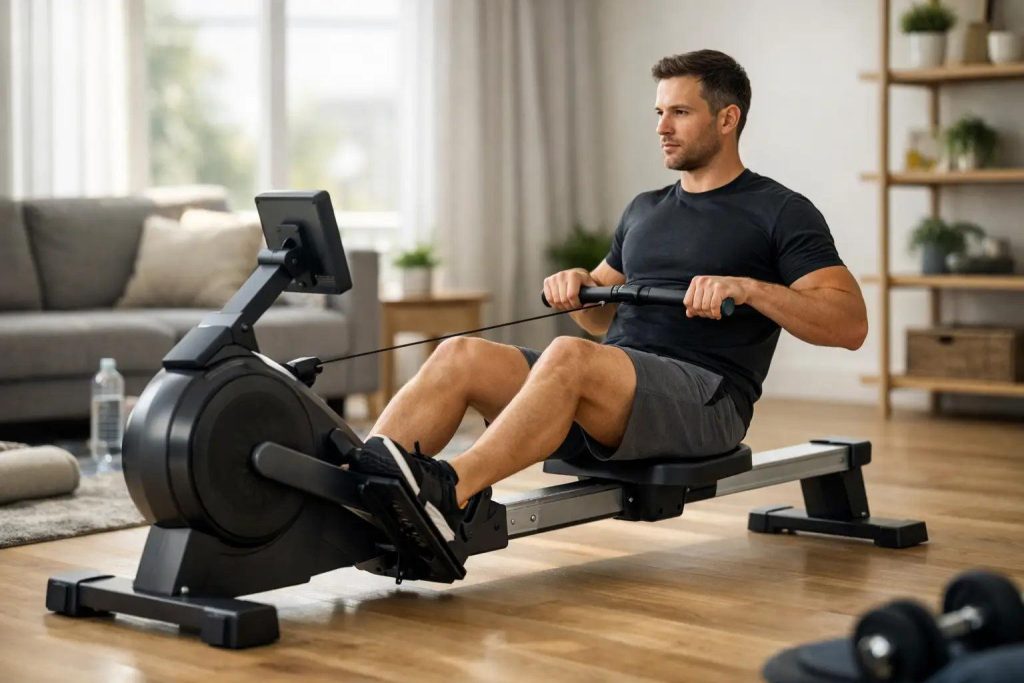
A rowing machine can contribute to belly fat reduction, but not through targeted fat burning. When you exercise, your body uses energy from different sources. Over time, maintaining a calorie deficit can reduce total body fat, including fat stored around your abdomen.
Rowing helps by increasing the amount of energy you use during physical activity. It also provides a workout that involves your legs, hips, back, arms, and core.
However, doing hundreds of rowing strokes does not force your body to use fat specifically from your stomach. The same principle applies to sit-ups and crunches: they can strengthen abdominal muscles, but they do not selectively remove the fat covering those muscles.
What Rowing Can Do
- Increase energy expenditure
- Improve cardiovascular fitness
- Engage multiple muscle groups
- Support a consistent exercise routine
What Rowing Cannot Do
- Target belly fat exclusively
- Guarantee a smaller waist
- Replace a balanced diet
- Produce identical results for everyone
Why Is a Rowing Machine Useful for Fat Loss?
1. It Combines Cardio With Full-Body Movement
Rowing is different from many cardio exercises because it involves coordinated movement across the upper and lower body. Your legs generate much of the power, while your hips, trunk, back, and arms contribute to the stroke.
This makes rowing a practical option for people who want a cardio workout that also challenges multiple muscle groups.
2. It Can Increase Daily Calorie Expenditure
Physical activity contributes to the total number of calories your body uses each day. A rowing workout can increase this expenditure, helping support a calorie deficit when combined with an appropriate eating pattern.
The actual energy used varies considerably according to body weight, workout intensity, duration, fitness level, and rowing efficiency. Machine calorie displays are estimates rather than exact measurements.
3. It Offers Adjustable Workout Intensity
You can row slowly for a longer session or alternate harder efforts with easier recovery periods. This flexibility allows you to adjust training to your current fitness level.
Beginners can start with comfortable steady rowing, while experienced users may include interval training as part of their weekly routine.
4. It Can Be Used at Home
A home rowing machine makes it easier to exercise without traveling to a gym. If you have enough room for the machine and can use it comfortably, you can build a repeatable cardio routine around your schedule.
Does Rowing Work Your Stomach Muscles?
Yes. Your core muscles help stabilize your trunk and transfer force during the rowing stroke. Your abdominal muscles work alongside your back and hip muscles to keep your body controlled as you move between the catch and finish positions.
However, the core is not the main source of rowing power. Your legs provide much of the drive, so trying to row primarily by pulling with your stomach or arms is not an effective technique.
Muscles Involved in Rowing
| Muscle Group | Role During Rowing |
|---|---|
| Quadriceps | Help extend the knees during the drive. |
| Glutes and hamstrings | Contribute to hip extension and power. |
| Back muscles | Help control the torso and pull the handle. |
| Abdominal muscles | Help stabilize the trunk and maintain posture. |
| Arms and shoulders | Help finish the stroke and control the handle. |
Rowing can therefore strengthen and condition muscles around your midsection, but visible abdominal definition also depends on overall body fat levels and individual factors.
How Long Should You Row to Help Lose Belly Fat?
There is no single rowing duration that guarantees belly fat loss. The right amount depends on your fitness level, workout intensity, recovery, and total weekly activity.
A practical starting point is to build up gradually toward regular moderate-intensity cardio. General physical activity guidelines for adults recommend at least 150 minutes of moderate-intensity aerobic activity per week, or 75 minutes of vigorous activity, or an equivalent combination. Strength training on at least two days per week is also recommended.
Example Rowing Schedule
| Fitness Level | Session | Frequency |
|---|---|---|
| Beginner | 10–15 minutes of easy rowing | 2–3 days/week |
| Intermediate | 20–30 minutes of steady rowing | 3–4 days/week |
| Experienced | 30–40 minutes steady or mixed-intensity rowing | 3–5 days/week, as tolerated |
These are example session ranges, not a requirement to row every day. Include recovery days and other forms of physical activity as needed.
If you are new to exercise, even shorter sessions can be a useful starting point. Add time gradually as your fitness and comfort improve.
Best Rowing Workouts for Belly Fat Reduction
Both steady-state rowing and interval training can support overall fat loss. You do not need to choose only one. A mix of manageable workouts may help you stay consistent without making every session exhausting.
Workout 1: Beginner Steady-State Rowing
This is a good starting routine if you are unfamiliar with rowing or have not exercised consistently.
Beginner Rowing Session
Approximately 15–20 minutes
1. Warm-up: 3–5 minutes at an easy pace.
2. Main workout: 8–12 minutes of comfortable, continuous rowing.
3. Cool-down: 3 minutes of very easy rowing.
Effort: Moderate. You should be able to speak in short sentences while exercising.
Workout 2: Moderate Steady-State Rowing
Once you can complete a beginner session comfortably, gradually increase the main workout duration.
30-Minute Steady Row
- 5 minutes of easy warm-up
- 20 minutes of consistent moderate rowing
- 5 minutes of easy cool-down
Focus on a sustainable pace rather than trying to achieve the highest possible distance. You should finish feeling that you worked, but not completely exhausted.
Workout 3: Rowing Machine HIIT
Interval training is another option for people who already have a basic level of fitness. It alternates hard efforts with easier recovery periods.
Beginner-Friendly Interval Session
- 5 minutes of easy warm-up
- 20 seconds of challenging rowing
- 100 seconds of easy rowing
- Repeat for 4–6 rounds
- 3–5 minutes of easy cool-down
Keep hard intervals controlled. If your technique deteriorates or you cannot recover comfortably, reduce the number of rounds or return to steady rowing.
For a more detailed interval plan, see our guide: HIIT Training on a Rowing Machine: Complete Workout.
How to Combine Rowing With Strength Training
Cardio is only one part of a well-rounded fat-loss routine. Strength training helps you build and maintain muscle while improving overall physical fitness.
Consider combining rowing with exercises that train your major muscle groups:
Squats
Train the quadriceps, glutes, and other lower-body muscles.
Push-Ups
Work the chest, shoulders, triceps, and core stabilizers.
Rows
Strengthen the back and arms with a controlled resistance exercise.
Planks
Challenge core stability and help develop trunk control.
You can schedule strength training on separate days from rowing or combine shorter sessions if your fitness level allows. Allow enough recovery so that you can maintain good exercise technique.
Why Nutrition Matters for Belly Fat Loss
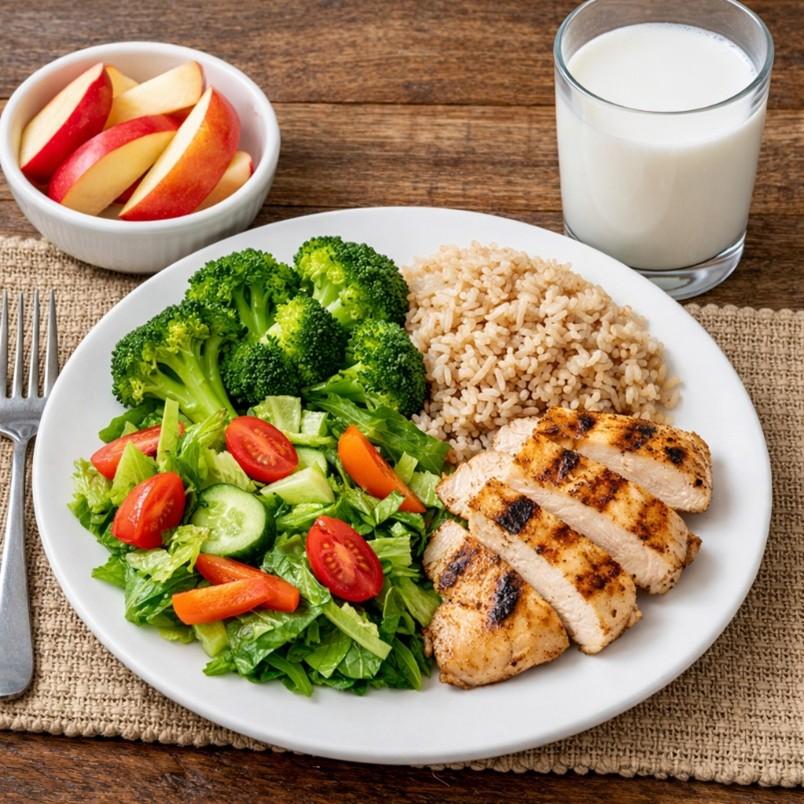

Exercise can increase energy expenditure, but food intake also plays an important role in body weight management. If your goal is to reduce overall body fat, a sustainable calorie deficit is generally necessary.
You do not need an extreme diet or complicated meal plan. Start with practical habits that you can maintain:
- Include protein in meals: Foods such as eggs, fish, poultry, beans, tofu, and yogurt can help support muscle maintenance and meal satisfaction.
- Eat more fiber-rich foods: Vegetables, fruit, legumes, and whole grains can help make meals more filling.
- Watch liquid calories: Sugary drinks, sweetened coffee, and frequent high-calorie beverages can add energy without making you feel as full.
- Pay attention to portions: Consistently eating more energy than your body uses can make fat loss difficult, even when you exercise.
- Keep your approach realistic: Avoid crash diets and overly restrictive eating plans that are difficult to sustain.
Remember
You cannot compensate reliably for an unsustainable eating pattern by adding more rowing sessions. A manageable combination of nutrition and physical activity is a better long-term strategy.
How to Track Your Progress
The number on the scale is only one way to measure progress. If your goal is to reduce abdominal fat, consider several indicators rather than relying on a single workout or daily weight reading.
| Metric | What It Can Tell You |
|---|---|
| Waist measurement | Can help track changes in abdominal size over time. |
| Body weight trend | Shows longer-term changes when measured consistently. |
| Workout duration | Shows whether you can comfortably sustain longer sessions. |
| Rowing pace or distance | Helps compare performance across similar workouts. |
| Recovery and energy | Helps you assess whether your routine is sustainable. |
Measure waist circumference under similar conditions each time, such as at the same point around your abdomen and at a similar time of day. Look at trends over several weeks rather than reacting to daily changes.
How to Choose a Rowing Machine for Weight Loss
You do not need an expensive rowing machine to support a fat-loss routine. The best model is one that fits your body, available space, budget, and training preferences.
Check the Weight Capacity
Choose a machine with a user weight capacity that comfortably accommodates your body weight. If you are a larger user, check the manufacturer’s stated maximum capacity and the stability of the frame.
Look at Rail Length and Seat Comfort
The rail should allow you to complete a comfortable stroke without feeling restricted. Seat shape and padding also matter if you plan to row for 20–30 minutes or longer.
Choose a Resistance Type That Fits Your Needs
Air, magnetic, and water rowing machines can all be used for steady cardio and interval workouts. Consider noise, maintenance, resistance adjustment, and the feel of the stroke before choosing.
Check the Workout Monitor
A useful monitor should make it easy to track basic workout information such as time, distance, stroke rate, and pace. These metrics can help you keep sessions consistent and monitor improvements.
For more equipment comparisons, visit our Fitness Guides and rowing machine buying guides.
Common Mistakes When Using a Rowing Machine for Belly Fat
Expecting Fast Results
Changes in body composition take time. Your results depend on many factors, including starting body weight, food intake, exercise consistency, sleep, and individual differences.
Rowing Hard Every Day
More intense exercise is not always better. Repeated hard sessions without sufficient recovery can make your routine difficult to maintain. Mix moderate sessions with easier days.
Ignoring Technique
Trying to row faster with poor form can reduce workout quality and increase unnecessary strain. Learn the correct stroke sequence before increasing intensity.
Focusing Only on Abdominal Exercises
Planks and other core exercises can strengthen your midsection, but they do not selectively burn belly fat. Combine them with full-body activity and appropriate nutrition.
Using Machine Calories as an Exact Number
Rowing machine calorie estimates are not precise measurements of energy expenditure. Use them as rough workout feedback rather than assuming you can eat back an exact number of calories.
Frequently Asked Questions
Can a rowing machine help reduce belly fat?
Yes. Rowing can increase calorie expenditure and support overall fat loss. As total body fat decreases, abdominal fat may also decrease. However, rowing cannot target belly fat specifically.
How long should I use a rowing machine to lose belly fat?
Start with 10–15 minutes if you are a beginner and gradually increase your session length. Many people build toward 20–30-minute sessions several times per week, alongside other physical activity and a balanced eating pattern.
Does rowing burn more belly fat than walking?
Neither exercise specifically targets belly fat. Rowing may use more energy per minute than walking for some people, depending on intensity and body size, but walking is often easier to perform for longer periods. The better option is the activity you can do consistently.
Can I lose belly fat by rowing 20 minutes a day?
A 20-minute daily session can contribute to your overall activity, but daily rowing is not necessary for everyone. Your results depend on total weekly activity, nutrition, recovery, and consistency.
Does rowing help flatten your stomach?
Rowing can strengthen your core and support overall fat loss. If your total body fat decreases, your waistline may become smaller. However, abdominal appearance also depends on muscle development, genetics, and other individual factors.
Is rowing or running better for belly fat?
Both can support overall fat loss when performed consistently. Rowing involves both upper and lower body movement, while running is a weight-bearing activity. Your fitness level, joint comfort, preferences, and ability to maintain the routine should guide your choice.
Should I do rowing HIIT or steady-state cardio?
Both can be useful. Steady-state rowing is easier to regulate and may be more comfortable for beginners. HIIT provides shorter, more intense intervals but requires more recovery. You can combine both approaches if your fitness level allows.
Will rowing alone give me visible abs?
Not necessarily. Rowing can strengthen muscles around your midsection, but visible abdominal definition depends on overall body fat, muscle development, genetics, and other individual factors. A broader exercise and nutrition plan is more appropriate.
Final Verdict: Is a Rowing Machine Worth Using for Belly Fat Loss?
A rowing machine is a useful tool for people who want to improve cardiovascular fitness, engage multiple muscle groups, and increase their daily energy expenditure. It can support a plan to reduce belly fat, but it cannot selectively burn fat around your stomach.
For a practical starting point, aim for two or three manageable rowing sessions each week. Build toward longer steady-state workouts, add interval training only when you are ready, and include strength training and balanced nutrition.
Most importantly, focus on sustainable habits rather than trying to force quick changes in your waistline. Consistent training and gradual progress are more valuable than extreme workouts.
Explore More Rowing Machine Guides
Learn proper rowing technique, build an interval routine, and compare different rowing machine types.
Disclaimer: This article is for general fitness education and is not individualized medical advice. Adjust exercise intensity to your abilities and seek professional guidance when appropriate.