
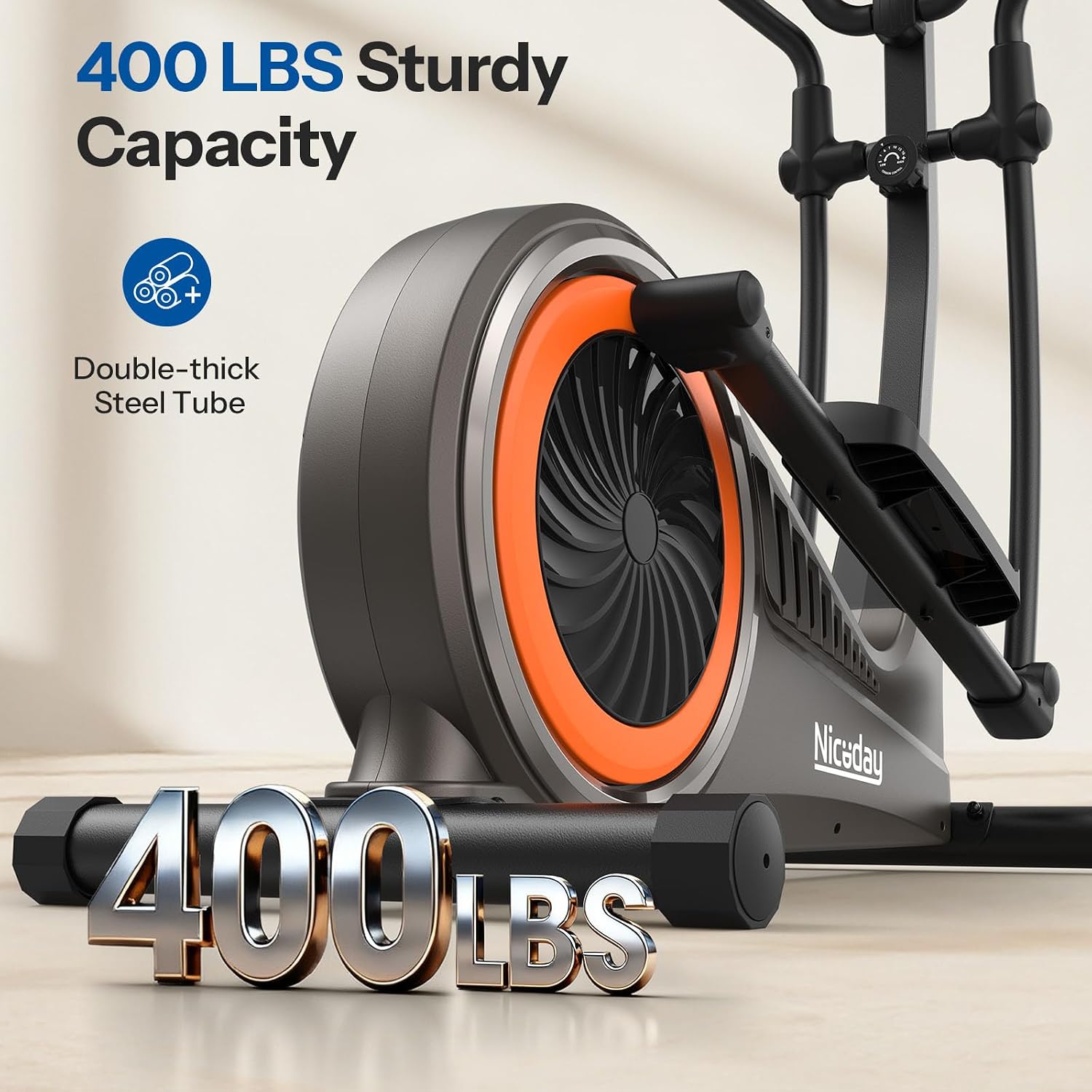
A rear drive elliptical machine places its main drive wheel or flywheel behind the pedals and the user. This layout is common in many traditional elliptical trainers and is often associated with a relatively flat, walking-like pedal motion.
Rear-drive ellipticals can be a good option if you prefer an upright workout position and a smooth, straightforward stride. However, they are not automatically better than front-drive machines. Their footprint, stride length, resistance system, weight capacity, and overall build quality still matter more than the flywheel position alone.
In this guide, we’ll explain how rear-drive elliptical machines work, examine their advantages and disadvantages, and show you what to look for before buying one for a home gym.
Quick Answer: Are Rear-Drive Ellipticals Worth It?
A rear-drive elliptical is worth considering if you want a relatively level, upright-feeling stride and find this motion more comfortable than the feel of a particular front-drive machine.
- Best potential advantage: A pedal path that can feel more like walking on level ground.
- Main drawback: Some models have a long footprint and require more floor space.
- Best for: Users who prioritize stride feel, stability, and comfortable everyday cardio.
- Check before buying: Actual stride length, user weight capacity, machine dimensions, and step-on height.
1. What Is a Rear-Drive Elliptical Machine?
A rear-drive elliptical is an exercise machine with its primary drive assembly positioned toward the back of the frame. The pedals and handlebars connect to a mechanical system that guides your feet through an elliptical movement.
Unlike a front-drive elliptical, where the drive housing is located in front of the user, a rear-drive model places that assembly behind the pedal area. The resulting pedal path and body position depend on the machine’s linkage geometry, stride length, and other design features.

Illustration recommendation: Label the rear flywheel, pedals, handlebars, and direction of pedal movement.
How Does the Rear-Drive Design Work?
As you push and pull the pedals, the crank and linkage system transfers your movement to the drive assembly. Resistance is supplied by the machine’s resistance mechanism, which may be magnetic or use another design depending on the model.
Some rear-drive ellipticals use a track-and-roller arrangement, while others use suspended pedal linkages. These differences can affect the feel of the stride, maintenance requirements, and the machine’s overall dimensions.
For that reason, the phrase “rear drive” describes the location of the drive system, not a guarantee of a particular stride length, resistance level, or workout experience.
2. Pros of Rear-Drive Elliptical Machines
A More Level, Walking-Like Pedal Motion on Many Models
One reason people consider rear-drive ellipticals is their relatively flat pedal movement. Depending on the machine’s geometry, the motion can feel closer to walking or jogging on level ground than the more inclined sensation some front-drive ellipticals create.
This can be appealing if you prefer to maintain a more upright posture during steady cardio sessions. However, comfort is personal: the actual pedal path and stride dimensions matter more than the drive location by itself.
A Potentially Comfortable Upright Workout Position
Some rear-drive designs allow users to maintain a more upright stance without feeling as though they are leaning forward. This may make the machine feel natural for people who prefer a level walking-style movement.
When testing a machine, pay attention to whether your feet stay comfortably positioned on the pedals and whether the handlebars allow your shoulders to remain relaxed.
A Different Mechanical Layout to Consider
Rear-drive machines use a different arrangement of the flywheel, linkage, and pedal components from front-drive models. Some designs have relatively straightforward mechanical layouts, but it would be inaccurate to assume every rear-drive elliptical has fewer moving parts or needs less maintenance.
Check the manufacturer’s maintenance instructions, warranty coverage, and availability of replacement parts before making a purchase.
Good Options for Steady Cardio Training
A well-built rear-drive elliptical can support regular low-impact cardio workouts. Resistance settings allow users to adjust exercise intensity, while moving handlebars can involve both the upper and lower body.
For longer sessions, look for a machine with a comfortable stride, stable frame, suitable pedal spacing, and resistance levels that match your fitness goals.
Who May Appreciate These Advantages?
- People who prefer a flatter pedal path.
- Users who want an upright-feeling cardio position.
- Home gym owners who have enough room for a full-size elliptical.
- People who have tested a rear-drive model and find its stride comfortable.
3. Cons of Rear-Drive Elliptical Machines
Some Models Require More Floor Space
A rear-mounted drive assembly can contribute to a longer machine footprint. Some traditional rear-drive ellipticals are relatively large, which can make them difficult to fit into small rooms or compact home gyms.
Do not rely only on the advertised frame dimensions. Measure the available floor area and leave enough clearance around the machine for mounting, dismounting, and safe operation.
Not Every Model Offers a Long Stride
Rear-drive design does not automatically mean a long stride. Entry-level models may have a relatively short fixed stride, which can feel restrictive for taller users.
Before buying, compare the advertised stride length with your height and preferred workout style. If multiple people will use the machine, choose a model that feels comfortable for the tallest regular user.
For more help, see our guide to elliptical machine stride length.
Incline Features May Be Limited
Some rear-drive ellipticals offer fewer incline adjustments than certain front-drive designs. This is not a universal rule, but it is worth checking if you want workouts that simulate climbing or emphasize different muscle groups.
Look at the actual incline range and adjustment mechanism rather than assuming a machine has incline capability because it is an elliptical trainer.
The Price Can Be Higher on Some Models
Premium rear-drive ellipticals can cost considerably more than basic home-use machines. Commercial-style construction, heavier frames, larger components, and advanced consoles can all affect the final price.
However, drive position alone does not determine price. Compare the frame, warranty, resistance system, stride dimensions, and user capacity before deciding whether a more expensive model offers better value.
The Feel May Not Suit Everyone
Some users prefer the flatter movement of a rear-drive machine, while others find a front-drive or center-drive elliptical more comfortable. The best choice depends on your natural movement, body proportions, and preferred training intensity.
If possible, test the machine before buying. A short trial can reveal whether the stride feels smooth, whether your knees track comfortably, and whether the handlebars are positioned correctly.
4. Rear-Drive vs. Front-Drive Ellipticals
The main difference is the location of the drive assembly. That design choice can influence the pedal path, machine dimensions, and the way the workout feels, but it does not determine overall quality by itself.
| Feature | Rear-Drive | Front-Drive |
|---|---|---|
| Drive location | Behind the pedal area | In front of the pedal area |
| Pedal feel | Can feel relatively flat and walking-like | May create a more inclined or climbing-like feel |
| Footprint | Some models have a longer frame | Many models are relatively compact |
| Stride length | Varies by model | Varies by model |
| Incline | Depends on the model | Some models offer substantial incline adjustment |
| Best buying factor | Stride comfort and available space | Stride comfort and incline features |
Neither design is automatically superior. If you prefer an upright, relatively level movement, try a rear-drive machine. If you want more incline-focused training or a compact frame, a front-drive model may be worth considering.
Read our related guide: Front Drive vs. Rear Drive Elliptical: Which Is Better?
5. Rear-Drive Elliptical Machines Worth Comparing
These examples illustrate different types of rear-drive machines, from straightforward home trainers to more versatile hybrid equipment. Model availability and specifications can change, so confirm the exact version and current listing before ordering.
Sunny Health & Fitness SF-E3912
Best for: Buyers looking for a straightforward home elliptical with multiple resistance levels.
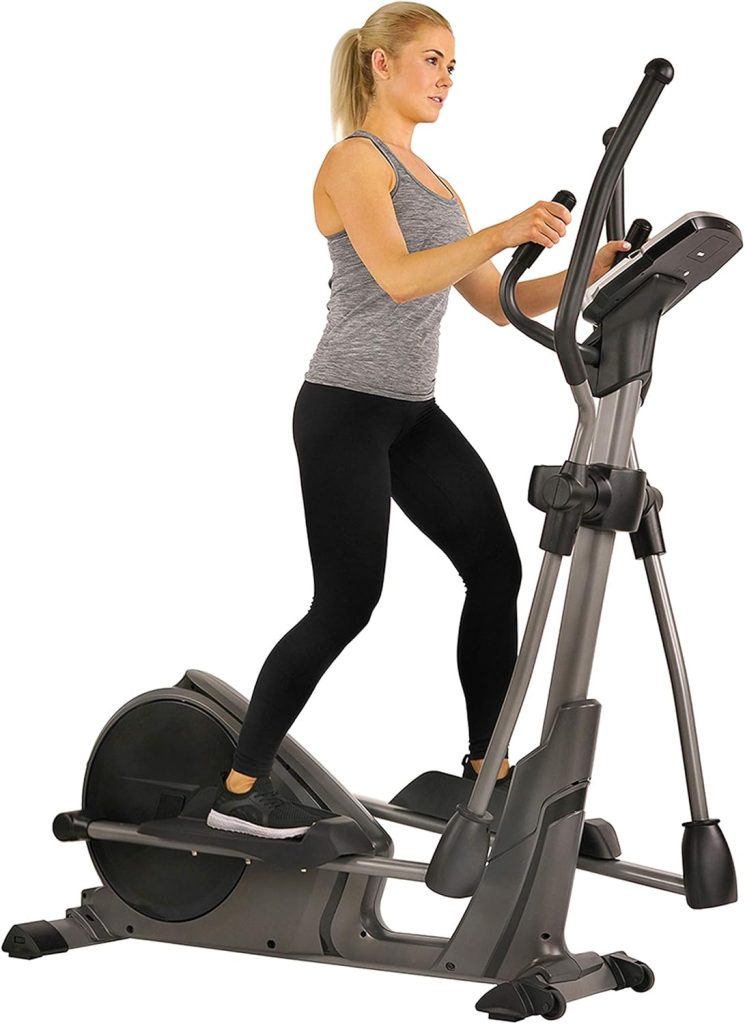

The SF-E3912 is a home-use elliptical with a reported 15.5-inch stride length and 16 resistance levels. Its basic training features may appeal to users who want adjustable resistance without paying for a large touchscreen console.
- Reported stride length: 15.5 inches
- Reported resistance: 16 levels
- Reported user weight capacity: 330 pounds
- Basic workout display and moving handlebars
Check the exact model number and current manufacturer’s specifications. Specifications may vary by listing or version.
Niceday Elliptical Machine
Best for: Buyers comparing compact home elliptical options.
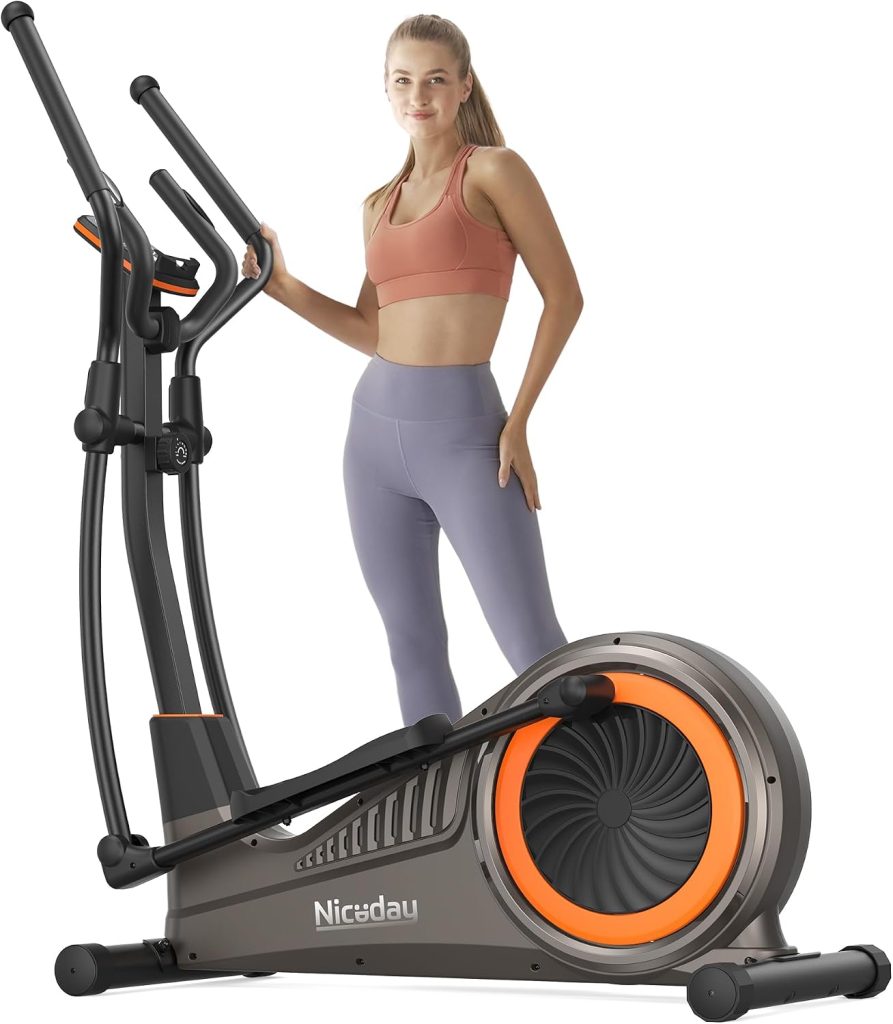

Some Niceday elliptical listings are described with a 15.5-inch stride, 16 resistance levels, and a high advertised user weight capacity. The compact frame may be attractive to home gym owners who have limited space.
- Reported stride length: 15.5 inches
- Reported resistance: 16 levels
- Some listings advertise up to 400 pounds of user capacity
- Check dimensions carefully before purchasing
Niceday sells different elliptical versions. Do not assume every listing shares the same stride length, weight capacity, or drive configuration. Verify the exact product before treating it as a rear-drive model.
YOUNGFIT Elliptical Machine
Best for: Buyers interested in a foldable home cardio machine.
Some YOUNGFIT elliptical listings emphasize folding storage, adjustable resistance, and a relatively compact frame. This type of design may suit users who need to move or store their equipment after workouts.
- Some listings advertise 22 resistance levels
- Some versions advertise a 15-inch stride
- Folding design on selected models
- Check folded and unfolded dimensions
Confirm the exact model’s drive layout, folding mechanism, and weight capacity. A folding frame does not necessarily mean the machine is suitable for every room or user.
ProForm Hybrid Trainer XT
Best for: People who want both seated and standing cardio options.
The ProForm Hybrid Trainer XT combines an elliptical-style standing workout with a recumbent exercise-bike position. This is a different approach from a conventional elliptical and may appeal to households that want two exercise positions in one machine.
- Hybrid elliptical and recumbent bike design
- Reported 16 resistance levels
- Reported 18-inch stride on the referenced version
- Check current availability and membership requirements
This is a hybrid trainer, not a direct substitute for a full-size rear-drive elliptical. Verify the drive layout and exact XT version before comparing it with conventional rear-drive machines.
Important Product-Selection Note
The products above are comparison candidates, not a claim that every current listing has been independently verified as rear-drive. Check the manufacturer’s diagram or product manual to confirm drive location before publishing a model as a confirmed rear-drive recommendation. Also verify weight capacity, stride length, and dimensions on the exact listing.
6. What to Check Before Buying a Rear-Drive Elliptical
1. User Weight Capacity
Weight capacity is especially important when choosing a machine for a heavier user or a multi-person household. Select a machine with a manufacturer-rated capacity comfortably above the user’s body weight.
For example, if the user weighs 300 pounds, a machine rated for 300 pounds leaves no additional capacity margin. A higher-rated model may be a more sensible choice, provided its frame, pedals, and warranty also meet your needs.
See our guide to elliptical weight capacity for more details.
2. Stride Length
Stride length affects how naturally your legs move during exercise. A stride that is too short may feel cramped, while an unnecessarily long stride may feel uncomfortable for shorter users.
Do not choose a rear-drive elliptical based only on its drive position. Compare the actual stride length with your height and, if possible, test the machine before purchasing.
3. Machine Dimensions and Clearance
Measure the machine’s length, width, and height. Also consider the space required for the pedals to move and for you to step on and off safely.
If your home gym is small, compare the actual footprint with other designs. Our guide to elliptical machines for small spaces can help you evaluate compact options.
4. Resistance Levels and Incline
Look for a resistance range that supports both comfortable warm-ups and more challenging workouts. If incline training is important, verify that the model offers adjustable incline and check how it is controlled.
A higher number of resistance levels does not necessarily mean a better machine. The quality and consistency of the resistance system matter too.
5. Frame Stability and Construction
A stable frame helps the machine feel secure during regular workouts. Check the frame construction, machine weight, stabilizers, pedal design, and customer feedback about wobbling or unusual noises.
For heavier users, frame stability and a suitable weight rating should take priority over extras such as speakers or a large display.
6. Warranty and Maintenance
Check the warranty for the frame, parts, and labor separately. Also review the maintenance instructions and whether replacement parts are available.
Do not assume a rear-drive elliptical is maintenance-free. Track-and-roller systems, joints, bearings, and other moving components may require inspection or care depending on the design.
7. Is a Rear-Drive Elliptical Better for Heavy People?
Not necessarily. A rear-drive layout does not automatically make an elliptical stronger or safer for heavier users. The machine’s rated user weight capacity, frame construction, pedal stability, and overall build quality are more important.
For a heavier user, focus on these features:
- Weight capacity: Choose a model with a suitable margin above the user’s body weight.
- Stable frame: Look for a sturdy frame and a design that remains stable during normal use.
- Comfortable stride: Make sure the stride length and pedal spacing suit the user’s body proportions.
- Secure pedals: Wide, textured pedals can help provide a stable foot position.
- Warranty: Review the parts and frame coverage, including any usage limitations.
If weight capacity is your main concern, compare machines by their verified specifications rather than choosing based on whether the drive is at the front or rear.
Related guide: Best Heavy-Duty Elliptical Machines for Home Use.
8. Final Verdict: Should You Buy a Rear-Drive Elliptical?
A rear-drive elliptical machine can be a good choice if you prefer its pedal motion, have enough room for the frame, and find a model with suitable stride dimensions and resistance settings.
Its biggest potential advantage is the relatively level, walking-like movement offered by many designs. Its main disadvantages are that some models take up considerable floor space and may offer fewer incline options than certain competing designs.
Our Buying Recommendation
- Choose rear-drive if you prefer a flatter pedal path and find the machine comfortable during a trial.
- Choose front-drive if you want to compare more incline-focused options or need a frame that may fit a smaller room.
- Prioritize capacity and stability if the machine will be used by a heavier person or several household members.
- Compare actual stride length if the machine will be used by taller or shorter individuals.
Ultimately, the best elliptical is the one that fits your body, available space, training goals, and budget. Drive position is a useful starting point, but it should not be the only factor in your decision.
Frequently Asked Questions
Are rear-drive elliptical machines better than front-drive models?
Neither design is universally better. Rear-drive machines may provide a flatter, walking-like pedal motion, while some front-drive models offer more incline options and a more compact frame. The best choice depends on your comfort, room size, and workout preferences.
Do rear-drive ellipticals have a longer stride?
Not always. Stride length depends on the machine’s linkage and overall design, not simply the location of the flywheel. Always check the manufacturer’s stated stride measurement.
Are rear-drive ellipticals good for tall people?
They can be, but only if the specific model provides a suitable stride length and enough room for comfortable leg movement. A rear-drive label alone does not guarantee a long stride.
Do rear-drive ellipticals take up more space?
Some rear-drive models have a longer footprint because of their drive assembly and frame layout. However, dimensions vary considerably. Measure the exact machine before buying.
Do rear-drive ellipticals require less maintenance?
Not necessarily. Maintenance depends on the specific drive system, bearings, rollers, joints, and other moving parts. Follow the manufacturer’s maintenance schedule rather than assuming all rear-drive models require less care.
Are rear-drive ellipticals suitable for heavy people?
They can be suitable if the machine has an adequate manufacturer-rated weight capacity, a stable frame, and comfortable pedals and stride dimensions. Compare these specifications before purchasing.
Can a rear-drive elliptical provide a low-impact workout?
Elliptical trainers generally provide low-impact cardio because the feet remain on the pedals during the movement. Comfort still depends on the user’s movement pattern, machine fit, and workout intensity.
Explore More Elliptical Guides
Continue comparing elliptical designs and features with these related guides:
Affiliate Disclosure: As an Amazon Associate, HeavyDutyChoice may earn from qualifying purchases. This does not affect the price you pay.