
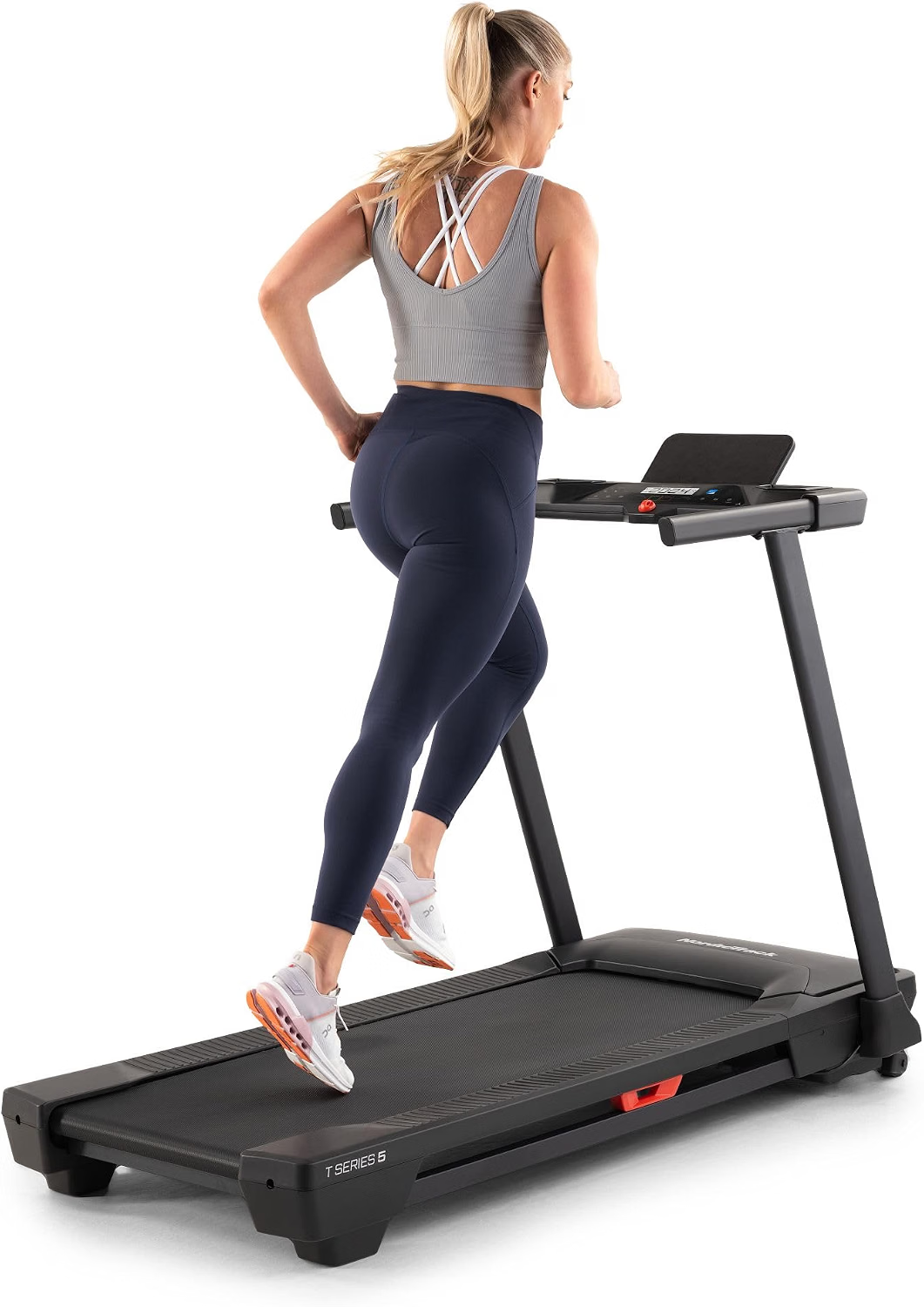
A low-impact treadmill is designed to provide a walking or running surface that may feel more comfortable than harder surfaces. Features such as deck cushioning, shock absorption, and a stable running platform can influence how a treadmill feels during exercise.
If you’re shopping for a treadmill for regular walking, light jogging, or home workouts, understanding these features can help you choose a machine that fits your exercise habits and comfort preferences.
Quick Answer: What Is a Low-Impact Treadmill?
A low-impact treadmill is a treadmill with features intended to make walking or running feel more comfortable, often through deck cushioning or shock-absorbing components.
- Cushioned deck: May provide a less rigid walking or running surface.
- Stable frame: Helps the machine feel secure during use.
- Comfortable belt: Provides a suitable surface for your stride.
- Appropriate speed range: Should match your planned walking or running workouts.
No treadmill eliminates exercise impact or guarantees protection from injury. Comfort varies by individual and machine design.
What Makes a Treadmill Low Impact?
The term “low impact” generally refers to exercise that involves less forceful contact than higher-impact activities. Walking is usually lower impact than running or jumping, although the actual demands depend on speed, stride, body mechanics, and individual fitness.
A treadmill may be marketed as low impact because of its cushioning system or deck construction. These features can change how the running surface feels, but they do not make every workout impact-free.
When comparing machines, pay attention to the following features:
Deck Cushioning
Cushioning components can influence how firm or forgiving the running surface feels underfoot.
Shock Absorption
Some treadmill designs use cushioning systems intended to reduce the rigid feel of the deck.
Running Surface
A suitable belt length and width can help provide comfortable room for your natural stride.
Frame Stability
A stable frame can help prevent unwanted movement and make workouts feel more controlled.
Benefits of Using a Low-Impact Treadmill
A treadmill with a comfortable deck and appropriate workout settings can be useful for people who want a consistent indoor walking or jogging routine.
1. Comfortable Indoor Walking
Walking on a treadmill provides a predictable surface and lets you control your speed. This can be useful when outdoor weather, uneven sidewalks, or limited daylight make outdoor walking less convenient.
A cushioned deck may also feel more comfortable than a very hard surface, although the experience varies between treadmill models.
2. Adjustable Workout Intensity
Most home treadmills allow users to adjust speed, and many models also provide incline settings. You can begin with a comfortable walking pace and adjust the workout as your fitness and preferences change.
If comfort is your priority, compare machines with easy-to-use speed controls and a suitable range of walking speeds.
3. Consistent Exercise Environment
A home treadmill provides a controlled workout environment. You do not need to deal with traffic, uneven outdoor terrain, or changing weather conditions.
This convenience can make it easier to establish a regular exercise routine.
4. Options for Different Fitness Levels
Low-impact treadmill workouts can be adjusted to suit different activity preferences. Some people prefer slow walking, while others may want a machine that also supports faster walking or light jogging.
Choose a treadmill based on your intended workout rather than relying only on the “low-impact” label.
Important Comfort and Safety Note
A cushioned treadmill does not eliminate impact or guarantee relief from joint pain. If exercise causes persistent pain, or you have been advised to limit certain activities, seek appropriate medical guidance before changing your workout routine.
Low-Impact Treadmill vs. Regular Treadmill
The main difference is usually the emphasis placed on cushioning and workout comfort. A regular treadmill may also include cushioning, so these categories are not completely separate.
| Feature | Low-Impact Focus | General Treadmill |
|---|---|---|
| Deck feel | Emphasis on cushioning and comfort | Varies by model |
| Workout type | Often walking and moderate workouts | Walking, jogging, or running |
| Cushioning | A key feature to compare | Depends on the design |
| Speed options | Should match intended walking or jogging | Varies by model |
| Best comparison criteria | Deck comfort and stability | Overall features and intended use |
A regular treadmill with a well-designed cushioning system may also be suitable for someone seeking a comfortable walking surface. Compare the actual deck design and specifications rather than assuming that one marketing category is automatically better.
What to Look for When Buying a Low-Impact Treadmill
Before choosing a treadmill, compare its construction, dimensions, workout settings, and user capacity. These details are more useful than relying on a product title alone.
1. Cushioning and Deck Design
Look for a manufacturer description of the deck cushioning system. Some machines use flexible deck structures or cushioning components, while others have a firmer feel.
If possible, test the treadmill before purchasing. A specification sheet may describe the system, but it cannot fully tell you how comfortable the machine will feel during your workout.
2. Running Belt Size
The belt should provide enough room for your natural walking or running stride. Taller users and people with longer strides may prefer a longer running surface.
Check the actual belt dimensions rather than judging the treadmill by its overall frame size.
3. Speed and Incline Settings
Choose a speed range that supports your planned workouts. If you mainly walk, you may not need the highest running speeds offered by a performance treadmill.
Incline can increase workout intensity, but it also changes the demands of the exercise. Make sure the controls are easy to operate and that the available settings fit your needs.
4. Maximum User Weight
Always check the manufacturer’s maximum user weight rating. The treadmill should be rated for your body weight with an appropriate margin, and you should follow all usage instructions.
For a more detailed explanation, read our guide to treadmill weight capacity.
5. Frame Stability
A stable treadmill should feel secure during normal use. Pay attention to frame construction, handrail design, and whether the machine moves or shakes during operation.
If you are a larger user, compare the frame design and maximum user weight rating carefully instead of selecting a treadmill based only on its advertised cushioning.
6. Warranty and Maintenance
Check the warranty coverage for the frame, motor, deck, and other components. Also review belt lubrication requirements, cleaning instructions, and maintenance recommendations.
Types of Low-Impact Treadmills to Consider
Different treadmill designs can suit different home workout needs. The right option depends on how much space you have and whether you plan to walk, jog, or run.
Cushioned Full-Size Treadmills
These machines are worth considering if you want a traditional treadmill with a full-size running surface. Compare deck cushioning, belt dimensions, frame stability, speed settings, and maximum user weight.
Browse cushioned treadmills on Amazon to compare available models and their specifications.
Walking Treadmills
Walking treadmills are designed primarily for walking workouts. They may be more compact than full-size running machines and can be useful when you want a simple indoor walking setup.
Check the walking surface, speed range, stability, and maximum user weight before buying.
Shop Walking Treadmills on Amazon
Under-Desk Walking Pads
Walking pads are compact machines intended for walking rather than regular running. They can fit into smaller home offices and may be easier to store than full-size treadmills.
However, not every walking pad offers the same stability, cushioning, or weight capacity. Check the manufacturer’s specifications carefully, especially if you plan to use it frequently.
Compare under-desk walking pads on Amazon.
Low-Impact Treadmill Workouts for Beginners
If you are new to treadmill exercise, start with a comfortable walking pace and gradually adjust your workout according to your fitness level.
BEGINNER SESSION
Easy Walking
Start with a short session at a comfortable pace. Focus on balance, posture, and getting familiar with the controls.
PROGRESSIVE SESSION
Steady Walking
When comfortable, gradually increase your walking time or pace. Avoid making several workout changes at once.
OPTIONAL PROGRESSION
Gentle Incline
If your treadmill has incline settings and you tolerate them comfortably, try a small adjustment rather than jumping to a steep incline.
Use the safety clip if your treadmill has one, wear suitable footwear, and stop if you feel dizzy, unstable, or experience unusual pain. Your workout duration and intensity should match your current fitness and any professional guidance you have received.
Frequently Asked Questions
Are low-impact treadmills better for your joints?
Some users may find a cushioned treadmill more comfortable than a harder walking surface. However, no treadmill guarantees joint protection or prevents injury. Comfort depends on the machine, workout intensity, individual movement patterns, and personal circumstances.
Does treadmill cushioning really make a difference?
Cushioning can change how the deck feels underfoot. Different systems may feel softer or firmer, so testing a machine is useful when possible. Do not assume that more cushioning automatically means a better workout experience.
Is walking on a treadmill considered low impact?
Walking is generally considered a lower-impact activity than running or jumping. However, the physical demands still depend on walking speed, incline, duration, and individual fitness.
Are walking pads considered low-impact treadmills?
Walking pads can be used for low-speed walking workouts, but they do not all have the same cushioning or stability features. Check the belt dimensions, maximum user weight, speed range, and manufacturer’s intended-use instructions.
Can heavier users use low-impact treadmills?
Potentially, provided the specific treadmill is rated for the user’s weight and intended workout. Check the maximum user weight, frame construction, belt dimensions, and warranty before purchasing. A cushioned deck does not necessarily mean a treadmill is heavy-duty.
Is a low-impact treadmill suitable for running?
Some full-size treadmills with cushioning systems support running, while many compact walking machines are designed only for walking. Check the manufacturer’s intended use, maximum speed, running surface, and weight rating before using a treadmill for running.
Final Thoughts
A low-impact treadmill can be a useful option if you want a comfortable indoor walking or running surface. The most important features to compare include deck cushioning, shock absorption, belt dimensions, frame stability, speed settings, and maximum user weight.
Do not choose a treadmill based only on the phrase “low impact” in its product title. Compare the actual specifications and make sure the machine suits your intended workouts, available space, and body weight.
For more options and buying advice, visit our Treadmills category for additional treadmill guides.
As an Amazon Associate, HeavyDutyChoice may earn from qualifying purchases.