
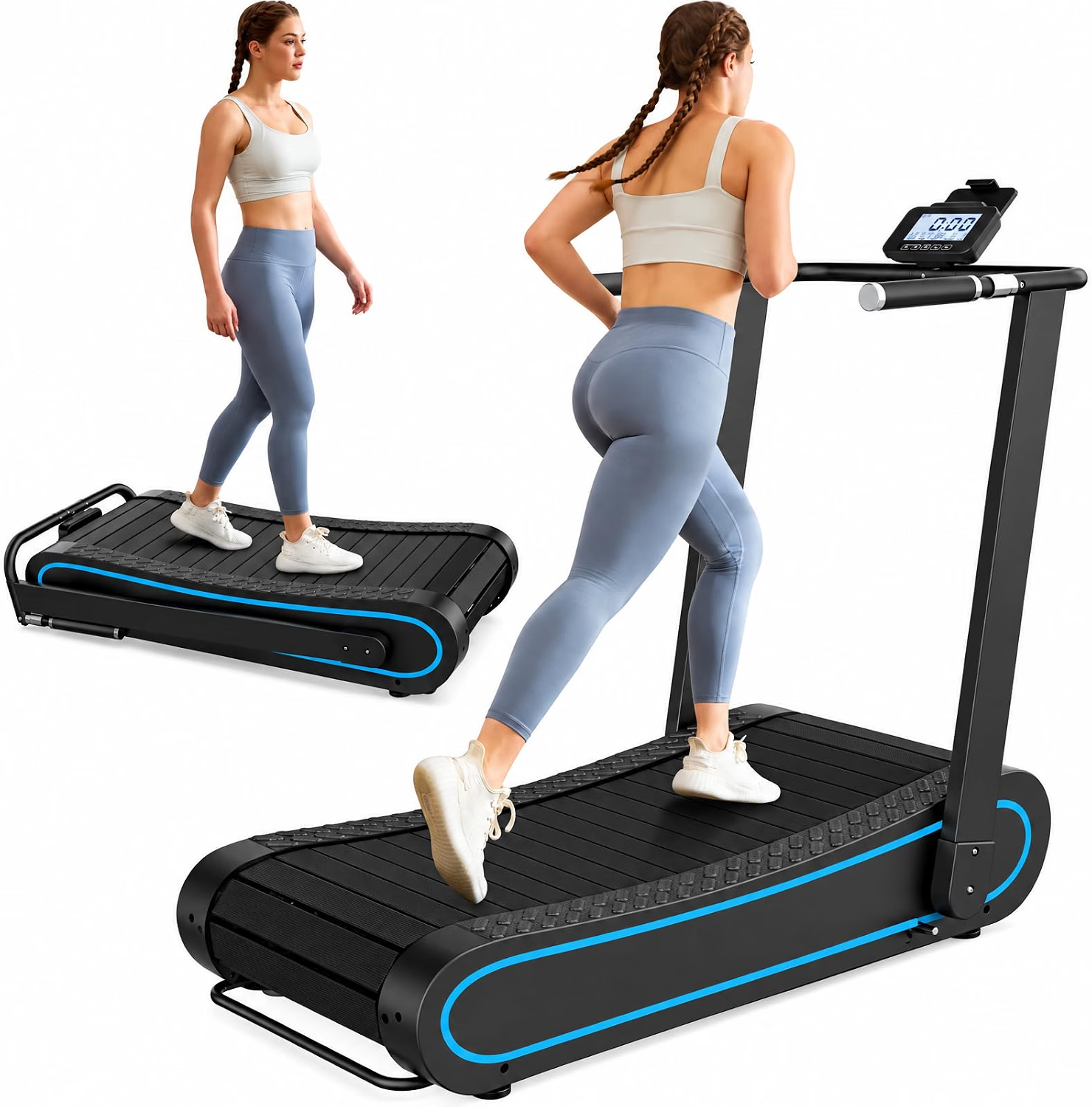
A treadmill is a significant piece of home fitness equipment, and choosing the right frame design can make a big difference in how you use it. While folding treadmills are popular for saving space, a non-folding treadmill may be a better choice if you have a dedicated workout area and want a machine that stays in one position.
Non-folding treadmills have a fixed frame that does not lift or fold vertically for storage. They are commonly found in home gyms and commercial fitness environments, where users can leave the equipment assembled and ready for regular workouts.
A non-folding treadmill is a fixed-frame treadmill designed to remain in its assembled position. It can be a practical choice for people with enough floor space, frequent workout routines, or a preference for a permanent home gym setup. However, it is not automatically more durable or powerful than a folding treadmill. Frame construction, motor specifications, deck design, and user weight capacity still matter.
What Is a Non-Folding Treadmill?
A non-folding treadmill is a treadmill with a frame that stays in its normal operating position. Unlike a folding model, its running deck does not lift upward to reduce the machine’s storage footprint.
Most fixed-frame treadmills have a base, upright supports, console, running belt, and deck. Some are designed for home use, while others are built for commercial gyms or more frequent use.
The main difference is the frame design, not necessarily the treadmill’s performance. A non-folding treadmill can be basic or advanced, lightweight or heavy-duty, depending on the model.
Non-Folding vs. Folding Treadmills
Before choosing a treadmill, consider how much space you have and whether you need to move the machine after exercising.
| Feature | Non-Folding Treadmill | Folding Treadmill |
|---|---|---|
| Frame design | Fixed frame | Deck can fold upward on many models |
| Storage | Requires permanent floor space | Can reduce storage footprint |
| Moving after use | Usually less convenient | Often easier if equipped with transport wheels |
| Home gym suitability | Good for dedicated workout rooms | Useful for shared or smaller spaces |
| Durability | Depends on construction and components | Depends on construction and components |
| Weight capacity | Varies by model | Varies by model |
Important: A fixed frame does not automatically mean a treadmill has a higher weight capacity. Always check the manufacturer’s stated user weight limit and the machine’s overall construction.
Advantages of Non-Folding Treadmills
The treadmill stays assembled and ready to use. You do not need to fold or unfold the deck before and after each workout.
A fixed-frame machine works well in a garage gym, basement, or spare room where storage space is not a major concern.
The fixed-frame category includes basic walking machines, full-size home treadmills, and commercial-style equipment.
A non-folding model does not rely on a folding hinge or lifting mechanism. This simplifies the frame design, although overall reliability still depends on the entire machine.
Disadvantages of Non-Folding Treadmills
Fixed-frame treadmills are not ideal for every home. Their main drawback is the amount of space they occupy.
- Permanent floor space: You cannot fold the running deck out of the way when the treadmill is not being used.
- More difficult relocation: Some models are heavy and awkward to move, even when transport wheels are included.
- Room layout limitations: You need enough clearance around the machine for safe mounting, dismounting, and exercise.
- Potentially higher shipping and assembly effort: Larger fixed-frame machines may require more space and assistance during delivery and setup.
Measure the treadmill’s assembled dimensions before ordering. Also leave the clearance recommended by the manufacturer, especially behind the running deck. Do not assume that the treadmill’s listed footprint is the only space you need.
What to Look for When Buying a Non-Folding Treadmill
The best non-folding treadmill is not necessarily the largest or most expensive model. Focus on the features that match your body size, workout habits, and available space.
1. Weight Capacity
Weight capacity should be one of your first checks, particularly if you are shopping for a treadmill for a larger user.
Look for a model with a clearly stated maximum user weight. It is sensible to leave a margin between your body weight and the manufacturer’s maximum rating rather than choosing a machine that is right at its limit.
For more guidance, see our guide to treadmill weight capacity.
2. Running Belt Dimensions
A comfortable running area matters for both walking and running. Taller users and people with longer strides may prefer a longer deck, while users who want more side-to-side room may benefit from a wider belt.
Check the actual belt dimensions rather than judging the treadmill by its overall width. The console and side rails can make a machine look larger without increasing the usable running surface.
3. Motor and Workout Requirements
Consider how you plan to use the treadmill. A machine used mainly for occasional walking has different demands from one used for regular running or multiple daily workouts.
Compare the motor information provided by the manufacturer, including continuous-duty horsepower when available. Do not rely on peak horsepower alone, because it does not tell the whole story about sustained operation.
4. Frame and Deck Construction
Look for a stable frame, solid support structure, and a deck designed for the intended level of use. Product descriptions should provide useful information about construction materials and warranty coverage.
For heavier users, pay attention to the stated weight limit, frame warranty, and overall machine weight. A heavy treadmill is not automatically a better treadmill, but build quality and stability deserve careful consideration.
5. Cushioning and Shock Absorption
Deck cushioning can influence how walking or running feels. If joint comfort is important, compare the treadmill’s cushioning system and look for clear information about how it works.
There is no single cushioning design that is best for everyone. If possible, test the machine before buying or check the return policy carefully.
6. Incline and Console Features
Incline settings can add variety to walking and running workouts. Other useful features may include speed controls, workout programs, heart-rate monitoring, and a readable display.
Choose features you will actually use. A complicated console is not necessarily better if your main goal is straightforward walking or running.
Who Should Buy a Non-Folding Treadmill?
A fixed-frame treadmill is a practical option if you have a permanent workout area and do not need to reclaim the floor space.
If you exercise regularly, leaving the machine assembled and ready may make your routine more convenient.
Some shoppers prefer a traditional fixed-frame treadmill with a full-size running deck and a permanent setup.
Who Should Choose a Folding Treadmill Instead?
A folding treadmill may be the better choice if:
- You live in an apartment or have limited floor space.
- Your treadmill shares a room with other furniture.
- You need to move or store the machine after workouts.
- You want to keep more of your floor area available for other activities.
Remember that folding models vary considerably. Some are compact walking treadmills, while others are full-size machines with substantial running decks and high user weight limits.
How to Find Non-Folding Treadmills on Amazon
When comparing products, use the following searches to explore different types of fixed-frame treadmills. Review each listing carefully for dimensions, user weight capacity, motor information, warranty, and return conditions.
Explore fixed-frame treadmills for everyday home walking and running.
Compare treadmills marketed for higher user weight capacities.
Explore larger machines designed for more demanding workout environments.
Product availability, specifications, and prices can change. Confirm all details on the Amazon product page before purchasing.
Frequently Asked Questions
Not necessarily. A fixed frame eliminates the folding mechanism, but durability still depends on the frame, motor, deck, belt, electronics, and overall manufacturing quality. Compare the specifications and warranty rather than assuming that every non-folding model is more durable.
Some fixed-frame treadmills offer high user weight capacities, but the frame design alone does not determine how much weight a treadmill supports. Check the manufacturer’s maximum user weight and choose a machine with an appropriate capacity margin.
They require their full operating footprint at all times because the running deck does not fold upward. This makes them less convenient for rooms where the treadmill needs to be stored between workouts.
Many models have transport wheels, but moving a treadmill can still be difficult because of its size and weight. Check the product instructions and never attempt to move a heavy machine without adequate assistance.
Yes, provided the model is designed for running. Check its motor specifications, running belt dimensions, speed range, cushioning, and recommended usage before buying.
Choose a non-folding model if you have a dedicated workout area and want a permanent setup. Choose a folding model if saving floor space and convenient storage are more important.
Final Thoughts
A non-folding treadmill can be a good investment for a home gym where space is not a major limitation. Its fixed-frame design keeps the machine in a permanent setup, making it convenient for people who exercise frequently and do not need to store their treadmill after every workout.
However, the best choice depends on more than whether the treadmill folds. Compare weight capacity, running surface, motor specifications, frame construction, cushioning, and warranty before making a decision.
If you are shopping for a treadmill for a larger user, prioritize a suitable weight capacity and stable construction over the frame style alone.
Disclosure: As an Amazon Associate, HeavyDutyChoice earns from qualifying purchases.