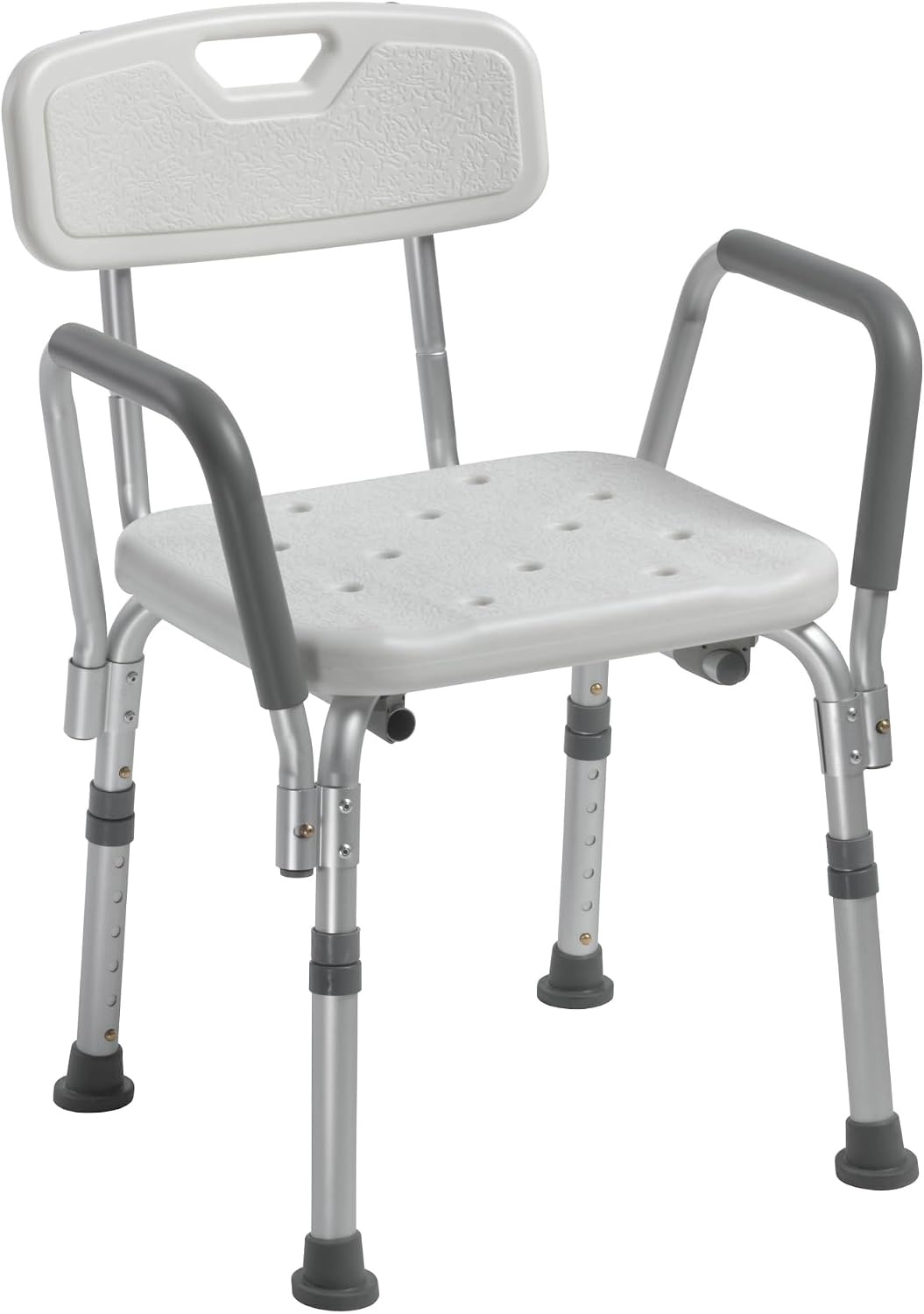
Choosing the right shower chair can make bathing more manageable for older adults who have difficulty standing for long periods, feel unsteady in the shower, or need a place to sit while washing. The best option is not necessarily the largest or most expensive chair. It is the one that fits the user, the bathroom, and their support needs.
This guide explains what to look for in shower chairs for elderly adults, including seat height, armrests, back support, weight capacity, and stability. It also covers common chair styles and practical checks to make before buying.
Quick Picks: Which Shower Chair Style Should You Consider?
Start by identifying the type of support the user needs. These are general shopping categories, not medical recommendations for every person.
Best Starting Point for Many Users
An adjustable-height shower chair with a backrest can provide a seated bathing surface and allow the seat height to be matched to the user.
For Easier Sitting and Standing
A chair with armrests may offer additional hand support during transfers, provided the design and the user’s abilities make it appropriate.
For More Seating Space
A wide-seat shower chair may be worth considering when a standard seat feels cramped. Check its actual dimensions and rated capacity.
Important: A shower chair is not automatically safe for every user or every shower. Confirm the manufacturer’s weight rating, installation requirements, bathroom fit, and the user’s ability to sit and transfer safely.
What to Look for in Shower Chairs for Elderly Adults
1. A Stable Frame and Suitable Feet
Stability should be a top priority. Look for a frame designed for wet environments, feet intended for the shower surface, and clear instructions for assembly and use. Rubber or other nonslip feet can help the chair grip the floor, but they do not eliminate the risk of slipping or tipping.
Before each use, check that the chair is assembled correctly, all legs contact the floor evenly, and the feet are clean and in good condition. Do not use a chair that rocks, has loose components, or has damaged feet.
2. The Right Seat Height
An adjustable-height model can help accommodate different user heights and shower layouts. When seated, the user should be able to position their feet securely and comfortably. A seat that is too high or too low can make sitting down and standing up more difficult.
Check the product’s listed height range rather than assuming all adjustable chairs fit the same way. Also confirm that the adjustment mechanism locks securely at the selected height.
3. Armrests for Transfers
Armrests may provide a place to hold while sitting down or standing up. However, not all armrests are designed to support body weight during transfers. Review the manufacturer’s instructions and avoid relying on a component for support unless it is designed for that purpose.
Consider whether fixed or removable arms would better suit the user and the available space. Removable arms may improve access in some situations, but they must be secured correctly before use.
4. Back Support
A backrest can provide additional support while seated. It may be useful for people who find it difficult to maintain an upright sitting position for the duration of a shower. A backrest does not replace appropriate supervision or a professional assessment when someone has significant balance or mobility limitations.
If the user prefers a more open design or needs a chair for a small shower, a backless model may also be an option. The choice should depend on the user’s support needs rather than appearance alone.
5. Weight Capacity and Seat Width
Always check the manufacturer’s stated weight capacity and the actual seat dimensions. A chair that meets the weight rating may still be uncomfortable if the seat is too narrow, too shallow, or difficult to access.
For users who need more room or a higher capacity, compare models specifically designed for those requirements. Do not assume that a wider-looking chair has a higher weight rating, or that every heavy-duty model has the same dimensions.
For more options, visit our Shower Chairs Buying Guide or browse heavy-duty shower chairs on Amazon.
6. Drainage and Easy Cleaning
A shower chair should be suitable for regular contact with water and easy to clean according to the manufacturer’s instructions. A seat with drainage openings can help water run off instead of collecting on the sitting surface.
Check for crevices that are difficult to clean, inspect joints and adjustment points periodically, and allow the chair to dry as recommended. Never use a product in a way that conflicts with its care instructions.
Shower Chair Types Compared
| Chair Type | Potential Advantage | What to Check |
|---|---|---|
| Basic shower stool | Compact and relatively open design | Whether the user needs back or arm support |
| Chair with backrest | Additional support while seated | Seat dimensions, backrest position, and shower clearance |
| Chair with armrests | Potentially helpful hand support | Armrest strength, transfer needs, and usable width |
| Adjustable-height chair | Can be fitted to a range of user heights | Adjustment range and locking mechanism |
| Wide-seat or heavy-duty chair | May provide more seating room or a higher rated capacity | Exact seat width, overall footprint, and rated capacity |
How to Measure Your Shower Before Buying
A chair that fits the user may still be unsuitable for the bathroom. Measure the available space before ordering and compare it with the manufacturer’s product dimensions.
- Measure the usable shower floor, including the space needed to enter and exit.
- Check the chair’s overall width and depth, not only the seat dimensions.
- Consider the location of shower doors, curtains, faucets, grab bars, and built-in ledges.
- Confirm that the user can get onto and off the chair without an unsafe reach or awkward turn.
- Check whether the chair’s feet sit evenly on the actual shower floor.
If the user needs to transfer from a wheelchair or has substantial difficulty standing, a standard shower chair may not be the right solution. A transfer bench or another assistive bathing device may be more appropriate, depending on the bathroom layout and the user’s needs.
Safety Checklist Before Every Shower
- Confirm that all legs are stable and all adjustment locks are engaged.
- Check that the feet are clean, intact, and positioned securely on the shower floor.
- Keep soap, shampoo, towels, and other essentials within easy reach.
- Make sure the chair does not block the entrance or create a tripping hazard.
- Follow the manufacturer’s instructions for weight limits, cleaning, assembly, and use.
- Seek advice from a qualified healthcare professional or occupational therapist if balance, transfers, or safe bathing are concerns.
A shower chair is only one part of a safer bathing setup. Grab bars, handheld showerheads, suitable lighting, and assistance when needed may also matter. Do not use towel bars or other fixtures as grab bars unless they are specifically designed and installed for that purpose.
Frequently Asked Questions
Are shower chairs good for elderly adults?
A suitable shower chair can help older adults who have difficulty standing during bathing. The correct design depends on balance, mobility, transfer ability, body size, and bathroom layout. Anyone with significant fall risk may need a professional assessment to determine the safest bathing equipment.
Is a shower chair with arms better than one without arms?
Not for everyone. Armrests may help some users position themselves when sitting or standing, but they can also affect how easily someone transfers onto the chair. Compare the design with the user’s needs and follow the manufacturer’s guidance.
Should I choose a shower chair with a backrest?
A backrest may provide additional support for someone who needs help maintaining a seated position. A backless stool can be more compact, but it offers less support. Choose based on the user’s comfort, stability, and ability to sit safely.
How do I choose the right weight capacity?
Read the manufacturer’s stated weight rating and confirm that it is appropriate for the intended user. Also consider seat width, depth, overall stability, and bathroom fit. Weight capacity alone does not establish whether a chair is suitable.
Does Medicare cover shower chairs?
Traditional Medicare generally does not cover shower chairs as standalone bathroom safety items. Coverage can depend on the type of plan and its rules, so verify benefits directly with the insurer. Read our guide to Medicare coverage for shower chairs for more information.
Can Medicaid pay for a shower chair?
Potential coverage varies by state, Medicaid program, eligibility, and the item’s classification. Contact the relevant state program or plan before purchasing. Our planned guide on Medicaid coverage for shower chairs will cover the main questions to check.
Final Thoughts
When comparing shower chairs for elderly adults, focus first on safe fit and practical support. Seat height, frame stability, armrests, back support, weight capacity, and available shower space are more important than choosing a chair based on appearance alone.
Before buying, compare the product dimensions with your measurements and read the manufacturer’s instructions carefully. If the user has significant balance problems or difficulty transferring, ask a qualified professional to help identify an appropriate bathing solution.
Explore More Shower Chair Guides
Disclosure: As an Amazon Associate, HeavyDutyChoice may earn from qualifying purchases. This does not affect the price you pay.