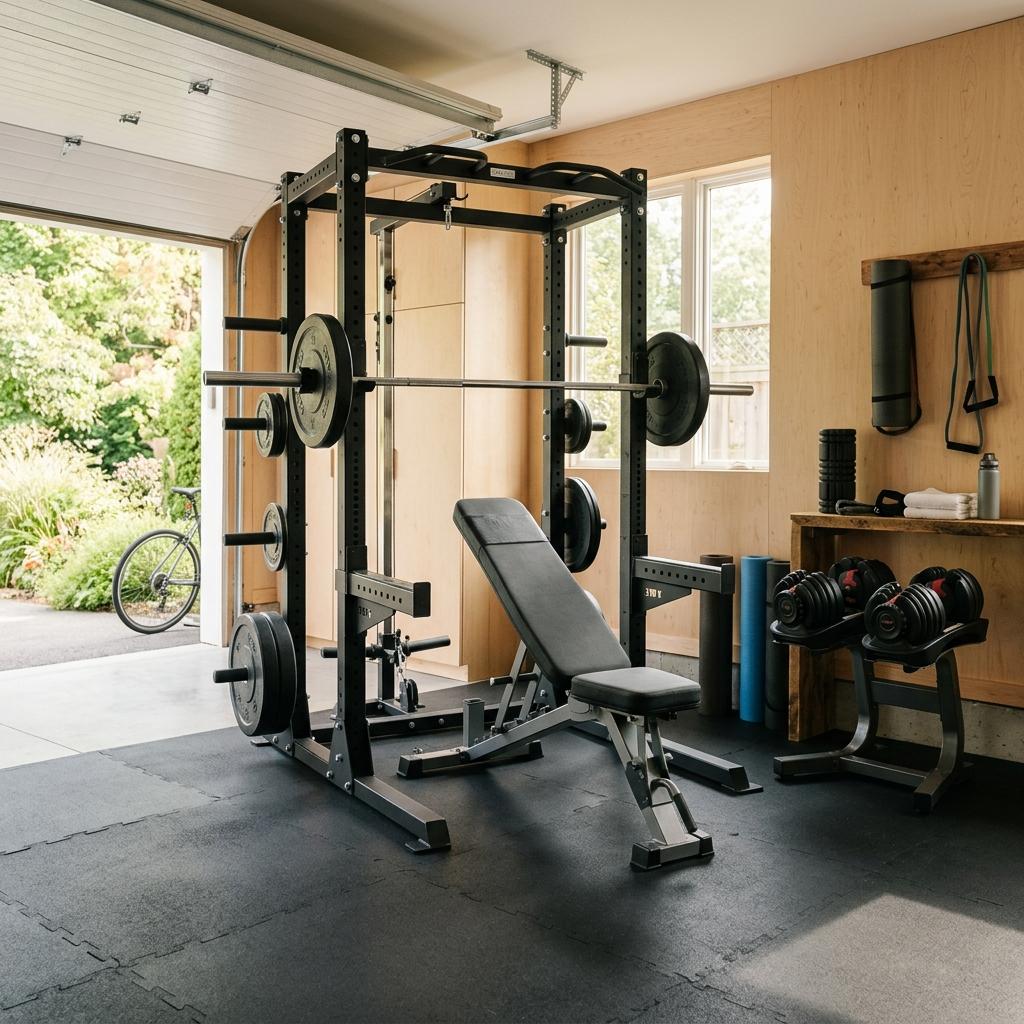
Planning a home gym is not just about choosing the right equipment. You also need enough room to use it safely, move between exercises, and store accessories without turning the workout area into a crowded space.
The ideal home gym dimensions depend on the equipment you plan to use. A small setup with adjustable dumbbells and resistance bands needs much less room than a gym with a treadmill, weight bench, squat rack, or multi-station machine.
Before buying equipment, measure your available floor space, check ceiling height, and consider how much clearance each exercise requires. This guide explains practical room sizes, equipment footprints, and layout ideas for different types of home gyms.
Quick Guide: How Much Space Does a Home Gym Need?
- Basic workout corner: Approximately 4 x 6 feet for a mat-based setup and selected accessories.
- Small home gym: Approximately 6 x 8 feet for adjustable dumbbells, a mat, and compact equipment.
- Strength training area: Approximately 8 x 10 feet for a bench, dumbbells, and additional movement clearance.
- Dedicated home gym: Approximately 10 x 12 feet or more for a broader equipment selection.
- Garage gym: Approximately 12 x 16 feet or larger can provide more flexibility for racks, benches, and cardio equipment.
These are practical planning examples, not universal minimum requirements. Actual space needs depend on equipment dimensions, user movement, and manufacturer clearance instructions.
What Are the Ideal Home Gym Dimensions?
There is no single perfect home gym size. The best dimensions depend on whether you want a simple workout corner, a strength-training setup, or a complete exercise room.
Use the following examples as starting points when planning your space.
| Gym Type | Example Dimensions | Approx. Area | Suitable Equipment |
| Workout Corner | 4 x 6 ft | 24 sq ft | Mat, bands, small accessories |
| Small Home Gym | 6 x 8 ft | 48 sq ft | Dumbbells, mat, compact equipment |
| Strength Training Area | 8 x 10 ft | 80 sq ft | Bench, dumbbells, selected rack setups |
| Dedicated Home Gym | 10 x 12 ft | 120 sq ft | Bench, rack, cable equipment |
| Larger Garage Gym | 12 x 16 ft | 192 sq ft | Multiple strength and cardio machines |
A larger room gives you more flexibility, but you do not need a dedicated gym to exercise effectively. The important thing is to match your equipment choices to the usable area you actually have.
How Much Space Does Each Type of Home Gym Equipment Need?
One of the most common planning mistakes is measuring only the equipment’s physical footprint. You also need room to get on and off the machine, extend your arms and legs, adjust weights, and move safely during exercise.
1. Adjustable Dumbbells
Adjustable dumbbells are among the most space-efficient strength-training options. They can replace several pairs of traditional dumbbells, making them useful in small rooms and shared living spaces.
However, you still need enough room to perform exercises such as shoulder presses, goblet squats, dumbbell rows, and Romanian deadlifts.
Planning example
- Storage area: Allow enough room for the dumbbells and their trays.
- Exercise area: Leave room to stand, bend, and extend your arms.
- Flooring: Use a stable surface that can handle normal equipment placement.
Space-saving tip: Store adjustable dumbbells against a wall or under a suitable bench when they are not in use. Keep the storage position accessible so you do not have to move other equipment before every workout.
2. Weight Bench
A weight bench requires more space than a pair of dumbbells because it has a longer footprint and needs additional clearance around it.
When planning a bench area, account for:
- The full length and width of the bench.
- Room to sit down and stand up.
- Space to position and pick up dumbbells.
- Clearance around the bench for pressing and rowing exercises.
- Additional storage space if the bench folds.
An adjustable bench can be a useful addition to a compact strength-training area, but it should not block the main walking route through the room.
3. Power Rack and Squat Rack
A power rack needs more than the space occupied by its frame. You must also consider the barbell’s length, plate loading, lifting position, and movement clearance.
When planning a rack area, measure:
- Rack width, depth, and height.
- Barbell length and sleeve clearance.
- Space on both sides for loading weight plates.
- Room in front of and behind the rack for exercise setup.
- Ceiling clearance for overhead movements, if applicable.
Important safety reminder
Do not place a squat rack or power rack in a space that prevents safe barbell loading, spotting, or movement. Follow the rack manufacturer’s installation and clearance instructions, and make sure the floor and supporting structure are appropriate for the equipment.
4. Treadmill
A treadmill needs room behind and around the running deck, not just enough floor space for its frame.
Before buying a treadmill, check:
- Overall length, width, and height.
- Required rear clearance specified by the manufacturer.
- Side access and safe mounting space.
- Ceiling height for running or walking.
- Power outlet location and cable routing.
- Whether the treadmill folds and how much space it occupies when folded.
A folding treadmill can help save storage space, but folding the deck does not remove the need for a safe workout area when the machine is in use.
For more equipment guidance, visit our Treadmills category.
5. Rowing Machine
Rowing machines are relatively long pieces of equipment. They need enough room for the sliding seat to move through its full range and for the user to extend their legs and arms.
Measure the machine in its operating position, not just its stored position. If you plan to stand it vertically or fold it after use, check the manufacturer’s storage instructions and required ceiling clearance.
For more options, explore our Rowing Machines category.
6. Elliptical Machine
Ellipticals usually occupy a larger permanent footprint than small accessories. The pedals and handles also move during exercise, so you need clearance around the machine.
Check the equipment’s overall dimensions, step-on height, pedal movement, handle movement, and ceiling clearance. If the machine has a tall frame, make sure there is enough vertical room for users of different heights.
Browse our Elliptical Machines category for more equipment guidance.
7. Wall-Mounted Cable Machine
A wall-mounted cable station can reduce the amount of permanent floor space used by a home gym. However, it still needs a clear workout area in front of the wall.
Allow room for:
- Standing cable exercises.
- Movement toward and away from the pulley.
- Attachment changes and weight loading.
- A bench if you plan to perform seated or supported exercises.
Also check the wall structure and installation requirements before purchasing. A compact footprint does not mean the machine can be mounted safely on any wall.
See our guide to Best Wall-Mounted Home Gyms for Small Spaces.
How Much Ceiling Height Does a Home Gym Need?
Floor space is only one part of home gym planning. Ceiling height matters when you use equipment with tall frames or perform movements that require overhead clearance.
Consider the following when measuring vertical space:
Standing Exercises
Allow enough room for your height, overhead arm movement, and any equipment attachments.
Power Racks
Check the rack’s total height and whether pull-ups or overhead movements are part of your routine.
Cardio Machines
Consider the user’s height, machine height, and any additional elevation during use.
Storage Position
Check vertical storage clearance for folding treadmills and upright rowing machines.
Do not rely on a general ceiling-height recommendation alone. Compare the equipment’s actual dimensions with your ceiling height and the manufacturer’s clearance instructions.
Small Home Gym Dimensions: How to Make a Small Room Work
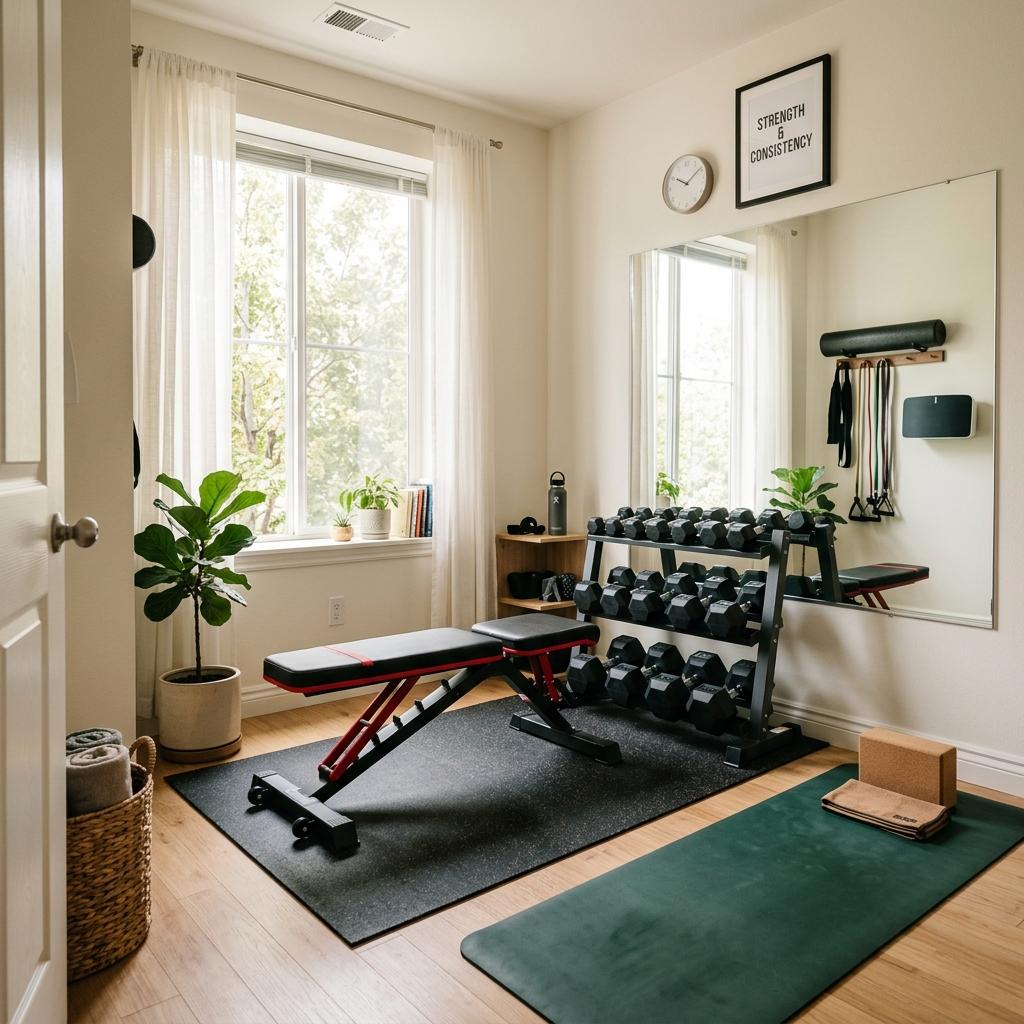
You can create a useful home gym in a spare bedroom, apartment, basement, or garage without filling the entire room with equipment.
The key is to select versatile equipment and organize the room around the exercises you perform most often.
Use Multi-Purpose Equipment
Choose equipment that supports several exercises rather than buying a separate machine for every movement.
- Adjustable dumbbells instead of multiple fixed-weight pairs.
- Resistance bands for different pulling and pressing movements.
- An adjustable bench for several dumbbell exercises.
- A folding rack if you need rack-based training but have limited floor space.
Use Wall Storage
Wall storage can help keep accessories off the floor. Suitable racks and holders can organize resistance bands, handles, jump ropes, and other small items.
Make sure any wall-mounted storage is installed using appropriate hardware. Do not confuse lightweight accessory storage with mounting requirements for heavy exercise equipment.
Keep the Floor Area Flexible
A room with too many permanently positioned machines can become difficult to use. Consider equipment that folds or can be moved safely when not in use.
Keep a clear area for bodyweight exercises, stretching, and movements that require more space than the equipment’s storage footprint.
Choose Equipment Based on Your Main Workout
If you mainly lift weights, prioritize dumbbells, a bench, and a suitable rack if needed. If cardio is your priority, choose one machine that fits your room rather than trying to squeeze several large machines into the same area.
Home Gym Layout Ideas for Different Room Sizes
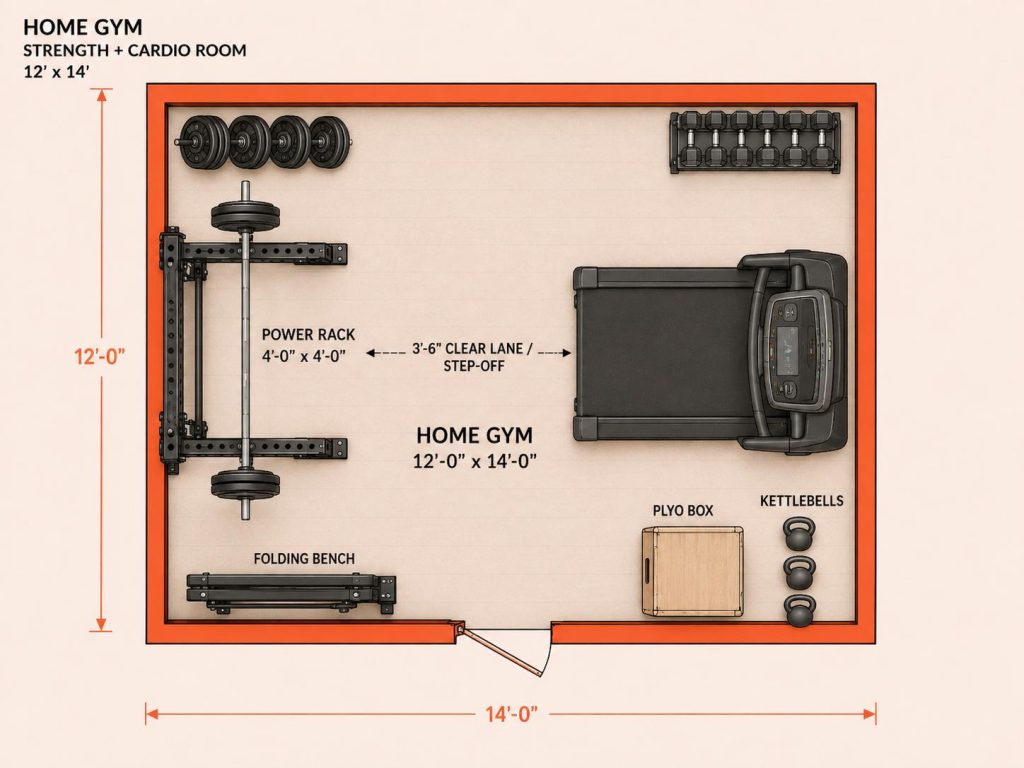
The following layouts show how different room sizes can support different equipment combinations. They are planning examples rather than exact construction plans.
Layout 1: Small Workout Corner
Example room size: 4 x 6 feet
24 sq ft
Suitable for:
- Resistance band workouts
- Bodyweight exercises
- Stretching and mobility
- Basic core training
Best for: Apartments, shared rooms, and beginners who want a simple setup.
Layout 2: Small Strength Training Gym
Example room size: 6 x 8 feet
48 sq ft
Suitable for:
- Adjustable dumbbell exercises
- Bench-supported training, if clearance allows
- Resistance band movements
- Floor exercises
Best for: People who want a compact but more versatile strength-training area.
Layout 3: Dedicated Strength Gym
Example room size: 10 x 12 feet
120 sq ft
Suitable for:
- Strength training with a suitable rack
- Dumbbell and bench workouts
- Accessory exercises
- More flexible workout arrangements
Best for: People who have a dedicated room and want a more complete strength-training setup.
Remember that these diagrams are conceptual. Actual equipment placement must be adjusted to the machine dimensions, movement clearance, door positions, windows, and safe access routes.
Garage Home Gym Dimensions: What Should You Consider?
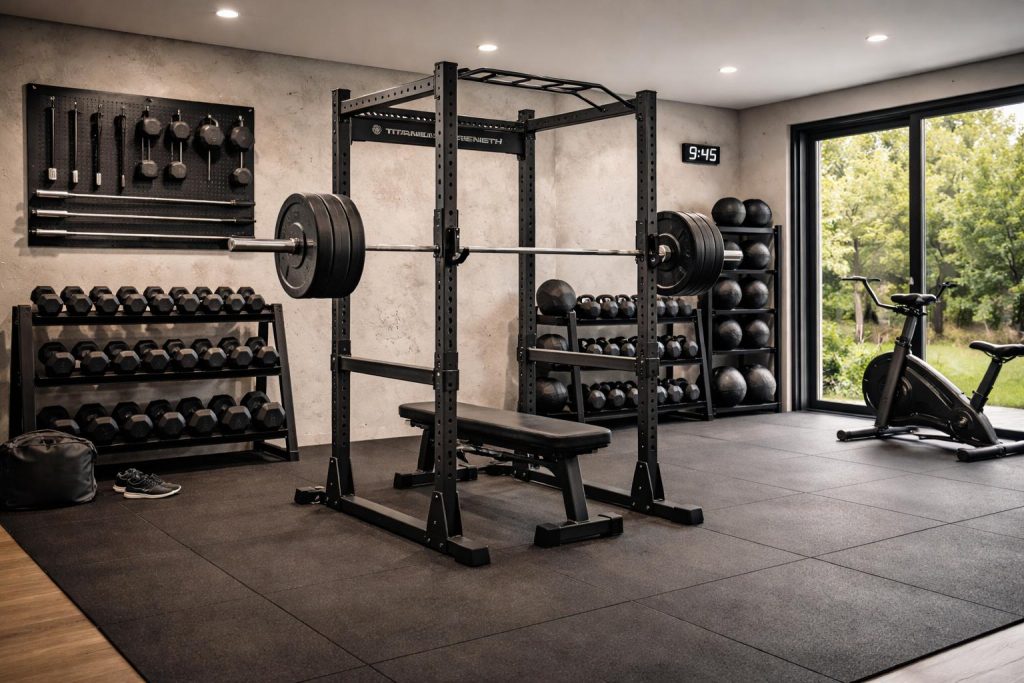
A garage can be an excellent location for a home gym because it may offer more open floor space than a spare bedroom. However, a garage also has some planning challenges.
Measure Around the Garage Door
Make sure equipment does not interfere with the garage door, tracks, opener, or vehicle access. Check the door’s full movement and keep equipment away from areas where it could be struck.
Check the Floor
Inspect the floor for cracks, uneven areas, moisture, and other issues. Heavy equipment should be placed on a suitable, stable surface. Use appropriate protective flooring where needed.
Plan for Ventilation and Temperature
Garages can become hot, cold, or humid depending on the climate and building design. Consider ventilation, airflow, lighting, and equipment storage conditions before setting up the room.
Leave Room for Storage
Weight plates, dumbbells, benches, and accessories can quickly make a garage feel crowded. Plan storage locations before moving equipment into the room.
How to Measure Your Home Gym Before Buying Equipment
Follow these steps to avoid purchasing equipment that does not fit your available space.
Step 1: Measure the Room
Measure the usable length, width, and ceiling height. Do not include areas blocked by permanent fixtures or inaccessible corners.
Step 2: Mark Fixed Obstacles
Identify doors, windows, radiators, electrical outlets, columns, and other obstacles that affect equipment placement.
Step 3: Check Equipment Dimensions
Compare each product’s published length, width, height, and folded dimensions with your room measurements.
Step 4: Add Movement Clearance
Account for exercise movement, loading weights, getting on and off equipment, and access around the machine.
Step 5: Plan Storage
Decide where dumbbells, plates, bands, and accessories will be stored when not in use.
Step 6: Test the Layout
Mark the proposed equipment footprints on the floor with tape before purchasing large machines.
Do not forget the usable area
A room measuring 10 x 12 feet does not necessarily provide 120 square feet of usable workout space. Built-in cabinets, doors, storage, and other obstacles reduce the area available for exercise.
Common Home Gym Space Planning Mistakes
Measuring Only the Frame
A machine may fit against the wall but still lack room for safe movement.
Ignoring Ceiling Height
Tall equipment and overhead exercises may not fit comfortably in a low-ceiling room.
Buying Too Many Machines
Multiple large machines can leave little room for actual exercise.
Forgetting Storage
Weight plates, dumbbells, and accessories need organized storage areas.
Blocking Access Routes
Equipment should not obstruct doors, exits, or normal movement through the room.
Ignoring Floor Protection
Heavy equipment and dropped weights can damage unsuitable flooring.
Frequently Asked Questions
What is a good size for a home gym?
A 6 x 8-foot area can work for a compact setup with adjustable dumbbells, a mat, and selected accessories. A larger 10 x 12-foot room provides more flexibility for benches, racks, and additional equipment. The right size depends on your workout routine and equipment dimensions.
Is 100 square feet enough for a home gym?
Yes, 100 square feet can support a useful home gym. You may be able to fit adjustable dumbbells, a bench, storage, and selected compact equipment. A full power rack or multiple large cardio machines may require more careful planning.
Is a 10 x 10 room big enough for a home gym?
A 10 x 10-foot room provides 100 square feet and can work well for many home gym setups. You can consider dumbbells, a bench, and some compact strength equipment. Measure the equipment and exercise clearance before deciding on a layout.
How much space do I need for a power rack?
The required area depends on the rack’s width, depth, height, barbell length, and exercise movements. You also need clearance for loading plates and moving safely around the rack. Always use the manufacturer’s dimensions and installation guidance when planning the layout.
Can I build a home gym in a small bedroom?
Yes. A small bedroom can accommodate a basic setup with resistance bands, adjustable dumbbells, and a mat. Choose equipment that is easy to store and keep enough open floor space for the exercises you plan to perform.
How much ceiling height do I need for a home gym?
There is no single ceiling-height requirement for every home gym. It depends on your height, the equipment’s frame height, and whether you perform overhead exercises. Check the equipment’s dimensions and required clearance before purchasing.
Can a garage be used as a home gym?
Yes. A garage can provide useful floor space for strength and cardio equipment. Check the garage door clearance, floor condition, ventilation, temperature, lighting, and storage before installing your equipment.
Final Verdict: Plan Your Home Gym Around Your Equipment
The best home gym dimensions depend on what you want to do, not simply how much floor space you have available. A small workout corner can support basic strength and mobility exercises, while a dedicated room offers more flexibility for benches, racks, and cardio equipment.
For beginners, a compact setup with adjustable dumbbells, resistance bands, and a mat is a sensible starting point. If you want to expand into heavier strength training, measure the room again before adding a bench or rack. For cardio equipment, account for the full operating footprint and the manufacturer’s clearance requirements.
Most importantly, measure the usable space, plan for movement, and leave enough room for safe access. A well-organized smaller gym is often more practical than a larger room filled with equipment that is difficult to use.
Explore More Home Gym Guides
Affiliate Disclosure: As an Amazon Associate, HeavyDutyChoice earns from qualifying purchases. This means we may receive a commission when you purchase through links on this page, at no additional cost to you.