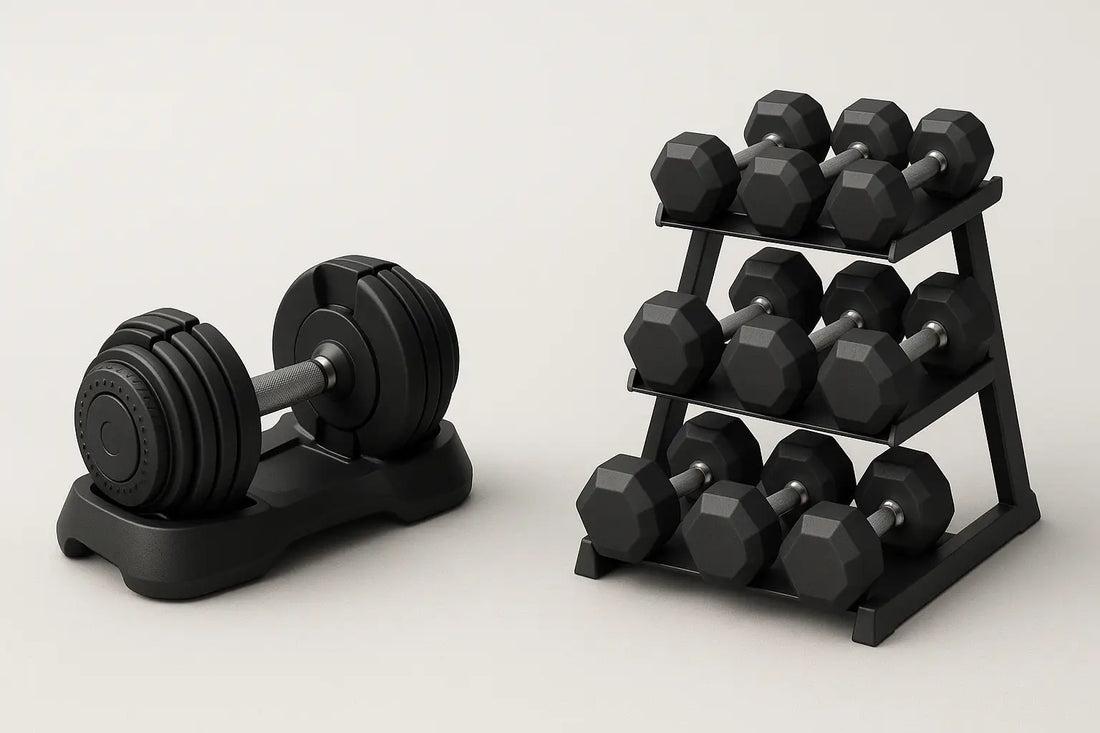
Choosing the right dumbbell weight is one of the most important decisions when building a home gym. A weight that is too light may not provide enough resistance, while a dumbbell that is too heavy can make it difficult to maintain proper form.
This dumbbell size chart explains common dumbbell weights, how to select the right size for different exercises, and what to consider when buying fixed or adjustable dumbbells. Whether you are a beginner or an experienced lifter, this guide will help you choose equipment that fits your training needs.
Quick Guide: Choosing the Right Dumbbell Weight
- Beginners: Start with manageable weights that allow controlled repetitions.
- General home workouts: Choose several weight options instead of relying on one pair.
- Strength training: Select weights according to the exercise and your current ability.
- Small home gyms: Consider adjustable dumbbells to save storage space.
- Progressive training: Look for a set that offers enough weight increments for future development.
These are general equipment-selection guidelines. Appropriate resistance varies by individual and exercise.
1. Dumbbell Size Chart: Common Weights and Uses
Dumbbells are available in a wide range of weights. Light dumbbells are commonly used for controlled movements and isolation exercises, while heavier options are useful for demanding strength exercises.
The chart below shows common individual dumbbell weights and examples of how they may be used.
| Dumbbell Weight | Common Applications | Typical User |
|---|---|---|
| 1–3 lb | Very light resistance, controlled movements, and some rehabilitation exercises | People needing very light resistance |
| 5 lb | Light curls, raises, and introductory exercises | Beginners and light-workout users |
| 8–10 lb | Curls, shoulder exercises, and selected upper-body movements | Beginners and general fitness users |
| 12–15 lb | Rows, presses, curls, and moderate resistance exercises | Users with some training experience |
| 20–25 lb | Heavier rows, presses, squats, and strength training | Intermediate users, depending on exercise |
| 30–40 lb | More demanding rows, presses, and lower-body movements | Experienced users |
| 45–50 lb and above | Heavy strength exercises and advanced training | Users who can safely handle heavier resistance |
Important: Individual Weight vs. Pair Weight
The dumbbell weights above refer to one dumbbell. A pair of 20 lb dumbbells weighs 40 lb combined. When shopping, check whether a listing specifies the weight of one dumbbell, a pair, or the entire set.
2. How to Choose Dumbbell Weight for Different Exercises
Different exercises use different muscle groups and movement patterns. This means you may need several dumbbell weights even within the same workout.
Biceps Curls
Curls isolate the biceps. Choose a weight that allows you to bend and straighten your arms without swinging your upper body.
Lateral Raises
Shoulder raises generally require lighter weights than many compound movements. Focus on controlled movement rather than lifting heavier dumbbells.
Dumbbell Rows
Rows often allow more resistance than isolation exercises. Maintain a stable torso and avoid using momentum to lift the weight.
Chest Press
Choose dumbbells that you can lower and press smoothly while keeping your shoulders and wrists comfortable.
Goblet Squats
Lower-body exercises may allow heavier resistance. However, the weight should not compromise balance, squat depth, or posture.
Dumbbell Lunges
Start with a manageable load that allows stable steps and controlled movement. Balance and coordination are important.
A useful rule is to choose a weight that challenges the target muscles while allowing you to maintain consistent technique throughout the exercise.
3. Dumbbell Weight Recommendations by Experience Level
For Beginners
If you are new to strength training, avoid buying a heavy dumbbell set simply because it appears to offer better value. A smaller range of manageable weights is often more practical.
- Start with weights that allow controlled repetitions.
- Choose lighter options for smaller muscle groups and isolation exercises.
- Learn correct movement patterns before increasing resistance.
- Consider adjustable dumbbells if you want several weight options in a small space.
For Intermediate Users
People who already train regularly may benefit from a broader selection of dumbbell weights. Having several increments makes it easier to adjust resistance between exercises.
- Consider a fixed-weight collection or adjustable set with a wider range.
- Make sure the available weights support both upper- and lower-body exercises.
- Look for practical weight increments rather than large jumps between settings.
For Advanced Users
Experienced lifters may require heavier dumbbells for rows, presses, squats, and other demanding exercises.
- Check the maximum weight available per dumbbell.
- Look for compatible expansion kits if you choose an expandable adjustable set.
- Consider a heavy-duty rack if purchasing multiple fixed-weight pairs.
- Check handle dimensions, grip comfort, and storage requirements.
Buying Tip
Do not buy the heaviest dumbbells you can find just because you expect to get stronger. Choose a practical weight range for your current training and a product that can accommodate future progression.
4. Fixed Dumbbells vs. Adjustable Dumbbells
After deciding what weight range you need, choose between fixed-weight dumbbells and adjustable dumbbells. Both types can work well in a home gym, but they serve different needs.
PowerBlock Elite EXP Adjustable Dumbbells
PowerBlock Elite EXP is an adjustable dumbbell product line designed to replace multiple pairs of traditional dumbbells. Its commonly listed Stage 1 configuration covers 5–50 lb per hand. Compatible expansion stages can extend the range, but expansion kits are sold separately.
Why consider it: A space-saving choice for people who want several weight options without storing many individual pairs.
Check before buying: Confirm the selected Stage 1 or expanded configuration, included accessories, and compatibility of any expansion kit.
CAP Barbell Rubber Hex Dumbbells
CAP Barbell rubber hex dumbbells are a fixed-weight option for buyers who prefer traditional individual dumbbells. They are available in different weight options, making it possible to build a collection gradually.
Why consider them: A straightforward choice for home gyms that prefer fixed weights and quick transitions between exercises.
Check before buying: Individual dumbbells, pairs, and multi-weight packages may be listed separately. Confirm the selected listing’s quantity and total weight.
If you want to build a more complete home workout station, read our guide to the best free weight sets with benches.
| Home Gym Setup | Suggested Equipment | Main Advantage |
|---|---|---|
| Starter setup | A few carefully selected dumbbell pairs | Lower initial investment |
| General home gym | Several light, medium, and heavier options | More exercise flexibility |
| Space-saving setup | One adjustable dumbbell set | Less storage space |
| Advanced home gym | A wider fixed-weight range or expandable adjustable set | Supports more training variations |
6. Common Mistakes When Choosing Dumbbell Sizes
Choosing Weights That Are Too Heavy
Excessive resistance can encourage poor form, momentum, and uncontrolled repetitions.
Buying Only One Weight
One pair may not provide suitable resistance for every exercise in your workout.
Ignoring Future Progression
A set with no practical way to increase resistance may need replacing as your training changes.
Forgetting Storage Requirements
Multiple fixed-weight pairs take up space and may require a suitable rack.
7. Frequently Asked Questions
What dumbbell weight should a beginner start with?
There is no single starting weight for everyone. Choose a manageable weight for each exercise that allows controlled repetitions without swinging or losing proper form. You may need lighter dumbbells for shoulder raises and heavier ones for some lower-body exercises.
Are 10 lb dumbbells enough for a home workout?
They can be useful for many light exercises and some upper-body movements. However, they may not provide enough resistance for every exercise or as your strength improves. A broader weight range offers more flexibility.
Are 20 lb dumbbells considered heavy?
It depends on the exercise and the person using them. A 20 lb dumbbell may be challenging for lateral raises but manageable for rows or certain lower-body exercises. Dumbbell weight should always be evaluated in relation to the movement.
Should I buy dumbbells in pounds or kilograms?
Either measurement works. The important thing is to understand the listed unit and avoid confusing the weight of one dumbbell with the combined weight of a pair. Many US-market dumbbells are labeled in pounds.
What is the difference between dumbbell weight and total set weight?
Dumbbell weight usually refers to one individual dumbbell. Total set weight may include both dumbbells, additional plates, handles, and other accessories. Always check the product description to understand exactly what is included.
Are adjustable dumbbells worth buying?
They can be a good choice if you need several weight options but have limited storage space. Compare the available weight range, adjustment mechanism, expansion options, and warranty before purchasing.
Final Verdict: Choose Dumbbells That Match Your Training
The best dumbbell size is not necessarily the heaviest one or the largest set you can afford. It is the weight that allows you to perform your exercises with control while providing enough resistance for your current training goals.
For a small home gym, adjustable dumbbells can be a practical space-saving solution. If you prefer fixed weights, start with a useful range and add pairs as your training needs change.
Use this dumbbell size chart as a starting point, compare different dumbbell types, and check the actual weight configuration before purchasing.
Explore More Free Weight Guides
Disclosure: As an Amazon Associate, HeavyDutyChoice earns from qualifying purchases. Product availability, configurations, and prices may change. Always confirm the selected product’s specifications and package contents on Amazon before purchasing.