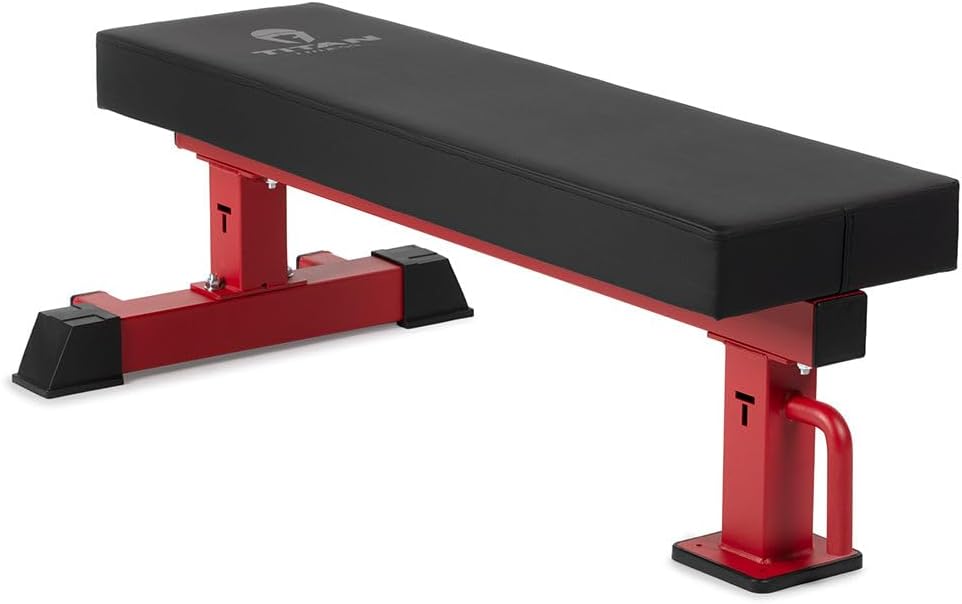
Finding the right weight bench for hip thrusts can make a big difference in your home glute-training setup. Unlike a bench press, a hip thrust pushes your upper body against the edge of the bench and can cause a lightweight or poorly positioned bench to slide backward. The right setup needs a stable base, a comfortable pad, and a height that works for your body.
You do not necessarily need a specialized hip thrust machine. A sturdy flat weight bench can work well, while a dedicated hip thrust bench may offer a more convenient setup for glute-focused training. This guide compares both options so you can choose equipment that fits your workouts, space, and budget.
- A stable base with feet that grip the floor and resist sliding.
- A firm, sufficiently wide pad to support your upper back.
- A bench height that allows comfortable hip movement and a controlled lockout.
- A clearly stated weight rating appropriate for your body weight and training load.
- A simple setup that does not wobble, tip, or shift during repetitions.
Safety note: Bench height and fit depend on your body proportions. Start with bodyweight or a light load, check that the bench cannot slide or tip, and increase resistance gradually. Verify the exact product’s instructions and capacity before using a loaded barbell.
Best Weight Benches for Hip Thrusts
These five options represent different approaches to hip thrust training, from heavy flat benches to purpose-built glute equipment. The links below open Amazon search results for the named product or model family. Check the exact listing, current availability, dimensions, and specifications before buying.
1. Titan Fitness TITAN Series Single Post Flat Bench
Best for: Lifters who want a substantial flat bench for hip thrusts and other strength exercises.
A heavy flat bench can be a practical option for hip thrusts because its mass may help resist backward movement. The Titan Fitness TITAN Series Single Post Flat Bench is worth researching if stability is your main priority and you have room for a substantial piece of equipment.
- Why consider it: A dedicated flat-bench design can provide a broad, continuous support surface.
- Check before buying: Confirm the current model’s bench weight, pad dimensions, height, and rated capacity.
- Potential drawback: A heavy bench can be difficult to reposition, even when it has transport wheels.
2. Titan Fitness Elite Series Single Post Flat Bench
Best for: Buyers looking for a flat bench that can serve multiple training purposes.
The Titan Fitness Elite Series is another flat-bench option to compare. A general-purpose bench can be useful if you want to perform hip thrusts as well as dumbbell presses, supported rows, and other exercises without dedicating floor space to a separate glute machine.
- Versatility: A flat bench can support several upper-body and lower-body accessory exercises.
- Fit: Check the pad height and width against your own proportions.
- Trade-off: A standard bench does not provide the built-in foot platform or resistance mechanism found on some specialized hip thrust machines.
3. REP Fitness FB-3000 Flat Weight Bench
Best for: Home gym users who want a traditional flat bench for mixed strength training.
The REP Fitness FB-3000 is a flat utility bench worth comparing if you prefer conventional gym equipment rather than a bench designed exclusively for glute training. It can be a practical multi-purpose choice, provided the bench’s dimensions and capacity meet your requirements.
- Multi-purpose use: Consider it if you also perform flat dumbbell presses and other bench-supported movements.
- Pad feel: Check the upholstery, firmness, and width to see whether the support surface suits your upper back.
- Important: Confirm the exact current model’s published specifications; ratings and dimensions may differ between sources or revisions.
4. PROIRON Flat Weight Bench
Best for: Buyers comparing a straightforward flat bench for home workouts.
A basic flat bench may be enough if you want to perform hip thrusts alongside a range of dumbbell exercises. PROIRON flat benches are worth investigating as a more budget-oriented option, but do not assume that every model has the same height, frame construction, or weight rating.
- Budget: Compare the full price with the bench’s construction and dimensions.
- Stability: Inspect the feet, frame layout, and locking or fastening hardware where applicable.
- Possible limitation: A bench that is too tall or too light may be a poor fit for loaded hip thrusts, even if its advertised static capacity looks high.
5. HANDBODE Hip Thrust Bench
Best for: Buyers who want equipment designed specifically for hip thrusts.
A dedicated hip thrust bench may offer a more convenient starting position and a support surface intended for glute-focused training. The HANDBODE Hip Thrust Bench is a model to research if you would rather have specialized equipment than adapt a standard weight bench.
- Specialized design: Compare the support pad, base footprint, and setup process with a conventional flat bench.
- Floor grip: Check whether the base is suitable for your flooring and whether the unit may shift during exercise.
- Capacity: Verify the manufacturer’s current rating and clarify what the stated capacity includes.
- Trade-off: A specialized bench may be less useful for ordinary pressing exercises than a standard flat or adjustable bench.
Hip Thrust Bench Comparison
| Option | Best for | What to verify |
|---|---|---|
| Titan TITAN Series | A substantial flat bench | Bench weight, pad dimensions, height, capacity |
| Titan Elite Series | General strength training | Height, base stability, dimensions |
| REP FB-3000 | Multi-purpose home gym use | Current specifications and pad fit |
| PROIRON Flat Bench | Budget-conscious buyers | Exact model, height, weight rating |
| HANDBODE Hip Thrust Bench | Dedicated glute training | Base grip, pad design, capacity |
How to Choose the Right Bench for Hip Thrusts
1. Check the bench height
Bench height affects your starting position and the range of motion you can achieve. A bench that is too tall may make it difficult to reach a comfortable top position, while a very low surface changes the movement in the opposite direction.
As a starting point, compare benches around 16–17 inches high with your own body proportions, but do not treat that range as a universal requirement. Try a controlled bodyweight setup if possible and confirm that the edge supports your upper back comfortably.
2. Prioritize stability over the biggest capacity number
During a hip thrust, your body drives against the bench horizontally. A bench that shifts can disrupt your movement, even if its published capacity is high. Look at the overall base design, the feet, the bench’s own weight, and the flooring where you plan to train.
Do not rely on bench weight alone as proof of stability. Test the setup carefully without a heavy load and stop if the bench moves or tips.
3. Choose a comfortable pad width
Your upper back rests against the edge of the bench during a hip thrust. A pad that is too narrow may create uncomfortable pressure, while an overly wide pad may interfere with your preferred shoulder position. Compare the actual dimensions rather than relying on product labels such as “wide” or “extra-wide.”
4. Look for firm padding
A firm pad provides a consistent contact surface. Very soft padding may compress more than expected under pressure, which can change how the bench feels from one repetition to the next. Review pad thickness, material, and user feedback when available.
5. Verify total load capacity
Before using a loaded barbell, read the manufacturer’s capacity definition. Check whether the rating covers the user plus the external load, and whether it applies to the intended exercise. A static load figure should not automatically be interpreted as a guarantee for every dynamic movement.
6. Decide between a flat bench and a dedicated hip thrust bench
A flat bench is often the more versatile option if you also train your chest, shoulders, and back. A dedicated hip thrust bench may be more convenient if glute training is the main goal and you want a setup designed around that movement.
Consider the equipment’s footprint, storage requirements, price, and the other exercises you plan to perform before making a decision.
How to Set Up a Weight Bench for Hip Thrusts
- Place the bench on a level surface. Check that all feet make firm contact with the floor and that the bench cannot rock or slide.
- Position your upper back carefully. The bench edge should support your upper back comfortably without pressing painfully into your neck.
- Begin with bodyweight repetitions. Confirm that you can move through a comfortable range without the bench shifting.
- Add resistance gradually. Use an appropriate barbell pad or other suitable protection when needed, and secure the load properly.
- Keep each repetition controlled. Avoid bouncing against the bench or using momentum to force the top position.
- Stop if the setup moves. Reposition or replace unstable equipment before adding more weight.
Common Mistakes to Avoid
- Buying by advertised capacity alone: Capacity does not tell the whole story about stability or fit.
- Ignoring height: The wrong height can make the movement uncomfortable or limit your usable range.
- Using a lightweight bench on a slippery floor: Check the floor grip and bench stability before loading it.
- Choosing a pad without checking its dimensions: Pad width and firmness affect comfort during repeated sets.
- Assuming every version is identical: Verify the exact model and its current instructions.
- Increasing resistance too quickly: Establish a stable setup and controlled technique before adding load.
Frequently Asked Questions
Can I use a regular weight bench for hip thrusts?
Yes, a regular flat bench can work if its height, pad, and base are suitable and it remains stable during the movement. Always check the manufacturer’s instructions and test the setup with bodyweight before adding resistance.
What height bench is best for hip thrusts?
Many lifters start by comparing benches around 16–17 inches high, but the best fit depends on body proportions and technique. Test your setup and choose a height that allows a comfortable range of motion without the bench edge pressing uncomfortably into your upper back.
Is a heavier bench better for hip thrusts?
A heavier bench may be less likely to slide, but weight alone does not guarantee stability. Base design, floor grip, pad placement, and the way you load the bench also matter.
Is a dedicated hip thrust bench worth buying?
It may be worthwhile if hip thrusts are a major part of your routine and you value a specialized setup. If you also perform many pressing and dumbbell exercises, a conventional flat or adjustable bench may offer better overall versatility.
Can I use an adjustable weight bench for hip thrusts?
Potentially, provided the manufacturer permits the intended use and the bench is fully secured in its flat position. Check the adjustment locks and confirm that the bench remains stable under horizontal force. A fixed flat bench may offer a simpler setup.
Final Verdict
The best weight bench for hip thrusts is one that fits your body, stays firmly in place, and supports the type of training you actually do. A substantial flat bench such as the Titan Fitness TITAN Series is worth comparing if stability is your main concern. The Titan Elite Series and REP FB-3000 are alternatives to investigate for mixed home-gym training, while PROIRON offers another flat-bench option and HANDBODE is worth researching for a dedicated hip thrust setup.
Before buying, verify the exact model, dimensions, weight rating, and intended use on the current Amazon listing. For more equipment comparisons, visit the Weight Benches category.
Disclosure: As an Amazon Associate, HeavyDutyChoice may earn from qualifying purchases. Product availability and specifications can change. Always confirm details on the current listing before purchasing.