Quick Guide
A heavy-duty elliptical cross trainer should match your body weight, stride, workout needs, and available space. Check the exact model’s maximum user-weight rating, then compare stability, pedal comfort, resistance, dimensions, and warranty before buying.
A cross trainer can provide a low-impact cardio workout while engaging both the upper and lower body. For larger users, however, the right machine is not simply the one with the biggest weight-capacity number. It should also feel stable, allow a comfortable stride, and fit safely into your home gym.
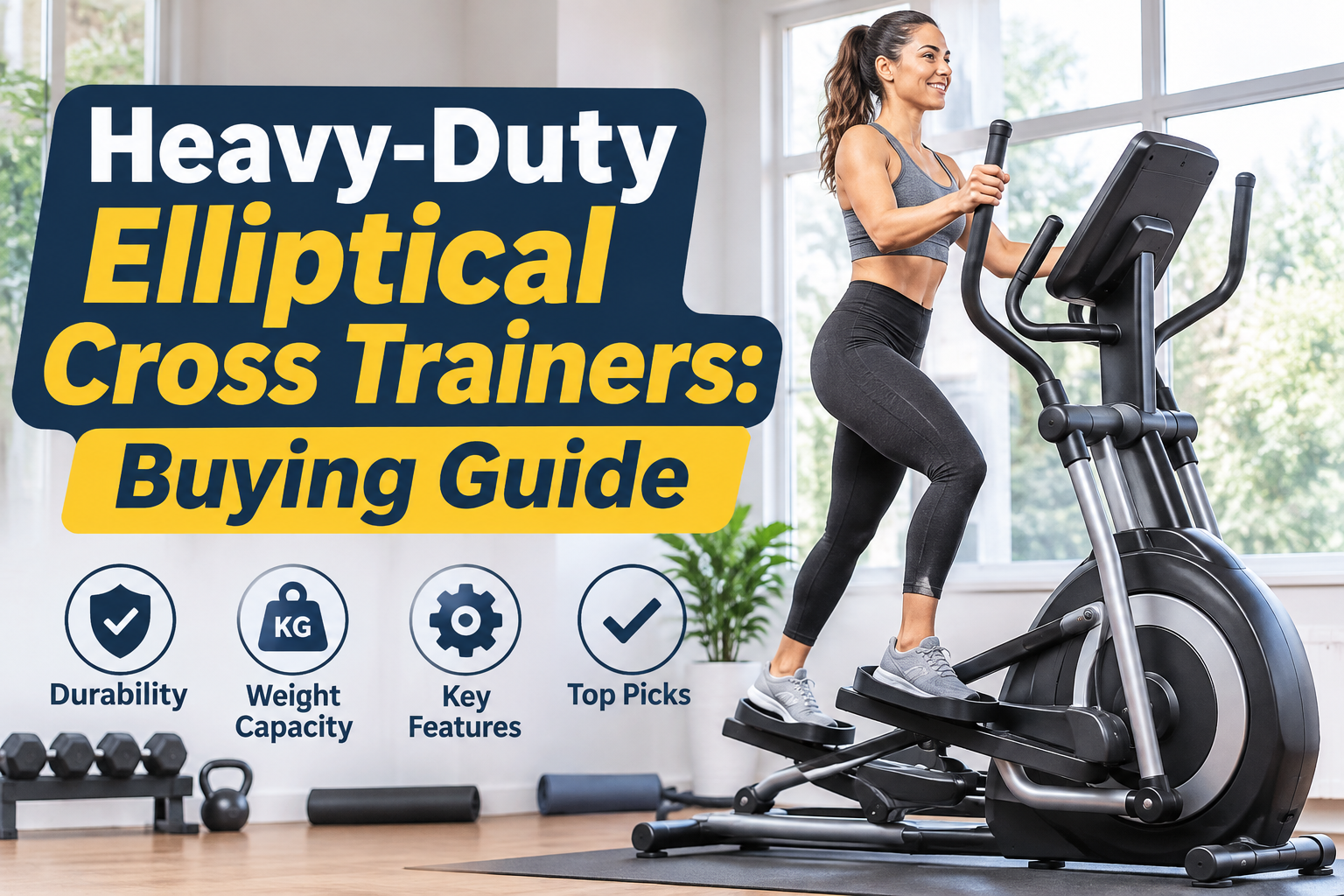
This buying guide explains the key features to compare when shopping for a heavy-duty elliptical cross trainer. Use it alongside the manufacturer’s current specifications and owner’s manual, since capacity and features can vary between model versions.
Capacity comes first
Never exceed the manufacturer’s maximum user-weight rating. If your weight is close to the listed limit, consider a model with additional capacity rather than choosing one with little margin.
What Is an Elliptical Cross Trainer?
An elliptical cross trainer uses moving pedals that follow an oval-like path. Many models also include moving handlebars, allowing you to work your arms as you pedal. The motion is generally lower impact than running, but the feel and range of motion differ by machine.
Some products use “elliptical” and “cross trainer” interchangeably. When comparing listings, focus on the actual design and specifications rather than the product name alone.
6 Features to Check Before Buying
1. Maximum user weight
Confirm the rating for the exact model and version. Treat it as a firm limit, not a suggested target.
2. Frame stability
Look for a solid base and clear assembly instructions. A high capacity alone does not guarantee a wobble-free workout.
3. Stride length
Choose a stride that allows a natural movement for your height. If possible, test the motion before purchasing.
4. Pedal comfort
Check pedal width, spacing, and grip. Your feet should feel secure without being cramped.
5. Resistance range
Adjustable resistance helps you vary workout intensity and progress gradually.
6. Dimensions and access
Measure the machine footprint, ceiling clearance, and room to step on and off safely.
Types of Cross Trainers to Consider
Full-size elliptical cross trainer
A full-size machine may offer a more substantial frame and a broader range of workout features. It can be a good option when you have enough room and want a dedicated cardio machine. Compare the dimensions and capacity of each model rather than assuming all full-size ellipticals are heavy-duty.
Compact or space-saving elliptical
Compact machines can work in smaller rooms, but check whether the shorter stride and narrower platform feel comfortable. Do not trade away a suitable weight rating or safe footing just to save floor space.
Elliptical with moving handlebars
Moving handlebars can add upper-body involvement. If you prefer to focus on lower-body movement, check whether the machine also has fixed handles for balance and support.
How to Compare Models
Before ordering, make a short comparison of the exact models you are considering. Record the following details from each product listing or manufacturer’s manual:
- Maximum user-weight rating
- Stride length and pedal dimensions
- Machine footprint and assembled height
- Resistance levels and any incline adjustment
- Warranty coverage and customer-support information
- Delivery, assembly, and return requirements
Product listings may combine multiple versions or show specifications from an older model. If a key detail is missing or inconsistent, verify it with the manufacturer before purchasing.
Set Up Your Home Workout Area
Measure the space before delivery. Leave enough room to get on and off the machine and to move naturally during exercise. Check the ceiling height, doorway width, and route from the delivery point to the workout area.
Place the machine on a level surface and follow the manual’s instructions for assembly and maintenance. If you use an equipment mat, make sure it does not make the machine unstable or interfere with its feet.
Frequently Asked Questions
Is an elliptical cross trainer suitable for heavier users?
It may be an option for low-impact cardio, provided the user stays within the machine’s weight rating and can use it comfortably. Choose equipment that fits your needs and follow any advice from your healthcare professional about exercise.
Does a higher weight rating mean the machine will last longer?
Not automatically. Capacity is only one specification. Build quality, correct assembly, regular maintenance, and use within the manufacturer’s instructions also matter.
Should I choose the longest stride available?
Not necessarily. The most suitable stride is one that feels natural for your height and movement. If possible, test the machine or review its return policy before buying.
What should I do if the elliptical rocks during use?
Stop using it and check the assembly, floor level, and manufacturer’s troubleshooting instructions. Do not continue exercising on a machine that feels unstable.
Bottom Line
A good heavy-duty elliptical cross trainer combines an appropriate user-weight rating with a comfortable stride, secure pedals, stable construction, and a footprint that fits your home. Verify the current specifications for the exact model, and choose fit and safety over extra features.
As an Amazon Associate, HeavyDutyChoice may earn from qualifying purchases. Product specifications and availability can change; verify details on the product page before ordering.