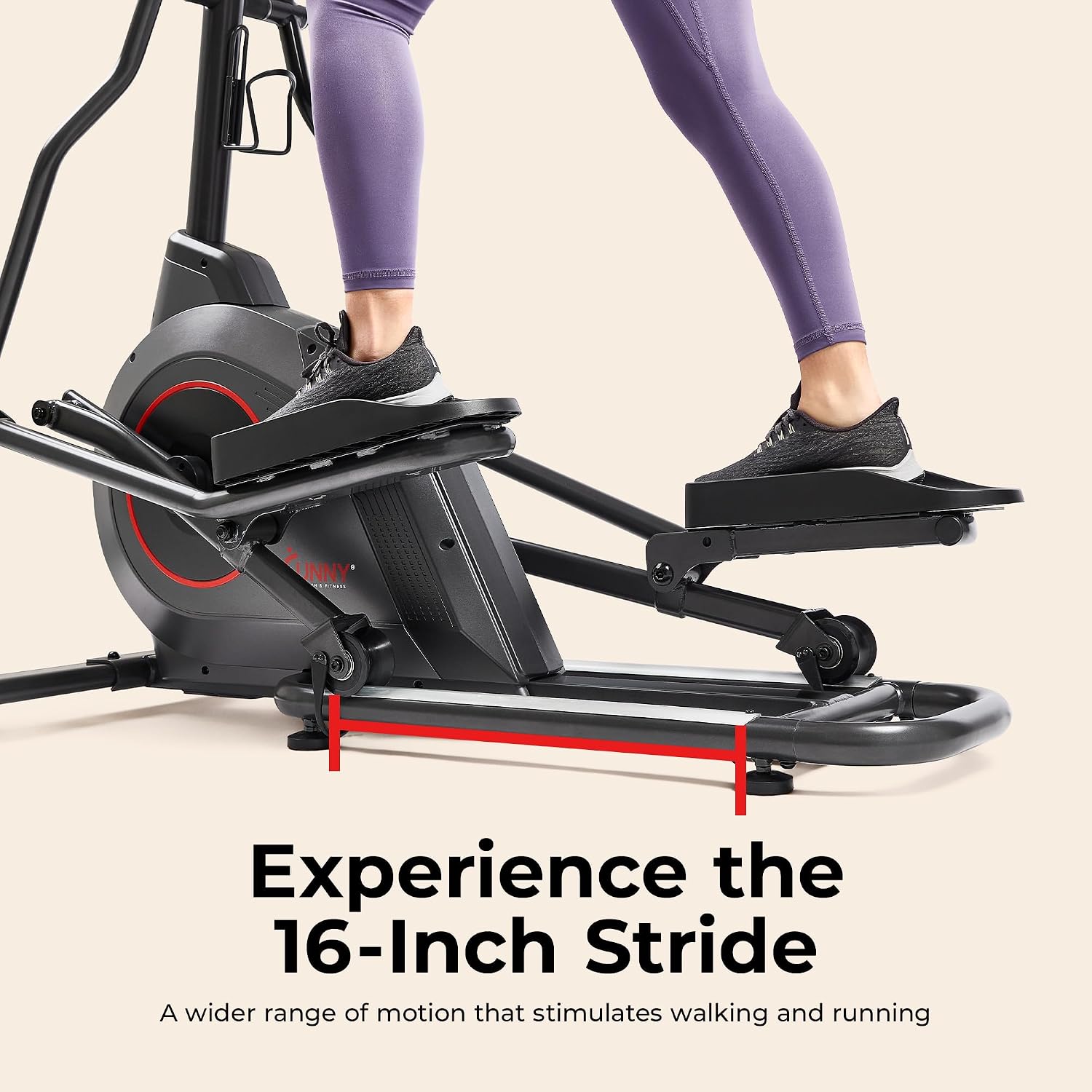
Quick Guide: Are Front-Drive Ellipticals Worth Buying?
Front-drive elliptical machines place the flywheel and main drive assembly at the front of the machine. This design is common in home ellipticals and can provide a climbing-oriented workout feel, with many models offering a good combination of features and value.
- Best for: Home users who prefer a slightly climbing-oriented elliptical motion.
- Main advantage: A wide selection of home models, including options with adjustable incline and resistance.
- Main drawback: Some designs use track-and-roller pedal systems that may require periodic cleaning and maintenance.
- Most important buying factor: How naturally the stride, pedal angle, and spacing fit your body.
When shopping for an elliptical trainer, one of the first design differences you will encounter is the drive system. Some machines place the flywheel at the front, while others position it behind the pedals or on either side of the user.
Front-drive elliptical machines are a popular option for home gyms because they offer a distinctive pedal motion and are available across a range of budgets. However, the location of the flywheel alone does not determine whether a machine is comfortable, stable, or suitable for heavier users.
In this guide, we explain how front-drive ellipticals work, examine their advantages and disadvantages, and compare several models worth considering. We will also cover the specifications that matter most before you spend money on a home elliptical.
Important: A front-drive design does not automatically mean a shorter stride, lower price, or better stability. Compare the actual machine specifications and test the movement whenever possible.
1. What Is a Front-Drive Elliptical Machine?
A front-drive elliptical is an exercise machine with its primary drive assembly and flywheel positioned at the front of the frame, ahead of the foot pedals.
When you pedal, the drive system transfers your movement through a linkage mechanism. Depending on the model, the pedals may travel on rollers along tracks or use another guided linkage arrangement.
How the Front-Drive Design Works
The flywheel creates rotational inertia, while the resistance system controls how difficult it is to pedal. As you move your feet, the pedals follow a predefined elliptical path.
On many front-drive designs, the motion has a slightly climbing-oriented feel. Some machines also include adjustable incline, allowing you to change the pedal path and workout intensity.
However, not all front-drive machines feel the same. Two ellipticals with the same drive position can have very different stride lengths, pedal angles, resistance systems, and overall movement patterns.
Front-Drive vs. Rear-Drive vs. Center-Drive
There are three common elliptical drive configurations:
Front-Drive
Flywheel sits at the front. Many models provide a climbing-oriented pedal feel and use a front housing with guided pedal movement.
Rear-Drive
Flywheel sits behind the user. Some models provide a flatter-feeling stride and use longer pedal arms or track systems.
Center-Drive
Drive assemblies sit on either side of the user. These machines often have a more compact central layout.
There is no universally superior drive type. Your body proportions, preferred movement, available floor space, and training goals should guide the decision.
For a more detailed comparison, see our guide: Front Drive vs. Rear Drive Elliptical: Which Is Better?
2. Pros of Front-Drive Elliptical Machines
1. A Climbing-Oriented Workout Feel
Many front-drive ellipticals produce a pedal motion that feels somewhat like climbing stairs or walking uphill. The movement can be useful for people who enjoy a more vertical-feeling workout rather than a flatter gliding sensation.
Models with adjustable incline provide additional ways to change the exercise experience. Increasing the incline can make the workout more demanding, depending on the machine’s design and resistance settings.
2. A Wide Range of Home-Gym Options
Front-drive machines are available in entry-level, midrange, and higher-end categories. Buyers can choose between relatively simple magnetic-resistance machines and more advanced models with powered incline, adjustable pedals, larger displays, and connected workout features.
This variety makes it easier to compare machines based on budget and desired features instead of being limited to one type of elliptical.
3. Incline and Resistance Options on Selected Models
Some front-drive ellipticals combine adjustable resistance with a motorized or manually adjustable incline. This gives users more control over workout difficulty and movement variation.
Keep in mind that incline is not standard on every front-drive machine. Check the product specifications carefully rather than assuming that all models provide it.
4. A Practical Choice for Home Cardio
Many front-drive models are designed for residential use and include features such as transport wheels, device holders, water-bottle holders, and built-in workout programs.
For someone building a home gym, these features can make a front-drive elliptical a practical option for regular cardio sessions.
3. Cons of Front-Drive Elliptical Machines
1. Some Models Have Track-and-Roller Maintenance Needs
Many front-drive ellipticals use rollers that travel along pedal tracks. Dust, dirt, and debris can accumulate around moving components, and worn or poorly maintained parts may contribute to noise or an uneven feel.
Follow the manufacturer’s cleaning and lubrication instructions. Do not apply lubricant to rollers, tracks, or other components unless the manufacturer specifically recommends it.
2. The Pedal Motion May Not Suit Everyone
A front-drive machine can feel more like stepping or climbing than natural level-ground walking. Some users enjoy this movement, while others prefer a flatter or more extended stride.
The actual experience depends on the machine’s geometry, stride length, pedal articulation, and incline settings. Try the machine before buying if you are unsure about the motion.
3. Not Every Model Offers a Long Stride
Stride length is particularly important for taller users. Some front-drive machines have an 18-inch stride, while others offer 20 inches or more.
If the stride is too short for your natural movement, you may feel cramped. A longer stride is not automatically better either; it should match your height and comfort.
Read our related guide: Elliptical Machine Stride Length: How to Choose.
4. Large Front Housings Can Affect Room Layout
The flywheel housing is located at the front, but this does not necessarily mean the complete machine has a smaller footprint. The overall length, pedal travel, handle movement, and required clearance all matter.
Measure the assembled dimensions and allow additional space around the machine for safe entry, exit, and exercise.
| Advantages | Disadvantages |
|---|---|
| Climbing-oriented movement on many models | Movement may not suit every user |
| Wide range of home-gym options | Feature sets vary significantly |
| Some models offer adjustable incline | Incline is not available on every model |
| Suitable options for residential cardio | Track-and-roller systems may need maintenance |
| Available across several price ranges | Some models may have limited stride length |
4. Three Front-Drive Elliptical Machines to Consider
The following models illustrate different approaches to front-drive elliptical design. They are not identical in price, features, or intended use, so compare their specifications against your own requirements.
1. SOLE E20 Elliptical
A straightforward front-drive option for home cardio.
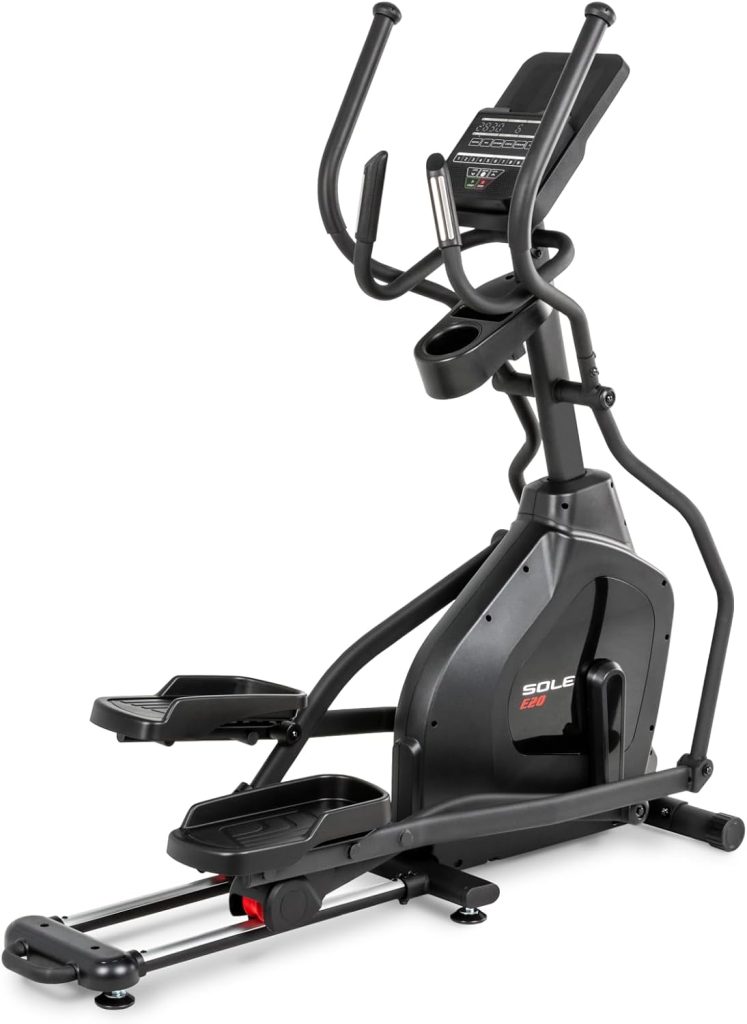
The SOLE E20 is an entry-level model in the SOLE front-drive elliptical lineup. Its 18-inch stride and magnetic resistance make it a model worth considering if you want a conventional home elliptical without paying for every premium feature.
Key specifications
- Drive system: Front-drive
- Stride length: 18 inches
- Flywheel: 14.3 lb
- Resistance: ECB magnetic
- Maximum user weight: 300 lb
Why consider it: The E20 provides a relatively simple way to get a front-drive elliptical from an established fitness-equipment brand. Its 18-inch stride may suit some users, but taller buyers should compare it with longer-stride alternatives.
Potential limitation: It has fewer premium features than higher-level models. Check the current console, warranty, and resistance specifications for the exact version being sold.
2. SOLE E35 Elliptical
A more feature-rich front-drive option with a longer stride.
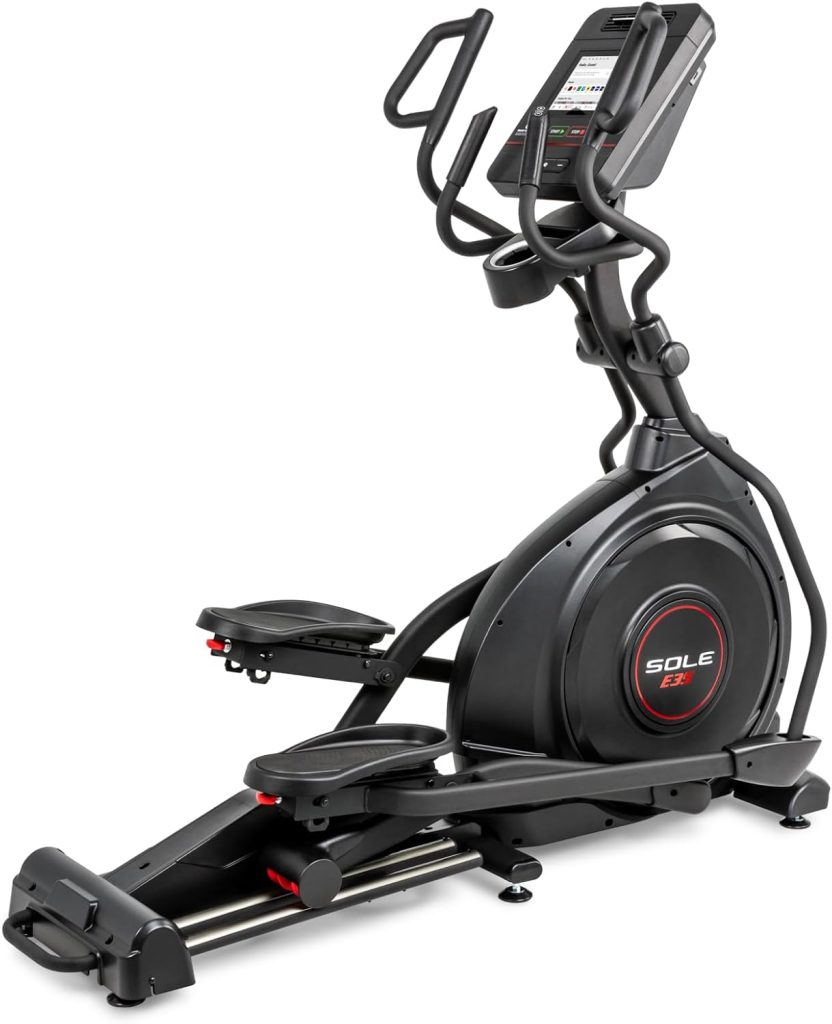
The SOLE E35 is a higher-level front-drive elliptical with a 20-inch stride, adjustable incline, and articulating foot pedals. It is worth comparing if you want more movement options and a machine designed for regular home training.
2026 model specifications
- Drive system: Front-drive
- Stride length: 20 inches
- Flywheel: 25 lb
- Resistance: 20 levels of ECB magnetic resistance
- Incline: 20 power incline levels
- Maximum user weight: 350 lb
Why consider it: The longer stride, adjustable pedals, and power incline provide more flexibility than a basic fixed-stride machine. The 350-pound capacity is also worth noting for buyers who need a higher weight rating.
Potential limitation: It is a larger investment and requires a suitable amount of floor and ceiling clearance. Make sure the current listing matches the 2026 specification set before purchasing.
3. Horizon Fitness EX-59 Elliptical
A residential front-drive elliptical with an 18-inch stride.
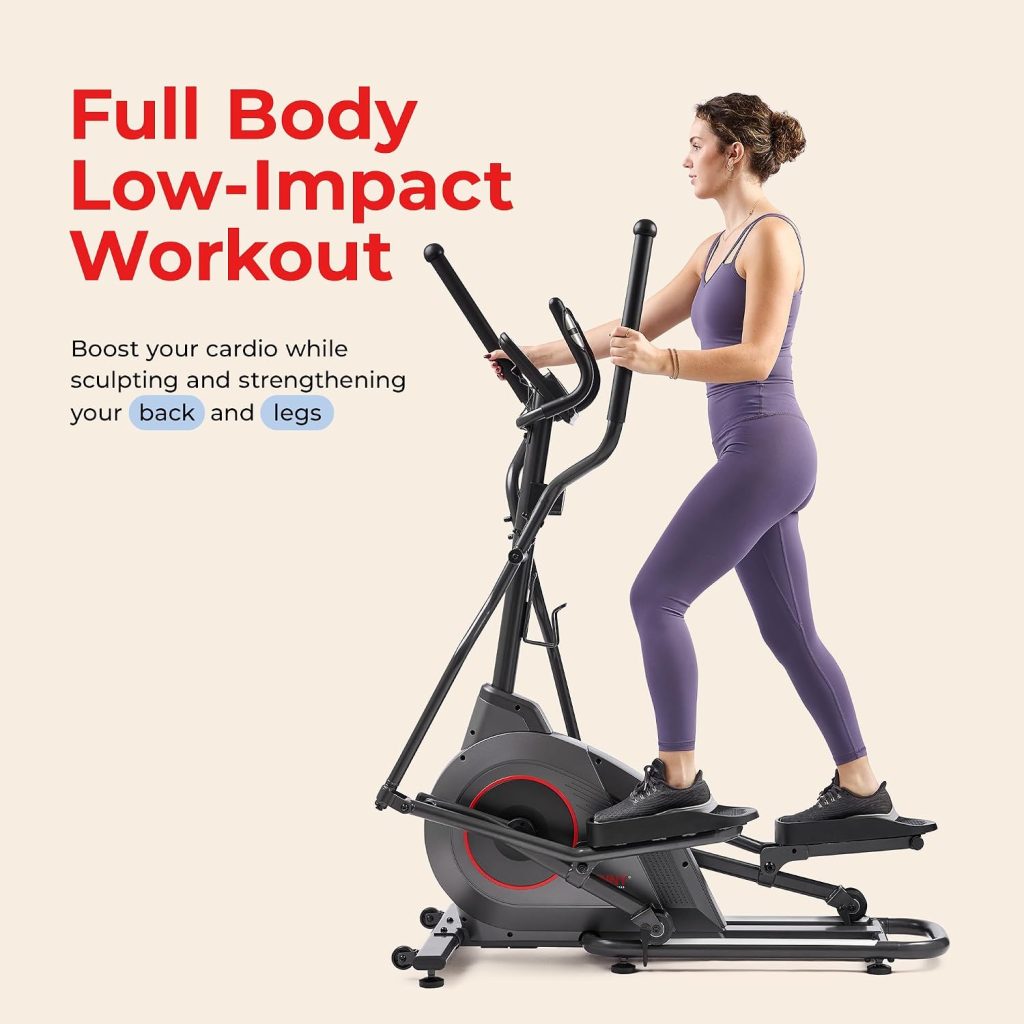
The Horizon EX-59 uses the brand’s SixStar front-drive frame. It offers an 18-inch stride, a relatively narrow pedal spacing, and electronically adjustable resistance. It is a useful comparison for buyers who want a conventional home elliptical with straightforward controls.
Key specifications
- Drive system: SixStar front-drive
- Stride length: 18 inches
- Flywheel: Approximately 14–15.4 lb, depending on specification version
- Resistance: 10 electronically adjustable levels
- Step-on height: 10 inches
- Maximum user weight: 300 lb
- Assembled dimensions: Approximately 73″ L × 24″ W × 65–66″ H
Why consider it: The EX-59 combines a front-drive layout with a low step-on height, oversized foot pedals, and a narrow Q factor. These details may matter to buyers who prioritize comfortable positioning and easy access.
Potential limitation: Its 18-inch stride and 300-pound user capacity may not meet the needs of every taller or heavier user. Compare those figures with your own requirements before buying.
Quick Comparison
| Model | Stride | Weight Capacity | Notable Feature |
|---|---|---|---|
| SOLE E20 | 18″ | 300 lb | Entry-level front-drive option |
| SOLE E35 | 20″ | 350 lb | Power incline and articulating pedals |
| Horizon EX-59 | 18″ | 300 lb | Low step-on height and narrow pedal spacing |
Specifications refer to the model versions described in this guide. Manufacturers may update products, and specifications can vary by market or production year. Confirm the exact model and current listing before purchasing.
5. What to Look for When Buying a Front-Drive Elliptical
The drive configuration is only one part of the buying decision. The following specifications have a much greater impact on whether a particular machine will work well for you.
1. Stride Length
Stride length describes the front-to-back distance covered by the pedals during the elliptical motion. It is one of the most important comfort specifications.
- 18 inches: A common option for general home use and some shorter or average-height users.
- 20 inches: A longer option that may provide more room for taller users.
- Adjustable stride: Useful when multiple people with different heights share the machine.
These are general comparisons, not strict height rules. Your natural movement and the machine’s pedal geometry matter just as much as the advertised number.
Related guide: How to Choose the Right Elliptical Stride Length.
2. Maximum User Weight
Weight capacity is especially important when buying an elliptical for a heavier user. Choose a machine whose maximum user weight comfortably exceeds the intended user’s current weight.
For example, a machine rated for 300 pounds is not the right choice for someone who weighs more than that limit. Consider a higher-capacity model and check the manufacturer’s rating for the exact version.
Do not confuse maximum user weight with the machine’s own assembled weight. They are two different specifications.
Read our related guide: Elliptical Weight Capacity: How Much Do You Need?.
3. Pedal Spacing and Foot Position
Pedal spacing, often described as Q factor, is the distance between the pedals. A wider stance may feel unnatural for some users, while a narrower stance may feel more comfortable.
Also check whether the foot pedals are cushioned, adjustable, or articulating. These features can influence how naturally your feet sit during a workout.
If possible, test the machine for several minutes. Pay attention to whether your knees track comfortably and whether your feet remain securely positioned on the pedals.
4. Resistance and Incline
Resistance controls how difficult it is to move the pedals. More resistance levels can provide finer adjustment, but the quality of the resistance system and the range of difficulty matter more than the headline number alone.
Incline is a separate feature. Some front-drive models provide powered incline adjustment, while others have a fixed pedal path. If incline training matters to you, confirm that the model has it and check how many positions are available.
5. Frame Stability and Machine Weight
A heavier frame can contribute to a stable feel, but machine weight alone does not guarantee good construction. Look at the frame design, base support, user-weight rating, and how securely the machine sits on the floor.
During a test workout, check for excessive rocking, rattling, or movement around the base. If you are buying online, review the warranty and return terms before ordering.
6. Noise and Maintenance
Front-drive ellipticals with track-and-roller systems may need periodic cleaning and inspection. Noise can come from several sources, including loose hardware, rollers, bearings, or moving linkages.
Before buying, look for clear maintenance instructions and available replacement parts. After assembly, follow the manufacturer’s guidance for checking bolts and maintaining moving components.
7. Ceiling Height and Available Space
Do not measure only the machine’s assembled height. Your body and the pedals rise during each stride, so the required ceiling clearance is higher than the frame height alone.
Measure the room, check the manufacturer’s maximum pedal height if available, and leave enough clearance around the machine for safe use.
6. Who Should Choose a Front-Drive Elliptical?
Home Cardio Users
People who want a residential elliptical for regular low-impact cardio and prefer the feel of a front-drive machine.
Incline Training Fans
Buyers who want a model with adjustable incline and multiple resistance settings.
Value-Focused Buyers
Shoppers comparing different residential models and looking for a suitable mix of features and price.
Who Might Prefer Another Design?
A rear-drive or center-drive elliptical may be worth testing if you prefer a different pedal path or a more upright-feeling position. Taller users should pay particular attention to stride length rather than choosing by drive type alone.
People who need a higher weight capacity should compare the manufacturer’s maximum user-weight ratings before considering console features or entertainment options.
For more specialized recommendations, see:
- Best Heavy-Duty Elliptical Machines for Home Use
- Best Elliptical Machines for Tall People
- Best Elliptical Machines for Small Spaces
7. How to Test a Front-Drive Elliptical Before Buying
If you can try a machine in person, use this checklist instead of judging it by appearance alone.
Front-Drive Elliptical Test Checklist
- ☐ Step on and off the machine comfortably.
- ☐ Check whether the stride feels natural without overreaching.
- ☐ Make sure your feet sit comfortably on the pedals.
- ☐ Check whether the pedal spacing feels comfortable.
- ☐ Test both low and higher resistance settings.
- ☐ Try the incline adjustment if the model includes one.
- ☐ Listen for unusual squeaking, grinding, or knocking.
- ☐ Confirm that the machine feels stable during normal use.
A few minutes of testing can reveal comfort issues that are difficult to identify from product photos or specification tables.
8. Frequently Asked Questions
Are front-drive elliptical machines good?
Yes. Front-drive ellipticals can be good home cardio machines, particularly if you enjoy their pedal motion and find a model with a suitable stride, comfortable pedals, and adequate stability. The best choice depends on the individual machine rather than the drive position alone.
Are front-drive ellipticals better than rear-drive models?
Neither design is automatically better. Front-drive models often have a more climbing-oriented feel, while some rear-drive machines provide a flatter-feeling stride. Compare the actual movement, stride length, pedal spacing, and dimensions before choosing.
Are front-drive ellipticals noisy?
Noise varies by model and maintenance condition. Some front-drive machines use rollers and tracks that can develop noise if dirty, worn, or poorly maintained. A well-maintained machine should operate without unusual grinding, knocking, or squeaking.
Are front-drive ellipticals suitable for tall people?
They can be, provided the machine has a stride length that fits the user’s natural movement. Look for models with longer strides, such as 20-inch options, and test the movement if possible. Do not assume that every front-drive elliptical has a short stride.
Do front-drive ellipticals take up less space?
Some models have relatively compact layouts, but drive position alone does not determine the overall footprint. Check the assembled length, width, height, pedal movement, and required safety clearance.
What is the best front-drive elliptical for heavier users?
Start by comparing maximum user-weight capacity, frame stability, stride length, and warranty coverage. The SOLE E35 is one example with a published 350-pound capacity in its 2026 specification set. Always confirm the exact model’s current rating before buying.
Do front-drive ellipticals need maintenance?
Yes. Follow the manufacturer’s maintenance schedule, keep the machine clean, inspect fasteners, and check moving parts for unusual wear or noise. Use only the cleaning and lubrication products recommended for the specific model.
9. Final Verdict: Should You Buy a Front-Drive Elliptical?
Front-drive elliptical machines are worth considering if you prefer their climbing-oriented movement and want a residential cardio machine with a choice of features and price points.
The SOLE E20 offers a simpler 18-inch-stride option, the SOLE E35 adds a longer stride and powered incline, and the Horizon EX-59 provides another front-drive design with a low step-on height and narrow pedal spacing.
Before buying, focus on the specifications that affect your actual workout: stride length, pedal spacing, weight capacity, incline, stability, and available space. A machine that fits your body and training habits is a better choice than one selected simply because it has a front-mounted flywheel.
More Elliptical Buying Guides
Disclosure: HeavyDutyChoice may earn a commission when you purchase through qualifying Amazon links. This does not affect the price you pay.