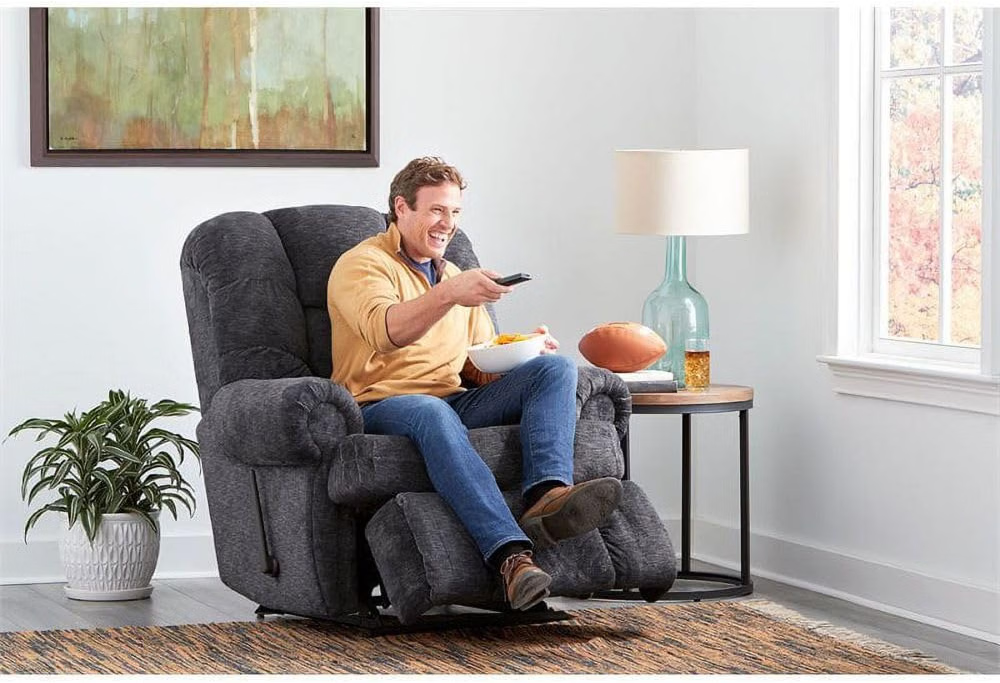
Finding the best heavy-duty recliners for heavy people is about more than finding the biggest chair available. The most important factors are the manufacturer-rated weight capacity, usable seat width and depth, overall chair dimensions, and the type of reclining mechanism.
A good heavy-duty recliner should give you enough room to sit naturally without pressing against the arms, while the frame and reclining mechanism should be rated for your body weight and intended daily use.
This 2026 guide covers big and tall recliners, power lift recliners, manual recliners, and wall-hugger models. We also explain which measurements to check before buying and how to compare capacity, comfort, durability, and price.
Why Choose a Heavy-Duty Recliner?
A recliner experiences more mechanical stress than a normal stationary chair. When you lean back, extend the footrest, or push yourself out of the seat, your weight is transferred through the seat platform, frame, reclining mechanism, and base.
For larger users, the problem with an ordinary recliner is not always the published weight limit. The chair may technically support your weight but still feel too narrow, too shallow, too low, or unstable during everyday use.
Common Problems With an Undersized Recliner
- Seat width that leaves little room between your hips and the armrests
- Seat depth that does not properly support your thighs
- A backrest that is too short for your torso
- Footrest mechanisms that feel weak or difficult to operate
- A frame or base that does not feel stable during entry and exit
- Power motors or lift mechanisms operating close to their rated limit
This is why shopping by weight capacity alone is not enough. The chair needs to fit your body dimensions as well as your weight.
Best Heavy-Duty Recliners for Heavy People in 2026
The models and product lines below represent different buying priorities rather than a single one-size-fits-all choice. Always verify the current capacity, dimensions, configuration, and availability for the exact SKU before ordering.
1. Mcombo Big and Tall Power Lift Recliner
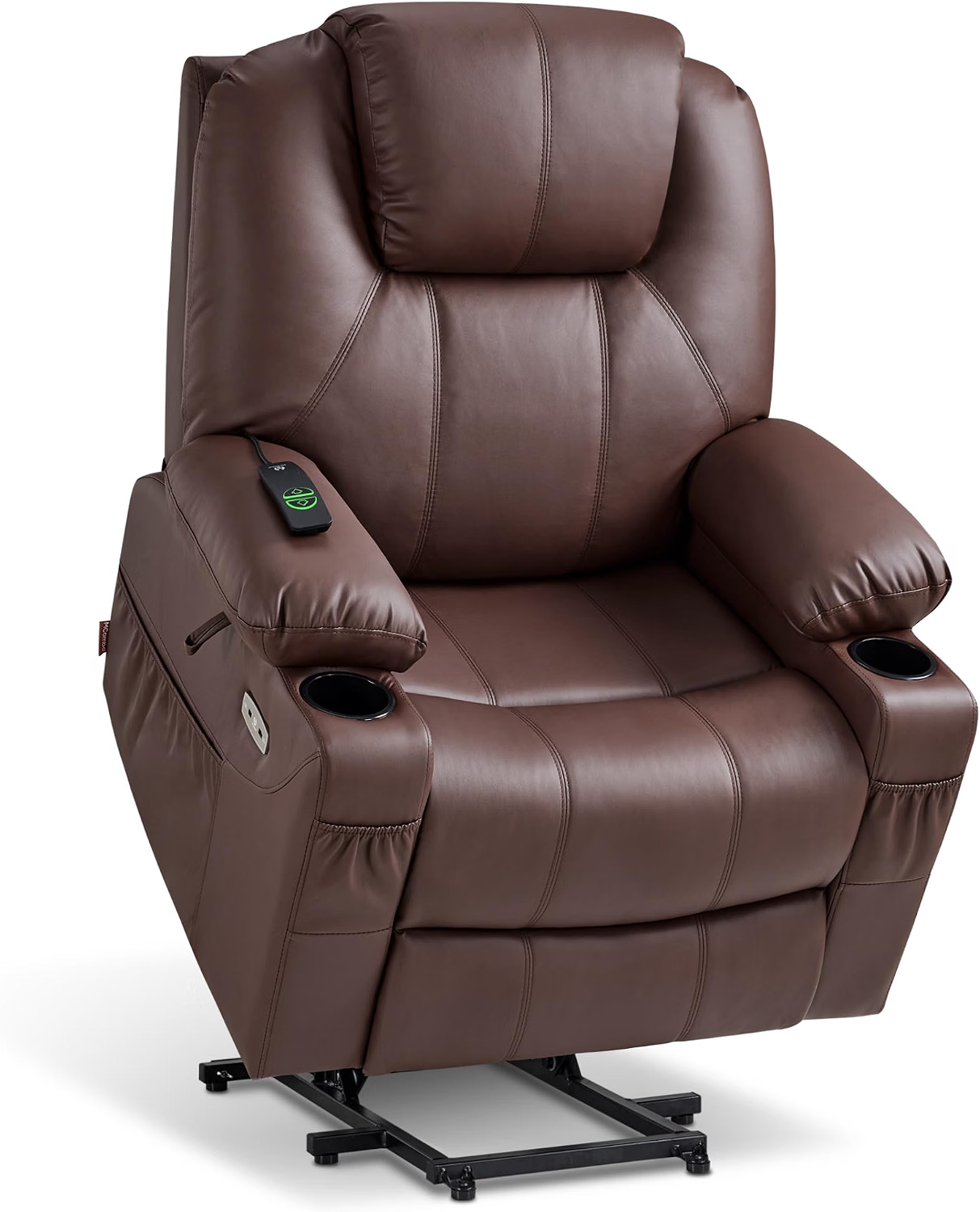
Mcombo offers several power lift recliner configurations aimed at larger users. The main attraction is the combination of powered reclining and lift assistance, which can make the chair easier to enter and exit than a traditional low recliner.
Because Mcombo sells multiple sizes and configurations, do not assume that every model has the same capacity or dimensions. Check the exact product listing for the weight rating, seat width, seat depth, overall dimensions, and included features.
2. Pride Mobility VivaLift! Atlas Plus
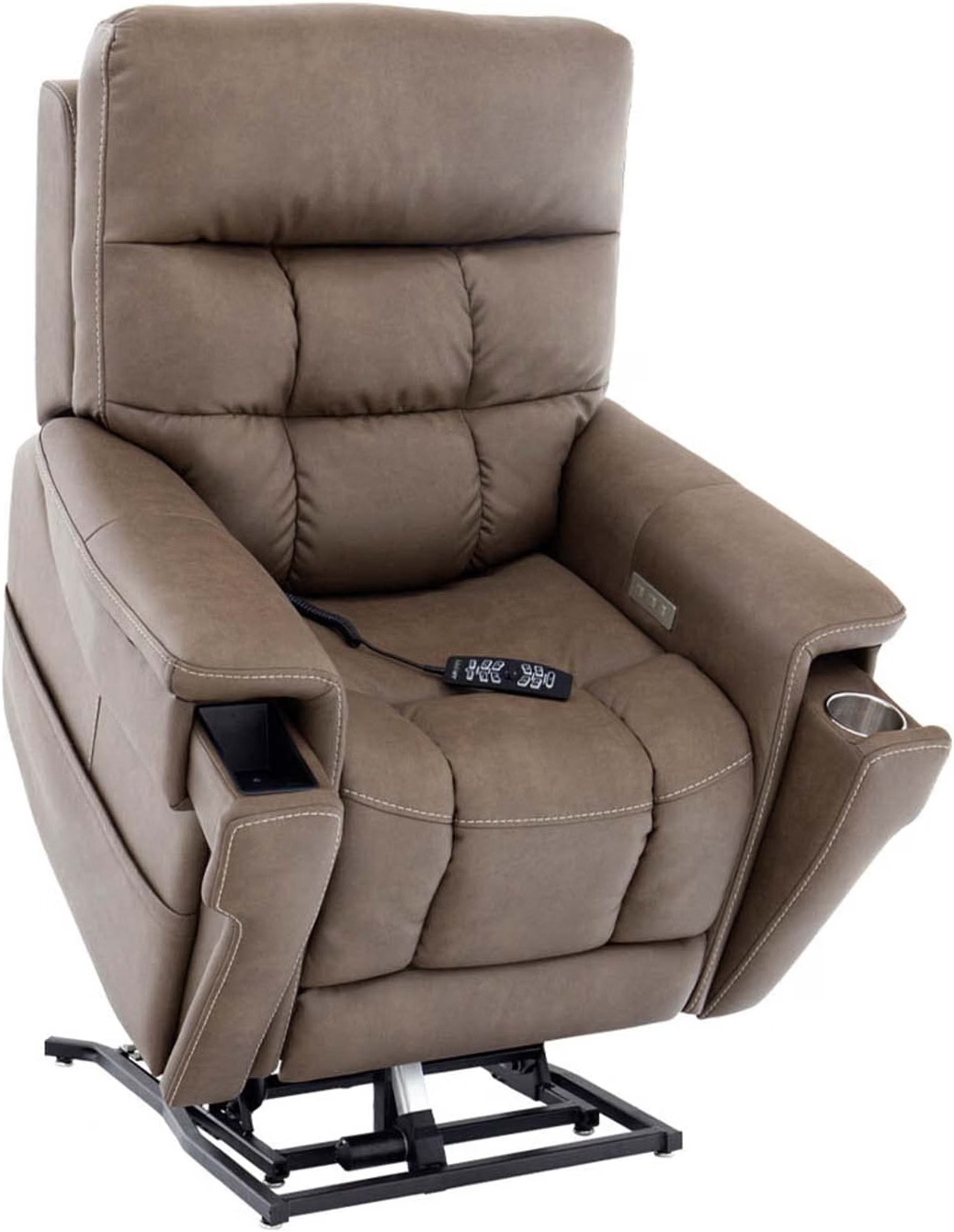
The VivaLift! Atlas Plus is designed around the lift-chair category, with powered positioning intended to provide more flexibility than a basic recliner. For shoppers who prioritize entry and exit assistance, a dedicated lift chair can make more sense than a conventional manual recliner.
The important comparison points are the chair’s published weight capacity, seat dimensions, lift and recline positions, upholstery, control layout, and warranty. Because lift chairs are available in different sizes, match the configuration to your body dimensions rather than buying solely by brand name.
3. Catnapper Big & Tall and Wall-Hugger Recliners
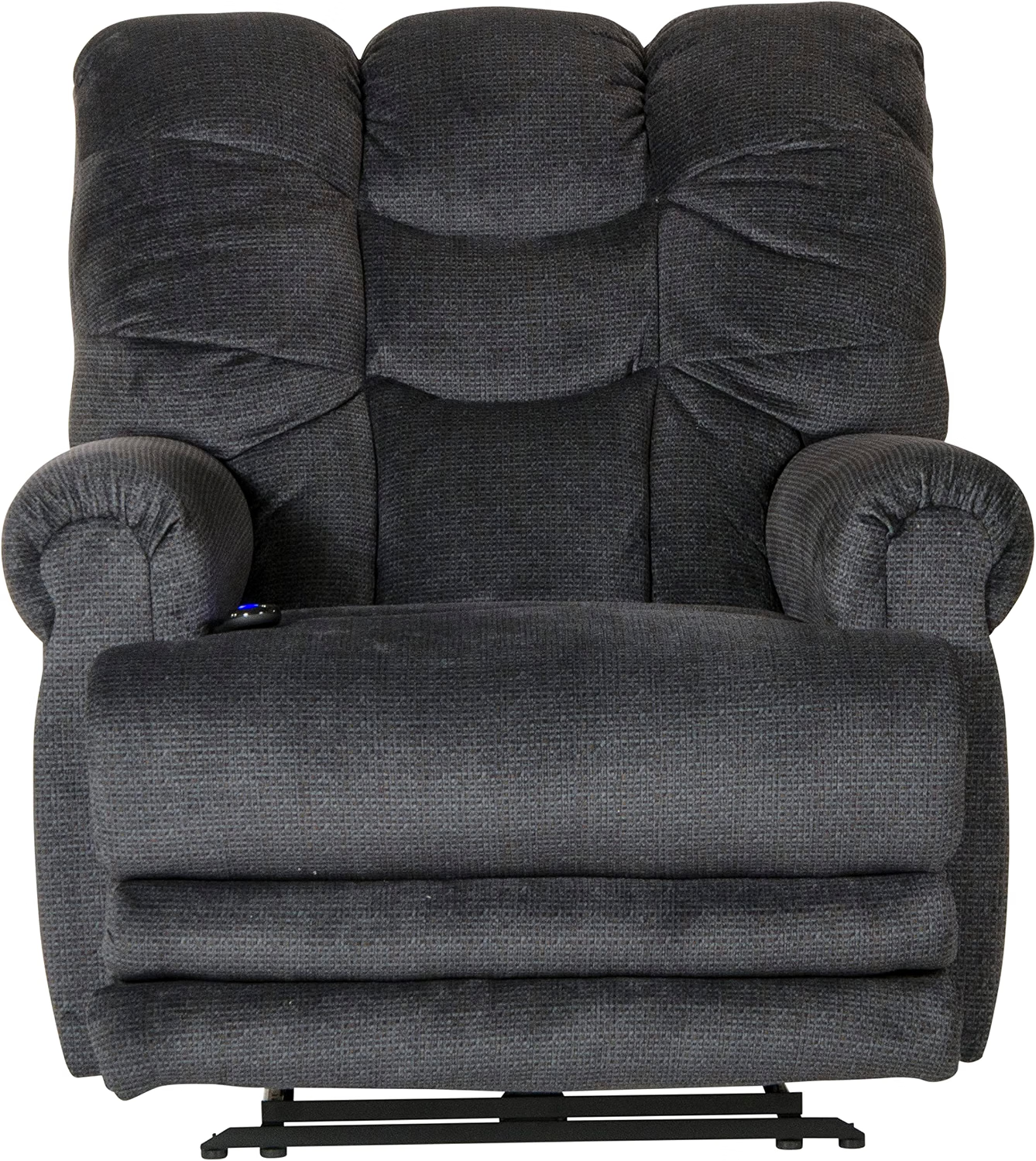
Catnapper has a broad range of oversized and big-and-tall recliners. Depending on the model, shoppers can find manual and powered configurations, including designs intended to reduce the amount of space needed behind the chair.
The advantage of shopping within a large product line is choice, but it also means you need to pay attention to the exact model number. Capacity, seat dimensions, upholstery, and mechanism type can vary significantly between configurations.
4. Lane Stallion Big Man Recliner
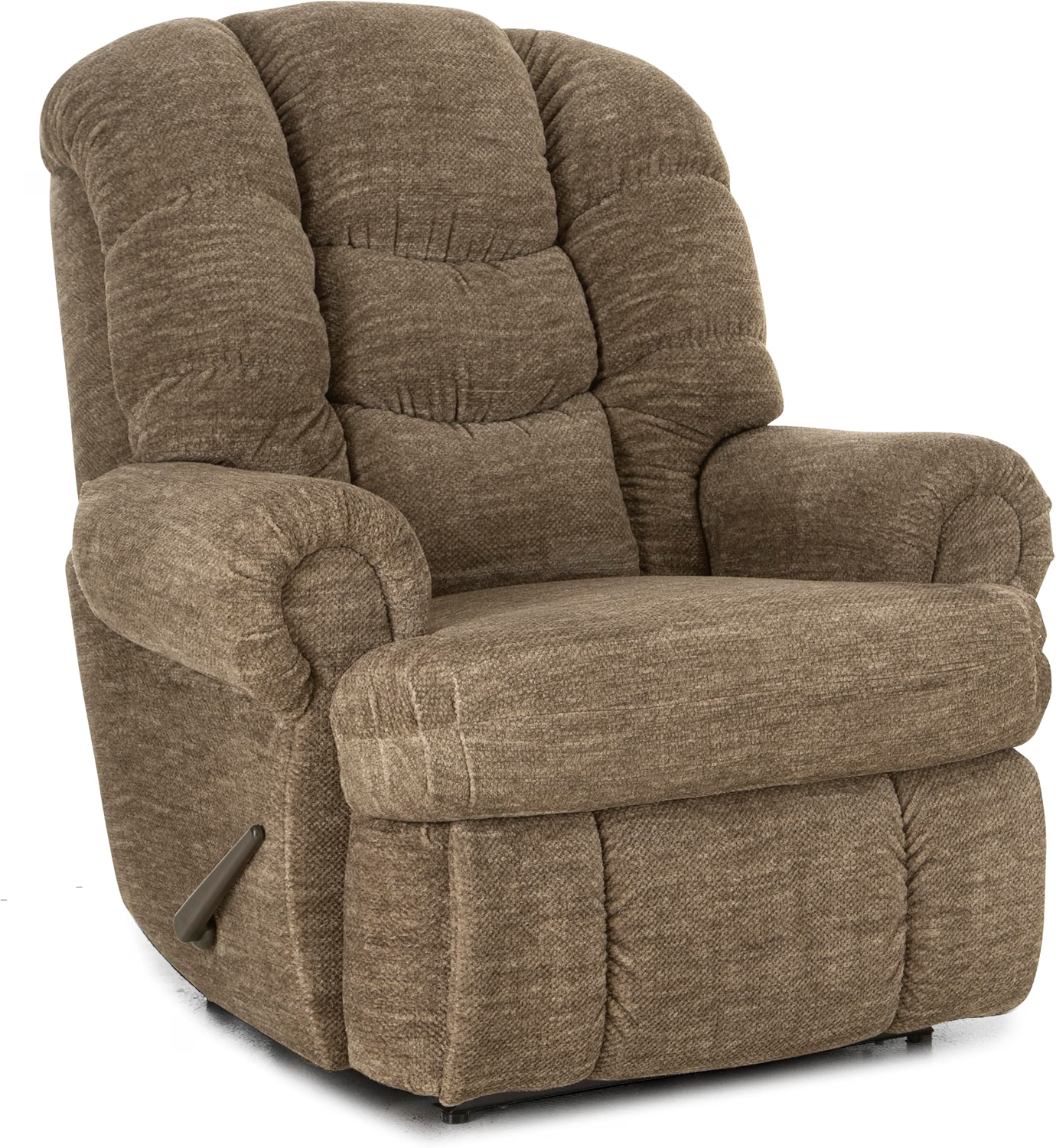
Lane’s Big Man recliner designs focus on providing additional room for larger frames. A wider seat and taller back can be especially useful when standard recliners feel cramped around the hips, shoulders, or legs.
Manual recliners also have a relatively simple mechanical design compared with powered chairs. The trade-off is that the user has to operate the reclining mechanism without motor assistance.
5. Esright Big and Tall Recliner
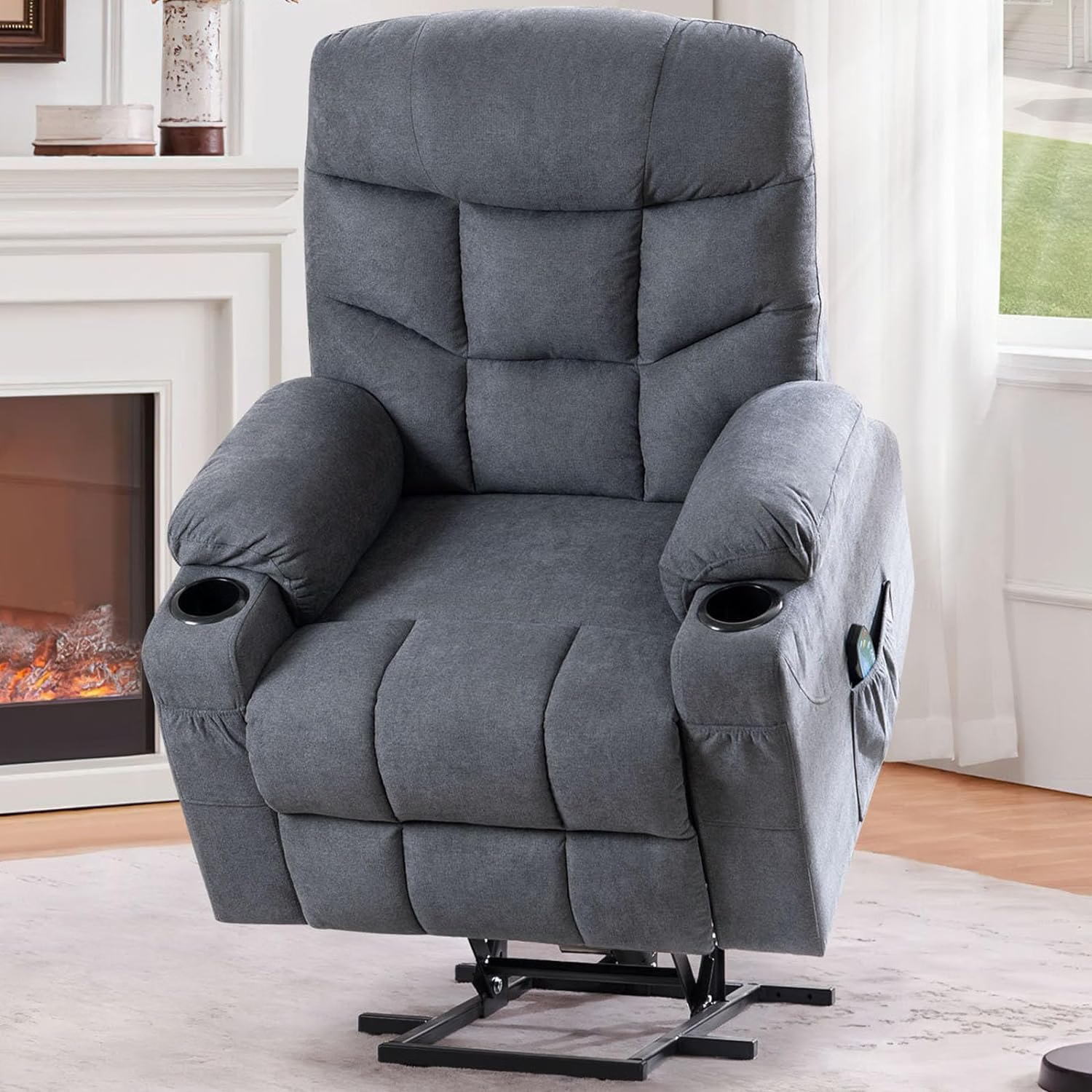
Esright offers more budget-oriented recliners, including larger configurations. These can be useful when the goal is to find a roomier chair without immediately moving into premium furniture pricing.
With budget recliners, pay particular attention to the exact product specifications. Confirm the stated capacity, seat dimensions, recline type, materials, assembly requirements, and warranty before buying.
Heavy-Duty Recliner Comparison
| Type | Main Advantage | Main Trade-Off | Best For |
|---|---|---|---|
| Power Lift | Powered standing assistance | Higher cost and needs power | Easy entry and exit |
| Manual | Simple mechanism | Requires physical effort | Traditional recliner use |
| Wall-Hugger | Reduced rear clearance | Fewer heavy-duty options | Small rooms |
| Big & Tall | More room for larger bodies | Larger footprint | Wider and taller users |
How to Choose a Heavy-Duty Recliner for Heavy People
1. Check the Manufacturer’s Weight Capacity
Start with the published weight capacity for the exact model. Do not assume that two recliners from the same brand have the same rating.
If your body weight is close to the published maximum, consider a model with a higher rated capacity rather than choosing a chair that operates near its limit. Also check whether the manufacturer publishes separate ratings for the frame, reclining mechanism, or lift function.
2. Measure the Usable Seat Width
Overall chair width can be misleading. What matters is the usable space between the armrests.
Compare the listed seat width with your own hip and thigh measurements. You want enough room to sit naturally without your legs or hips being squeezed against the arms.
3. Check Seat Depth and Seat Height
A wide seat is not automatically a comfortable seat. Seat depth matters because it determines how much of your thighs are supported.
Your feet should be able to reach the floor comfortably when seated, while the backrest should support your torso and head without forcing you into an awkward position.
4. Look at the Frame and Base
The frame and base carry much of the structural load. Look for clear information about frame construction rather than relying on marketing terms such as “heavy duty” alone.
For powered models, also consider the construction of the reclining and lift mechanisms. A high chair capacity is less useful if the powered mechanism has a lower limit.
5. Choose the Right Reclining Mechanism
Power lift: useful when standing up from a recliner is difficult. The chair uses a motor to raise the seat and assist with the transition to standing.
Manual: a straightforward choice when you do not need powered assistance. It also avoids the need for an electrical outlet.
Wall-hugger: useful when floor space is limited. The mechanism moves the chair forward as it reclines, reducing the clearance required behind the chair.
Heavy-Duty Power Lift Recliners: What to Know
Power lift recliners are especially relevant for people who want help getting in and out of a deep or low chair. Instead of requiring the user to push forward and stand from a fixed seat, the lift mechanism raises and tilts the chair.
Advantages
- Powered lift assistance
- Powered reclining on many models
- Useful for users who find deep chairs difficult to exit
- Multiple positioning options on some models
Potential Trade-Offs
- Requires access to a power outlet
- Usually costs more than a comparable manual chair
- Contains motors, controls, and electrical components that require additional service considerations
- The exact lift capacity should be checked before purchase
Best Wall-Hugger Recliners for Big and Tall Users
A wall-hugger recliner can solve a different problem from a conventional heavy-duty chair: limited room behind the chair.
Traditional recliners generally move backward as they recline. Wall-hugger designs are engineered to move the seat or backrest forward during the reclining motion, allowing the chair to sit closer to a wall.
However, do not assume that every wall-hugger model is suitable for a heavier user. Check the exact weight rating and seat dimensions, because heavy-duty wall-hugger choices can be more limited.
Heavy-Duty Recliner Features That Matter Most
| Feature | What to Check |
|---|---|
| Weight capacity | Manufacturer-published rating for the exact model |
| Seat width | Usable width between the arms |
| Seat depth | Enough support for your thighs without forcing your knees upward |
| Seat height | Comfortable foot contact with the floor |
| Frame | Construction materials and structural design |
| Mechanism | Manual, power recline, lift, or wall-hugger system |
| Warranty | Frame, mechanism, motor, electronics, and upholstery coverage |
| Overall dimensions | Doorways, stairs, room width, and recline clearance |
Heavy-Duty Recliner Size Guide
The phrase “big and tall” does not describe one standardized chair size. Two chairs marketed for larger users can have very different seat widths, depths, heights, and backrest proportions.
Before ordering, measure your current chair and compare those dimensions with the new model. If your current recliner feels narrow, focus on the usable seat width. If your knees extend beyond the cushion or your lower legs feel unsupported, compare seat depth and footrest dimensions.
Also measure the delivery route. A large heavy-duty recliner may fit comfortably in the room but fail to pass through a doorway, hallway, stairwell, or tight corner.
Durability, Warranty, and Maintenance
What Makes a Heavy-Duty Recliner Durable?
Durability depends on more than a high weight rating. Frame construction, mechanism quality, foam, upholstery, hinges, and the way the chair is used all affect long-term performance.
For power models, the motor and control system add additional components. For manual models, the mechanical linkage remains important because it handles repeated reclining and footrest movement.
Warranty Coverage
Read the warranty carefully rather than relying only on the headline warranty period. Coverage may be different for the frame, reclining mechanism, motor, electrical components, and upholstery.
Keep your receipt and product documentation. Also follow the manufacturer’s weight limit and care instructions, because misuse or exceeding the rated capacity can affect warranty coverage.
Assembly and Maintenance
- Use two people when moving or assembling a large recliner.
- Check that the backrest and base connections are secure before use.
- Keep the recline path clear of furniture and other objects.
- Keep electrical cables away from walking paths.
- Clean upholstery according to the manufacturer’s instructions.
- Investigate grinding, unusual movement, frame cracks, or a footrest that no longer operates correctly.
Frequently Asked Questions
What weight capacity should I look for in a heavy-duty recliner?
Choose a model whose manufacturer-published capacity is comfortably above your body weight rather than shopping right at the maximum rating. The exact capacity you need depends on your weight and the model available. Always verify the current rating for the exact SKU.
Are power lift recliners suitable for heavy people?
They can be, provided the specific chair is rated for the user’s weight and the lift mechanism is designed for that load. Check the published capacity, seat dimensions, lift function, and warranty before purchasing.
What seat width is best for big and tall users?
There is no single ideal seat width for every person. Measure the usable space between the arms and compare it with your own body dimensions. A wider seat is useful only if the depth and seat height also work for you.
Are wall-hugger recliners available with high weight capacities?
Yes, but the selection can be more limited than conventional heavy-duty recliners. Check the capacity and dimensions for the exact wall-hugger model because the “wall-hugger” label itself does not guarantee a high weight rating.
How much assembly does a heavy-duty recliner require?
Many recliners arrive partially assembled. The backrest may need to be attached to the base, while power lift models may require the transformer and control cable to be connected. Because these chairs can be heavy and awkward to handle, having a second person available is a good idea.
How long should a heavy-duty recliner last?
There is no universal lifespan for a recliner. Construction quality, weight relative to the rated capacity, frequency of use, mechanism design, maintenance, and upholstery all matter. A longer frame or mechanism warranty can provide useful information about the manufacturer’s coverage expectations, but it is not a guarantee of service life.
Can I use a standard recliner if I weigh more than 300 lb?
The key question is the chair’s published weight capacity, not a general 300 lb threshold. If a standard recliner is specifically rated above your weight and its dimensions fit your body, it may be suitable. If the capacity is lower than your weight, choose a model designed and rated for a heavier user instead.
Final Thoughts
The best heavy-duty recliner for heavy people is not necessarily the widest, most expensive, or highest-rated chair. It is the model whose published capacity, usable seat dimensions, reclining mechanism, and overall size match the person using it.
Start by checking the manufacturer’s weight capacity. Then compare seat width, seat depth, seat height, backrest dimensions, and the amount of clearance required in your room.
If standing assistance is important, compare power lift recliners. If floor space is limited, look at wall-hugger designs. If you simply want a roomy chair with fewer electronic components, a manual big-and-tall recliner may be worth considering.
1 thought on “Best Heavy-Duty Recliners for Heavy People (2026 Guide)”