
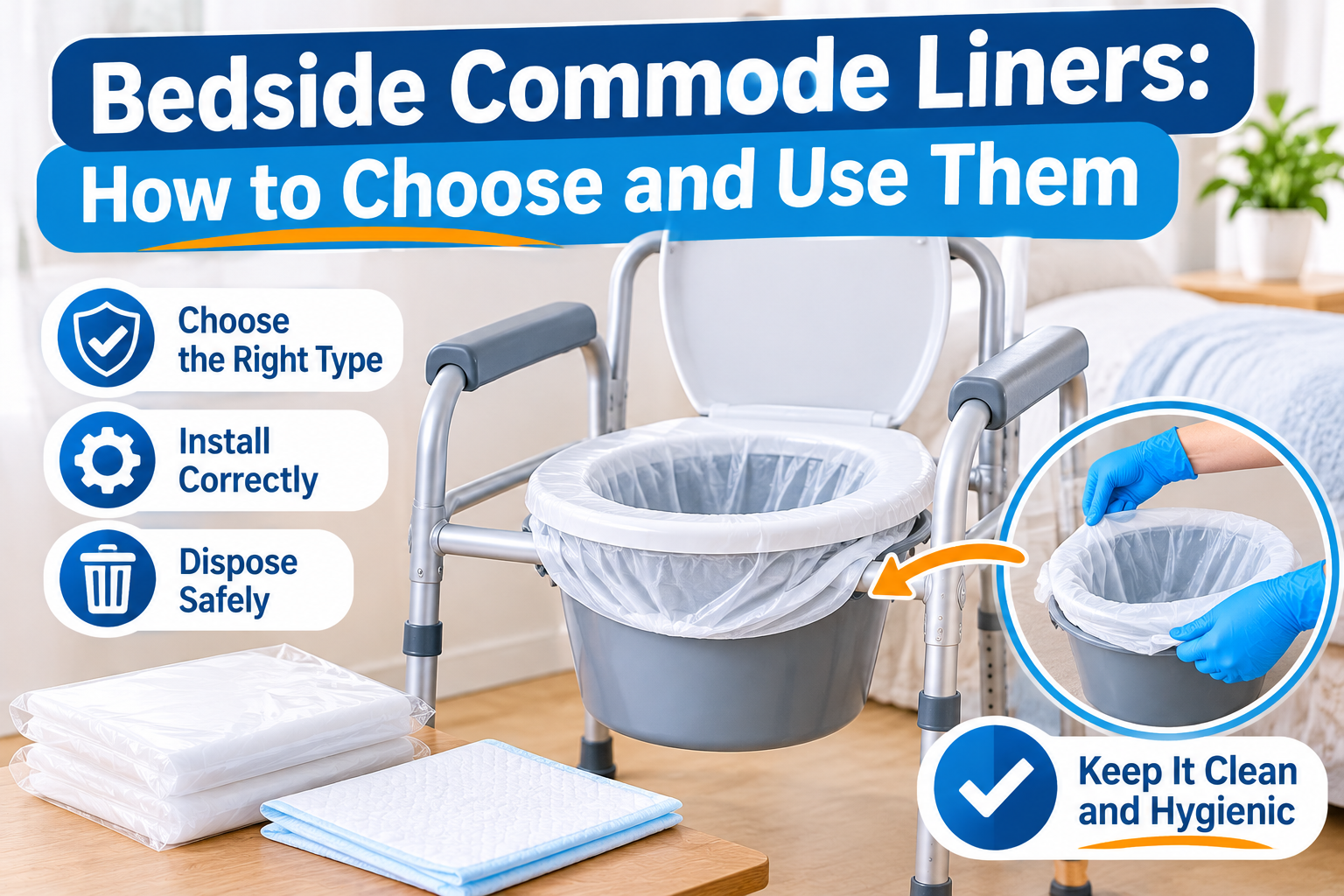
Bedside commode liners can make daily commode maintenance easier for seniors, caregivers, and people with limited mobility. These disposable liners fit inside a commode bucket and are designed to collect waste, helping reduce direct contact with the bucket during emptying and cleanup.
However, not all commode liners are the same. Some are simple disposable bags, while others include absorbent pads or materials designed to help contain liquid. Choosing the right size, capacity, and design is important for preventing leaks and making everyday use more convenient.
What to Know About Commode Liners
- Choose a liner that fits your commode bucket securely.
- Consider absorbent liners if liquid containment is a priority.
- Check the product’s stated capacity and leak-protection design.
- Follow the manufacturer’s instructions for installation and removal.
- Dispose of used liners according to the product instructions and local waste rules.
- Continue cleaning the commode bucket when necessary, even when using liners.
In this guide: liner types, buying considerations, installation, removal, disposal, common mistakes, and caregiver tips.
1. What Are Bedside Commode Liners?
A bedside commode liner is a disposable bag or liner designed to fit inside the removable bucket of a bedside commode. It creates a barrier between the waste and the bucket, making removal and disposal more convenient.
Depending on the product, a liner may include an absorbent pad or another material intended to help contain liquid. Some products are designed primarily as disposable collection bags, while others are marketed as absorbent commode liners.
Disposable Collection Bags
Designed to line the commode bucket and make waste removal more convenient. Check whether additional absorbent material is required.
Absorbent Commode Liners
Include absorbent material intended to help contain liquid. Absorbency and capacity vary by product.
Liners With Absorbent Pads
Combine a collection bag with an absorbent insert. Check whether the pad is included and how it should be positioned.
Important distinction
A disposable liner does not automatically disinfect the commode or replace routine cleaning. The bucket, seat, frame, and other contaminated surfaces may still need cleaning.
2. Benefits of Using Bedside Commode Liners
For households that use a bedside commode regularly, disposable liners can simplify some parts of the cleanup process. Their usefulness depends on the commode design, the type of liner, and the user’s needs.
Less Direct Contact
A liner can reduce the need to handle waste directly from the bucket during disposal.
More Convenient Disposal
Some products allow caregivers to remove the used liner as a contained unit.
Potential Leak Protection
Products with suitable construction and absorbent materials may help reduce leakage when used correctly.
Useful for Caregivers
Disposable options may make frequent commode maintenance more manageable.
Keep in mind that liners are not a substitute for gloves, handwashing, or appropriate cleaning. A poorly fitted liner can also create problems, so compatibility should always come first.
3. How to Choose the Best Bedside Commode Liners
The best liner is one that fits the bucket, handles the expected amount of waste, and can be removed and disposed of safely. Consider these factors before buying.
BUYING FACTOR 01
Size and Bucket Compatibility
This is one of the most important considerations. A liner that is too small may not cover the bucket opening properly, while an oversized liner may bunch up or interfere with the seat and bucket positioning.
Before purchasing, check:
- The dimensions of your existing commode bucket.
- The liner’s stated width, length, or size range.
- Whether the liner is designed for standard bedside commode buckets.
- Whether the liner can be secured without interfering with the seat or splash guard.
Buying tip
Do not rely only on a product title that says “universal.” Compare the actual dimensions and compatibility information before ordering.
BUYING FACTOR 02
Absorbency and Capacity
If you are considering a liner with an absorbent pad, review its stated absorbency and intended use. Products can vary considerably in how much liquid they are designed to contain.
- Check the manufacturer’s stated capacity.
- Look for information about the absorbent material.
- Check whether the absorbent pad is included in each liner.
- Follow any maximum-use or replacement instructions.
Do not assume that every liner includes absorbent material or that all products have the same capacity. Never exceed the stated limit.
BUYING FACTOR 03
Leak-Resistant Construction
Leak protection matters because a damaged or poorly fitted liner can contaminate the commode bucket and surrounding area.
Look for clear product information about:
- Bag material and thickness.
- Sealed seams or leak-resistant construction.
- Closure method after use.
- Instructions for removing and carrying the filled liner.
No liner should be treated as completely leak-proof. Handle used products carefully and avoid overfilling them.
BUYING FACTOR 04
Easy Removal and Disposal
A liner should be reasonably easy to remove without pulling, tearing, or spilling its contents.
- Check whether the bag has handles or a closure system.
- Look for clear disposal instructions.
- Consider whether the caregiver can safely lift the filled liner.
- Check how many liners are included in the package.
If the filled liner would be too heavy or difficult to handle, choose a product and routine that allow safer disposal.
BUYING FACTOR 05
Cost and Package Quantity
If the commode is used frequently, package size and replacement cost can affect the overall value.
- Compare the number of liners per package.
- Calculate the approximate cost per liner.
- Check whether absorbent pads are included or sold separately.
- Consider storage space and product shelf-life information, if provided.
4. How to Use Bedside Commode Liners Correctly
Proper installation is important. A liner that slips, folds incorrectly, or blocks the bucket’s normal position can increase the risk of spills.
STEP 01
Check the Bucket and Liner
Before installation, check that the commode bucket is clean, dry, and free from cracks or sharp edges that could damage the liner.
Read the liner instructions and confirm that the size is appropriate for your bucket. Do not use a damaged or previously used disposable liner.
STEP 02
Open the Liner and Position It
Open the liner fully and place it inside the bucket. Make sure the bottom reaches the base of the bucket and the sides cover the interior as directed.
If the product includes an absorbent pad, position it according to the manufacturer’s instructions. Do not assume every liner uses the same pad placement.
STEP 03
Secure the Liner
Arrange the liner so it stays in place and does not interfere with the bucket rim, seat, or splash guard.
- Make sure the liner is not twisted or folded into the bucket opening.
- Use the product’s designated securing method.
- Check that the bucket still fits correctly into the commode frame.
If the liner prevents the bucket from fitting securely, remove it and check compatibility. Do not use a setup that makes the commode unstable.
STEP 04
Check the Setup Before Use
Before someone uses the commode, confirm that the bucket and liner are properly positioned.
- The bucket is correctly installed.
- The liner is not obstructing the seat or splash guard.
- The commode frame is stable.
- There are no visible tears or loose sections.
STEP 05
Remove the Used Liner Carefully
After use, put on disposable gloves and follow the liner manufacturer’s removal instructions.
Gather the liner carefully without squeezing its contents. If it has a closure mechanism, use it as directed. Keep the liner away from your clothing and avoid sudden movements.
If the liner is torn or leaking, handle it carefully, prevent further spreading, and clean any contaminated surfaces promptly.
STEP 06
Dispose of the Liner and Clean Up
Dispose of the used liner according to its packaging instructions and local waste-disposal rules. Do not flush it unless the specific product explicitly permits flushing and local plumbing guidance allows it.
Check the bucket for residue or leakage. Clean and disinfect it when needed, following the manufacturer’s instructions. Remove your gloves and wash your hands thoroughly.
5. How to Dispose of Used Bedside Commode Liners
Disposal instructions vary by product. Most disposable commode liners should be placed in an appropriate waste container rather than flushed down the toilet.
Do not assume commode liners are flushable
Even if a liner looks similar to a regular plastic bag, it should never be flushed unless the exact product instructions explicitly permit it. Flushing unsuitable materials can cause plumbing problems.
Use this general disposal routine, while following the instructions supplied with your particular product:
- Put on disposable gloves before handling the used liner.
- Close or seal the liner using its designated closure method, if provided.
- Avoid squeezing, puncturing, or overhandling the contents.
- Place it in the appropriate waste container according to product and local instructions.
- Clean any contaminated surfaces and wash your hands.
If a household has special medical waste-disposal requirements, follow the instructions provided by the relevant healthcare team or local waste authority.
6. Do Commode Liners Eliminate the Need to Clean the Bucket?
No. Liners can reduce direct contact with the bucket, but they do not guarantee that the bucket stays clean.
Leaks, splashes, incorrect installation, or residue around the bucket rim can still cause contamination. The commode seat, frame, handles, and nearby surfaces may also need routine attention.
What Liners Can Help With
- Containing waste inside a disposable barrier.
- Making some disposal tasks easier.
- Reducing direct contact with bucket contents.
What Liners Cannot Replace
- Handwashing and glove use.
- Cleaning after leaks or spills.
- Routine commode maintenance.
For a complete cleaning routine, read our guide: How to Clean a Bedside Commode Safely.
7. Common Mistakes When Using Commode Liners
Choosing the Wrong Size
A poorly fitted liner can slip, bunch up, or interfere with the bucket. Always check dimensions.
Overfilling the Liner
Exceeding the stated capacity increases the risk of leaks and difficult handling.
Ignoring the Instructions
Different products may have different installation, closure, and disposal requirements.
Reusing Disposable Liners
Disposable liners are intended for the use specified by the manufacturer, not repeated reuse.
Assuming Every Liner Is Flushable
Follow the exact product disposal instructions. Most should not be flushed.
Skipping Bucket Cleaning
A liner does not prevent every spill or contamination event. Inspect and clean the bucket as needed.
8. Where to Buy Bedside Commode Liners
Bedside commode liners are available through medical supply retailers and online marketplaces. When shopping online, compare the product dimensions, absorbent design, package quantity, and disposal instructions rather than relying only on the product title.
AMAZON SHOPPING
Compare Bedside Commode Liners
Browse disposable commode bags, absorbent liners, and replacement liner options. Confirm compatibility with your bucket before ordering.
For caregivers who use a commode frequently, it may be useful to compare the cost per liner and the number of liners in each package. Make sure the product you choose is suitable for the specific commode bucket.
Frequently Asked Questions
Are bedside commode liners worth using?
They can be useful for caregivers and people who want to make waste disposal more convenient. Their value depends on how frequently the commode is used, the cost of replacement liners, and whether the product fits the bucket correctly.
Do all commode liners have absorbent pads?
No. Some products are simple collection bags, while others include absorbent pads or materials. Read the product description carefully to confirm what is included.
Can you use a regular trash bag in a bedside commode?
Do not assume a regular trash bag is suitable. It may not fit securely, could tear, or could interfere with the bucket and seat. Use a product specifically designed for commode use unless the manufacturer permits another option.
Can you flush disposable commode liners?
Generally, no. Only flush a liner if the exact product instructions explicitly state that it is flushable and local plumbing guidance permits it. Otherwise, dispose of it as directed.
How often should you replace a commode liner?
Follow the product’s intended-use instructions. Disposable liners should not be reused beyond the manufacturer’s stated use. Replace them when required and never exceed their recommended capacity.
Do commode liners prevent odors?
Some products may help contain waste or reduce odor during handling, but odor-control performance varies. Prompt disposal, proper cleaning, and good bathroom ventilation remain important.
Do you still need to clean a commode when using liners?
Yes. Inspect the bucket after each use and clean it when residue, leaks, or contamination are present. Also maintain the seat, frame, and other frequently touched surfaces.
Final Thoughts: Choosing the Right Bedside Commode Liners
Bedside commode liners can make everyday commode maintenance more convenient, particularly for caregivers who handle waste disposal frequently. The most important factors are correct bucket fit, suitable capacity, reliable construction, and clear disposal instructions.
Before buying, compare the liner’s dimensions with your commode bucket and check whether absorbent material is included. Follow the product instructions for installation, removal, and disposal, and remember that liners do not eliminate the need for routine cleaning and hand hygiene.
Explore More Commode Guides
Get more practical advice on bedside commode selection, cleaning, and everyday use.
Affiliate Disclosure: HeavyDutyChoice may earn a commission from qualifying purchases made through Amazon links on this page, at no additional cost to you.