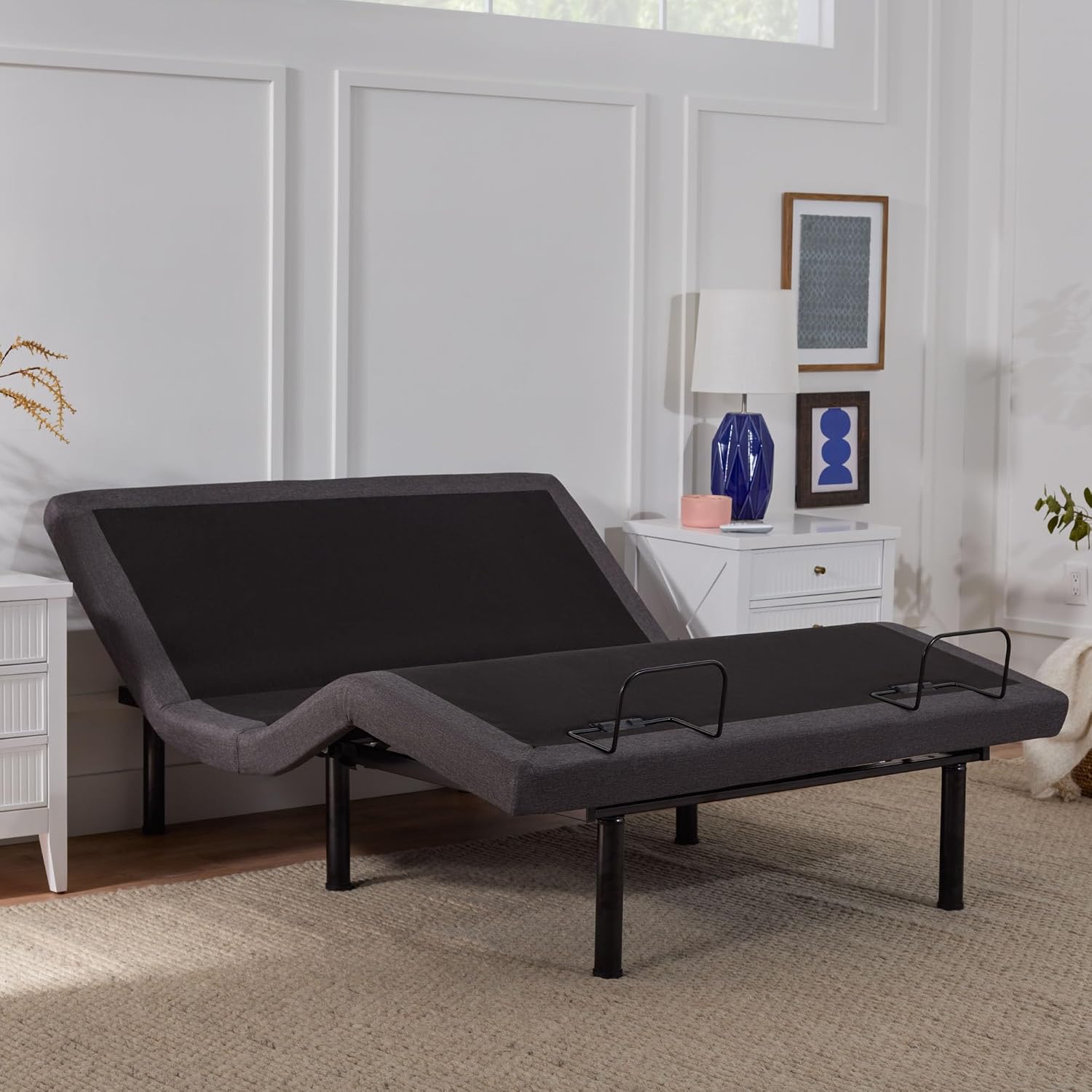
Choosing a bed frame for back pain is about more than finding a sturdy platform. The right setup should provide stable support for your mattress, keep the sleeping surface level, and make getting into and out of bed comfortable. An adjustable base may also be worth considering if you prefer to raise your upper body or legs while resting.
A bed frame alone cannot diagnose or treat back pain, and replacing a frame will not necessarily relieve symptoms. However, if your current bed sags, shifts, or does not properly support your mattress, choosing a more suitable foundation may improve your overall sleep setup.
In this guide, we explain what to look for, compare several bed-frame styles, and highlight practical features that matter when choosing a new foundation. If you need a frame with a higher load rating, see our guide to the best heavy-duty bed frames for heavy people.
Quick Picks: Bed Frames Worth Considering
The best choice depends on your mattress, preferred sleeping position, mobility, and budget. These options represent different approaches to mattress support rather than a medical ranking.
SIMPLE PLATFORM
Mellow Naturalista Classic
A wood platform-style option to investigate if you want a conventional bed frame without a separate box spring, subject to mattress requirements.
LOW-PROFILE SUPPORT
Zinus SmartBase
A metal foundation style to consider if you want a relatively straightforward setup. Check the exact size, height, and support specifications.
POSITION ADJUSTMENT
Lucid L300 Adjustable Base
An adjustable-base option for shoppers who want to experiment with raising the head or foot of the bed. Confirm mattress compatibility.
Product note: These buttons open Amazon search results, not verified individual product listings. Confirm the exact model, size, current availability, mattress compatibility, warranty, and published weight rating before purchasing.
What Makes a Bed Frame Suitable for Back Pain?
1. Stable, Even Mattress Support
A bed frame should support the mattress according to the mattress manufacturer’s requirements. A weak center support, damaged slats, loose hardware, or an uneven foundation can allow the sleeping surface to sag or shift.
Before replacing your bed, inspect the current setup. Look for broken slats, a bowed center rail, loose joints, missing support legs, or a mattress that visibly dips. If the frame is sound but the mattress has developed permanent indentations, a new frame may not solve the underlying problem.
- Check whether the frame has center support where required, particularly for larger mattress sizes.
- Confirm that slat spacing meets the mattress manufacturer’s specifications.
- Look for a level platform that does not rock or shift under normal use.
- Check the frame’s stated weight capacity and what the manufacturer includes in that rating.
2. The Right Bed Height
A bed that is too low or too high can make sitting down, standing up, and getting into bed awkward. If you have difficulty with these movements, consider the combined height of the frame, foundation, and mattress rather than the frame height alone.
When seated on the edge of the bed, many people find it easier to stand when their feet can rest flat on the floor. Individual needs differ, so use your comfort and mobility as a guide rather than assuming one height suits everyone.
3. Compatibility With Your Mattress
The mattress and foundation work together. A mattress designed for a solid platform may have different support requirements from one intended for a slatted frame or adjustable base.
Check the mattress warranty and care instructions before choosing a frame. In particular, verify slat spacing, required center support, foundation type, and whether the mattress can bend on an adjustable base. A frame that looks sturdy is not automatically suitable for every mattress.
4. A Frame That Stays Quiet and Secure
Squeaking, shifting, or wobbling can interrupt sleep and indicate that joints or fasteners need attention. A rigid frame with secure connections may be preferable if your existing bed moves whenever you change positions.
Read reviews for recurring reports of loose hardware, difficult assembly, or noise after extended use. Also check whether replacement parts and customer support are available.
Which Type of Bed Frame Should You Choose?
| Frame Type | Potential Advantages | What to Check |
|---|---|---|
| Platform bed | Can provide a simple, low-maintenance mattress foundation. | Slat spacing, center support, platform height, and mattress requirements. |
| Metal bed frame | Often offers a straightforward structure and may be easy to assemble. | Frame rigidity, center legs, joint security, and stated capacity. |
| Solid wood frame | Can offer a traditional appearance and a substantial structure. | Actual materials, rail construction, slats, and support design. |
| Adjustable bed base | Allows changes to head or foot elevation on compatible models. | Mattress compatibility, motor noise, controls, warranty, and total cost. |
| Traditional frame with foundation | May suit mattresses that require a separate foundation. | Whether the mattress manufacturer approves the full combination. |
There is no single frame type that is best for everyone with back pain. Start with the support requirements of your mattress, then consider height, stability, ease of movement, and the features you will actually use.
Are Adjustable Bed Frames Better for Back Pain?
An adjustable bed base lets you raise or lower sections of the sleeping surface. Some people prefer an elevated upper body or slightly raised legs when resting, but comfort varies, and an adjustable base is not a guaranteed solution for back pain.
Consider an adjustable base if you regularly change positions to get comfortable, want powered adjustment, or have a compatible mattress. It may be unnecessary if you sleep comfortably on a flat surface and simply need a more stable foundation.
What to Check Before Buying an Adjustable Base
- Mattress compatibility: Confirm that your mattress can be used on the selected adjustable base.
- Independent or split adjustment: Check whether the model adjusts as one unit or has separate controls for each side.
- Remote and controls: Make sure the controls are easy to operate, especially if bending or reaching is uncomfortable.
- Noise and movement: Read reviews that discuss motor operation and long-term reliability.
- Height and clearance: Consider the overall bed height, under-bed clearance, and room needed for movement.
- Return policy and warranty: Check coverage for the motor, frame, and other components before buying.
If you want to compare adjustable models, search Amazon for the Lucid L300 adjustable bed base and compare the current listing with other compatible models. Treat this as a starting point for research, not a medical recommendation.
How Much Weight Capacity Do You Need?
Weight capacity matters for durability and safe use, but a larger advertised number does not automatically mean a bed frame will be more comfortable for your back. Choose a frame whose documented capacity meets the needs of the sleepers and mattress, while following the manufacturer’s definition of its rating.
Before purchasing, clarify whether the stated capacity covers the combined weight of the sleepers and mattress, whether it applies to the selected size, and whether the frame requires specific center supports or assembly conditions. Do not assume that a rating for one size applies to every size in the same product line.
For frames built with higher weight ratings in mind, see our guide to heavy-duty bed frames. You can also compare options in our heavy-duty bed frames for heavy people guide.
Common Bed Frame Buying Mistakes
Choosing a Frame Based on Appearance Alone
A stylish frame may not provide the support your mattress requires. Review the support structure and assembly instructions before making a decision.
Assuming a Firm Frame Means a Firm Mattress
The frame supports the mattress; it does not determine the mattress’s entire feel. Mattress firmness, materials, condition, and personal comfort are separate considerations.
Ignoring Bed Height
A very low or very high bed may make getting in and out more difficult. Check the combined frame and mattress height in advance.
Trusting an Unverified Weight Rating
Ratings can differ by size and model. Verify the exact product documentation rather than relying only on a headline, an image, or a review of a different version.
How to Choose the Right Bed Frame for Your Situation
- If your mattress sags: Inspect both the mattress and its foundation to determine which component needs replacing.
- If your current bed wobbles or squeaks: Look for a rigid frame with secure joints and adequate center support.
- If getting into bed is difficult: Compare total bed height and consider whether a different height would make movement easier.
- If you want to change your resting position: Consider an adjustable base, provided your mattress is compatible.
- If you need a higher weight rating: Compare documented capacity, support-leg placement, mattress dimensions, and the manufacturer’s conditions.
- If your budget is limited: First determine whether the problem is the frame, mattress, or foundation. Replacing every component may not be necessary.
Frequently Asked Questions
What is the best bed frame for back pain?
There is no universally best bed frame for back pain. A suitable choice should support your mattress correctly, remain stable, and have a comfortable height for getting in and out of bed. An adjustable base may suit some people, while others may prefer a conventional platform frame.
Can a bed frame cause back pain?
A damaged or unsuitable frame can contribute to an uneven or sagging sleeping surface, which may affect comfort. However, back pain has many possible causes, so a frame should not be assumed to be the cause without considering other factors.
Is a platform bed better than a box spring for back pain?
Neither is automatically better. The right choice depends on the mattress manufacturer’s support requirements and your comfort preferences. Some mattresses are designed for platform frames, while others require a compatible foundation.
Should I buy an adjustable bed frame for back pain?
An adjustable base may be worth considering if you find different head or leg positions more comfortable. Check mattress compatibility, controls, warranty, and return terms. It is an optional comfort feature, not a guaranteed treatment.
Does a heavy-duty bed frame help with back pain?
A heavy-duty frame may be appropriate when you need a higher documented weight capacity or a more robust support structure. Its capacity alone does not determine comfort or treat back pain; mattress support and the overall sleeping setup also matter.
When should I seek medical advice for back pain?
If back pain persists, worsens, or interferes with daily activities, seek advice from a qualified healthcare professional. Seek urgent medical care for back pain accompanied by new loss of bladder or bowel control, numbness around the groin or saddle area, or significant new leg weakness.
Final Thoughts
When choosing a bed frame for back pain, prioritize a stable foundation, correct mattress compatibility, suitable bed height, and secure construction. An adjustable base is worth considering if position changes improve your comfort, but it is not essential for everyone.
Before buying, verify the exact model’s dimensions, weight rating, support requirements, warranty, and return policy. A well-matched frame can help create a more supportive sleep setup, but persistent or severe back pain deserves appropriate medical assessment.
Affiliate Disclosure: As an Amazon Associate, HeavyDutyChoice may earn from qualifying purchases. Product availability, prices, specifications, and return policies can change. Verify current details on the product listing before purchasing.