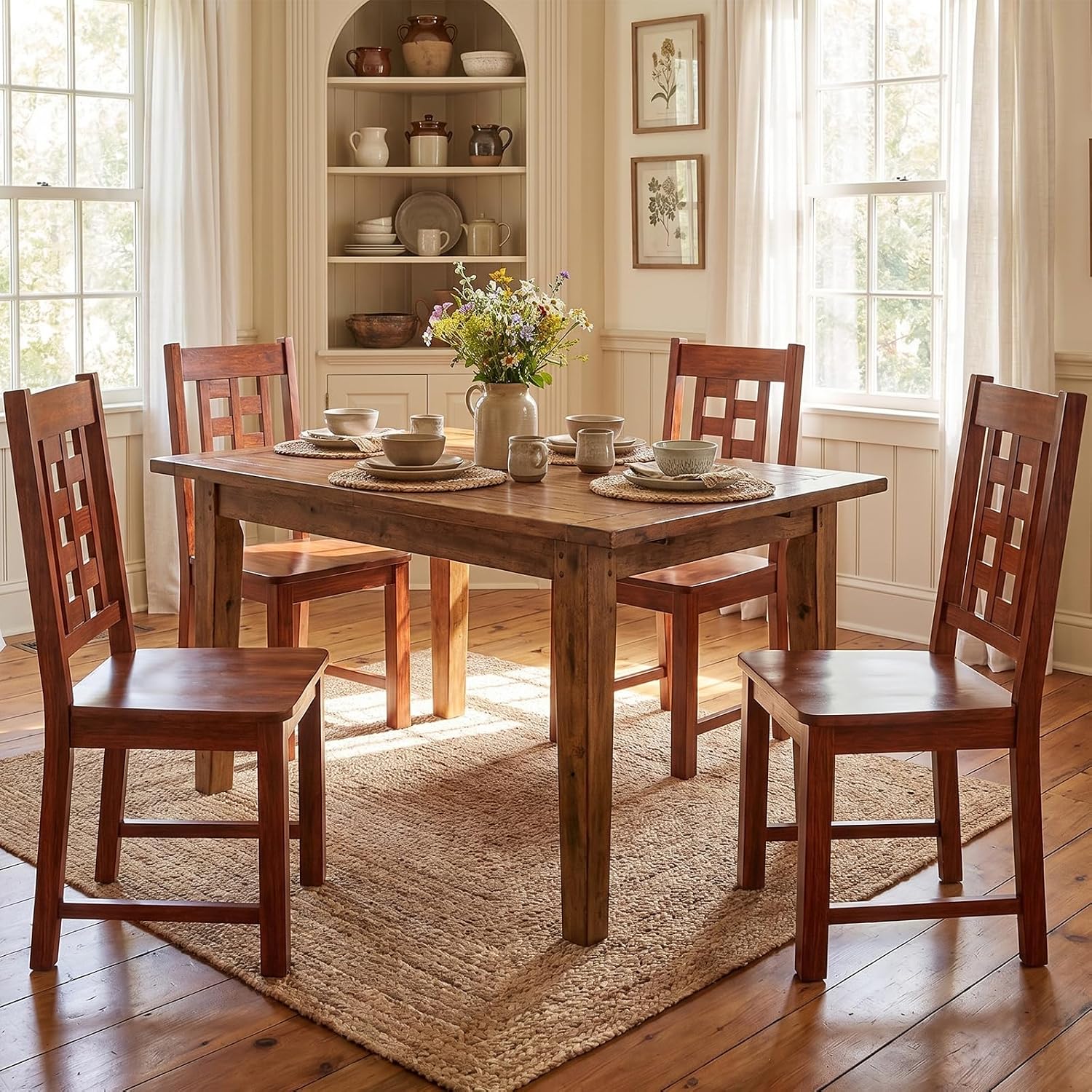
Heavy-Duty Seating Guide
Find Dining Chairs That Fit Your Body and Your Table
The best heavy-duty dining chairs should do more than look sturdy. They need an appropriate published weight capacity, enough usable seat space, stable construction, and dimensions that work with your dining table.
Whether you are replacing a wobbly kitchen chair or furnishing a dining room for everyday use, this guide explains what to compare before buying and which types of heavy-duty chairs are worth investigating.
Standard dining chairs do not always provide the room or documented capacity that every household needs. For big-and-tall shoppers, the challenge is finding a chair that combines dependable support with a comfortable fit instead of relying on a vague “heavy duty” label.
Our recommendations focus on five practical factors: published weight capacity, seat dimensions, frame construction, comfort, and ease of maintenance. Product specifications can change, so confirm the current manufacturer’s information before placing an order.
What to Compare First
- A clearly stated weight capacity for the individual chair.
- Usable seat width and depth, not just overall chair dimensions.
- A stable frame, sound joints, and suitable hardware.
- Seat height and enough clearance beneath the dining table.
- Upholstery, cleaning requirements, warranty, and assembly needs.
5 Heavy-Duty Dining Chair Options to Compare
The following are product candidates and styles to investigate, not independently tested or fully verified rankings. Check the exact model, published capacity, dimensions, and current availability on the retailer’s listing. A product described as heavy duty should not be assumed to meet a particular weight limit without supporting specifications.
Option 1 · Solid Wood Style
POWERSTONE Wood Dining Chairs
A solid-wood dining chair is worth considering if you prefer a traditional look rather than an industrial metal frame. POWERSTONE wood dining chair sets have been listed with rubberwood construction and a claimed 400 lb capacity, but the current listing must be checked to confirm the exact product and rating.
What to verify
- Whether the stated capacity applies to each chair.
- The seat width, seat depth, and backrest dimensions.
- Whether the frame, joints, and finish match your daily-use needs.
Potential fit: Buyers who want a wood dining-room appearance and prefer a conventional four-leg design.
Option 2 · Metal and Wood
LUCKYERMORE Heavy-Duty Dining Chairs
LUCKYERMORE metal-frame dining chairs are another candidate for shoppers who prefer a practical, restaurant-inspired design. Some listings have advertised capacities around 450 lb, but ratings and construction can differ between models. Verify the exact listing before treating that figure as applicable.
What to verify
- The manufacturer’s capacity for the specific chair.
- Whether the seat is wood, upholstered, or a combination.
- The frame finish, welds, feet, and whether the chair ships assembled.
Potential fit: Buyers looking for a simple metal-frame chair for a kitchen, dining room, or suitable commercial setting.
Option 3 · Farmhouse Look
GIANTEX Rubberwood Dining Chairs
GIANTEX wooden dining chair sets are worth checking if you want a familiar farmhouse or ladder-back appearance. Some product listings have advertised 400 lb capacities, but do not assume every GIANTEX chair has the same rating or materials.
What to verify
- Whether the rating is per chair and applies to normal intended use.
- The actual seat dimensions and whether the seat is padded.
- Assembly instructions, joint construction, and the included hardware.
Potential fit: Households looking for matching wooden chairs with a classic dining-room design.
Option 4 · Upholstered Comfort
Upholstered Heavy-Duty Dining Chairs
An upholstered dining chair can be a better choice if you prefer a padded seat for long meals. Look for a product with a documented capacity, supportive seat construction, and upholstery that suits your cleaning routine.
What to verify
- Seat padding and the support structure underneath it.
- Usable seat width and depth, including any armrests.
- Fabric or faux-leather care instructions and the warranty.
Potential fit: Buyers who prioritize a padded seat and a more formal or contemporary appearance.
Option 5 · Commercial Seating
Commercial-Grade Metal Side Chairs
Commercial seating can be a practical alternative when capacity and repeated everyday use matter more than a residential furniture style. Some metal side chairs are designed for waiting rooms, event spaces, or other commercial environments, so confirm that the dimensions and intended use also make them suitable for dining.
What to verify
- The published capacity and whether it is a static or other specified rating.
- Seat height, usable width, back support, and comfort over a meal.
- Floor protection, cleanability, and whether the chair is intended for dining use.
Potential fit: Buyers who prefer straightforward, functional seating and can accommodate a more utilitarian design.
Quick Comparison: Which Type Should You Choose?
| Chair Type | Best For | Main Trade-Off | Must Verify |
|---|---|---|---|
| Solid wood | Traditional dining rooms | Unpadded seats may feel firm | Capacity and joints |
| Metal frame | Functional or commercial-style spaces | Some designs feel utilitarian | Frame rating and seat comfort |
| Upholstered | Padded seating | More cleaning and fabric care | Capacity and seat support |
| Commercial side chair | Practical, repeated use | May not resemble home furniture | Dining suitability and dimensions |
How to Choose Heavy-Duty Dining Chairs
1. Check the Published Weight Capacity
Start with the manufacturer’s stated weight limit for the exact model. Do not infer capacity from a thick seat, a metal frame, or a “heavy-duty” product title. Check whether the rating applies to each individual chair and whether any test or use conditions are specified.
Choose a chair whose documented rating meets your requirements, follow the manufacturer’s instructions, and never exceed its published limit. If the listing does not provide a clear capacity, contact the seller or choose a product with better documentation.
2. Measure the Usable Seat Width
A chair’s overall width is not necessarily the same as the width of its seating surface. Arms, side rails, and thick upholstery can reduce usable room. Compare the dimension diagram with a chair that already fits you comfortably.
Seat depth also matters. A deep seat may provide more room for some people but can feel uncomfortable if it prevents you from sitting with your back supported. Check both measurements rather than choosing on width alone.
3. Inspect the Frame and Joints
Look for clear product information about frame materials, leg construction, cross-bracing, fasteners, and the connection between the seat and the frame. Wood and metal can both work well when appropriately designed; neither material guarantees a specific capacity by itself.
Read recent customer feedback for recurring reports of wobbling, loose hardware, cracked components, or difficult assembly. Reviews can identify potential concerns, but they are not a substitute for a manufacturer’s rating.
4. Match the Chair to Your Table
Measure the height of the table and the available space beneath its apron. Make sure the chair can slide into position and that armrests do not collide with the tabletop or its supports. For round tables, also consider the combined width of the chairs and the space needed to move around them.
5. Consider Comfort and Maintenance
For long meals, compare seat padding, backrest shape, and upholstery. A padded seat may feel softer, while a wooden seat can be easier to wipe clean. Choose according to your preferences and cleaning needs rather than assuming one design is best for everyone.
Common Buying Mistakes to Avoid
- Trusting the product title alone: Look for a documented rating rather than relying on the words “heavy duty.”
- Ignoring seat width: A high-capacity chair may still be too narrow for your needs.
- Assuming a set rating applies to every chair: Confirm whether the specification is per chair or for another configuration.
- Overlooking the table clearance: Check seat height, arm height, table legs, and apron dimensions before ordering.
- Skipping assembly and maintenance checks: Follow the instructions and stop using a chair if its frame or structural joints become damaged.
Frequently Asked Questions
What is the best weight capacity for a heavy-duty dining chair?
There is no single capacity that suits every buyer. Start with your requirements and the manufacturer’s documented rating, then compare seat dimensions, construction, and intended use. Never exceed the stated weight limit.
Are wooden dining chairs strong enough for heavy-duty use?
Some wooden chairs are designed for higher loads, but wood type alone does not establish capacity. Check the complete chair’s published rating, joints, frame design, and assembly requirements.
Are metal dining chairs always stronger than wood chairs?
No. Overall strength depends on the design, material specifications, joints, fasteners, and testing. Compare the documented capacity of each specific model instead of assuming one material is automatically stronger.
What seat width should I look for?
Choose a usable seat width that fits your body comfortably and allows room to sit without pressure from arms or side rails. Compare actual measurements with a chair that fits well; there is no universal width that is right for everyone.
Are upholstered dining chairs suitable for everyday use?
They can be, provided the chair has an appropriate published capacity, a suitable support structure, and upholstery that meets your cleaning needs. Check care instructions and warranty terms before buying.
Where can I find more dining chair buying advice?
Visit our Dining Chairs Guide for more information on weight capacity, seat fit, frame construction, and dining-room planning.
Choose a Chair That Fits Your Needs
The right heavy-duty dining chair combines a suitable published weight rating, comfortable dimensions, stable construction, and a design that works with your table. Verify the specifications before you buy.
Disclosure: As an Amazon Associate, HeavyDutyChoice may earn from qualifying purchases. Product availability, prices, dimensions, and specifications may change. Confirm the current listing and manufacturer information before purchasing.