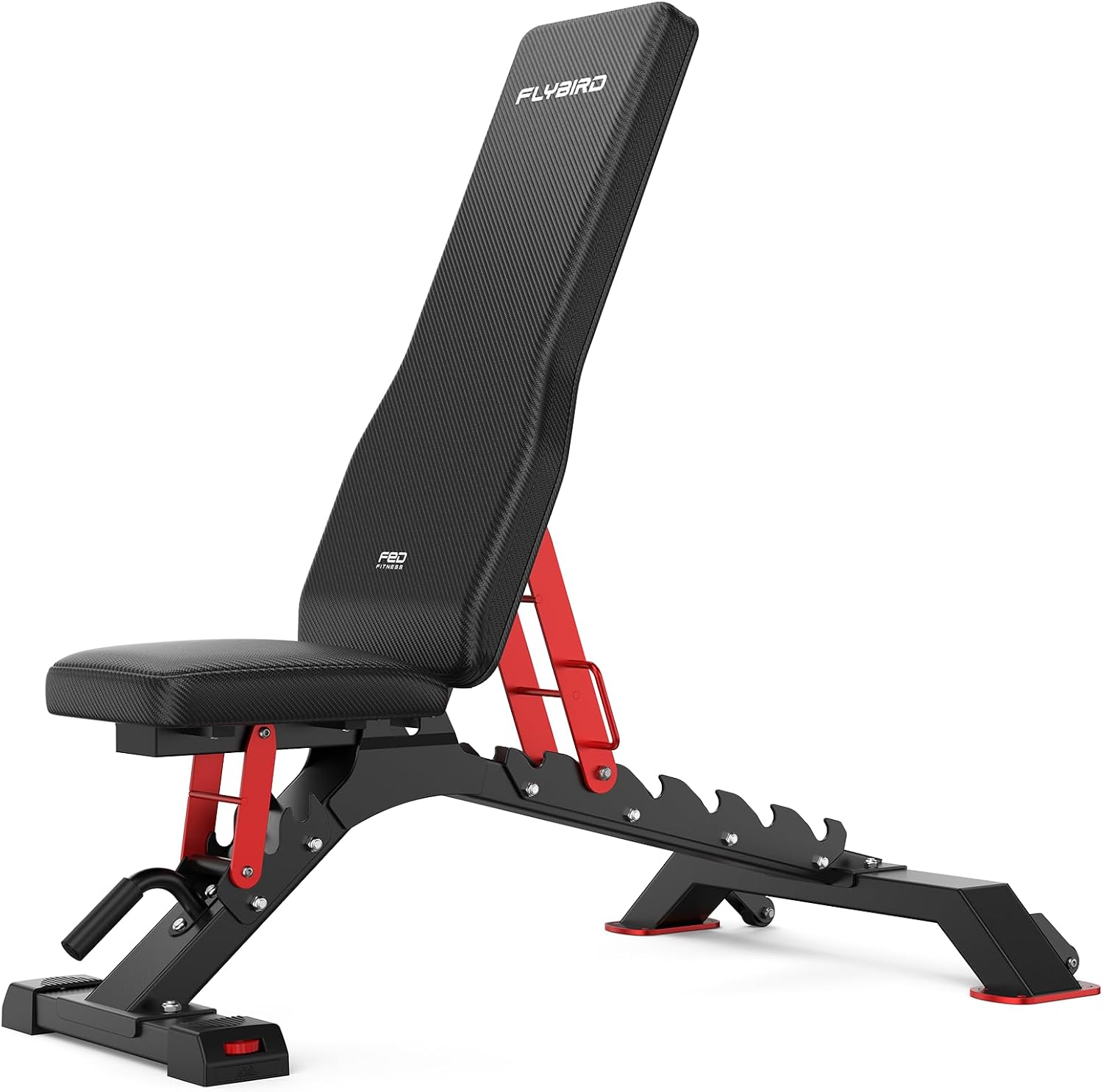
Choosing a heavy duty weight bench is about more than finding the highest advertised weight capacity. Heavy lifters need a stable frame, a supportive pad, secure adjustment hardware, and a design that fits their training style. A bench that works well for light dumbbell exercises may not be the best choice for regular heavy barbell pressing.
This guide compares several weight benches worth researching for a home gym, including high-capacity adjustable benches and established strength-training options. Use the recommendations as a shortlist, then verify the current product specifications before buying.
- Choose a published weight rating that comfortably exceeds your body weight plus the load supported by the bench.
- Look for a wide, stable base and a rigid frame with secure joints.
- Check the pad width, length, firmness, and height for your body size.
- For frequent heavy barbell work, prioritize stability and construction over extra attachments.
- Confirm whether the stated capacity applies to flat, incline, and decline positions.
A manufacturer’s maximum capacity is not a guarantee that every bench will feel stable under every movement. Check the exact model’s instructions, inspect the frame and adjustment locks, and use a rack with correctly positioned safety arms or a competent spotter for heavy barbell pressing.
Best Heavy Duty Weight Benches: Our Shortlist
The following products represent different priorities, from high advertised capacity to a more traditional strength-training setup. Product names and specifications can vary by model and revision, so confirm the listing details before purchasing.
1. FLYBIRD WB7 Commercial Bench
Best for: Lifters who want to investigate a high-capacity adjustable bench.
The FLYBIRD WB7 is marketed as a commercial-style adjustable bench. It is worth considering if you want a bench that can support multiple pressing exercises while offering a substantial advertised load rating.
- What to check: The exact model’s maximum capacity and whether it applies to all backrest positions.
- Stability: Inspect the base width, frame construction, adjustment mechanism, and any movement when the bench is set up correctly.
- Trade-off: A heavier-duty bench can take up more room and be less convenient to move or store.
2. Keppi Fitness Adjustable Weight Bench
Best for: Home gym users who want an adjustable bench for several exercise angles.
Keppi offers adjustable benches aimed at home strength training. Depending on the model, adjustment options and construction can differ considerably. Make sure you are comparing the intended model rather than assuming every Keppi bench has identical specifications.
- Adjustability: Confirm the available backrest and seat positions.
- Frame: Check the connection points, locking mechanism, and manufacturer’s stated load limit.
- Fit: Review the back pad length and width if you have a larger frame or prefer more shoulder support.
3. REP Fitness Nighthawk Adjustable Bench
Best for: Buyers who prioritize a purpose-built strength-training bench.
REP Fitness is another option to research if you want an adjustable bench designed around strength training rather than a large collection of add-on exercise stations. Compare its current specifications with your planned working loads and the bench positions you use most often.
- Construction: Review the frame design and adjustment hardware in the exact listing.
- Exercise range: Verify the available backrest and seat angles.
- Budget: A more specialized bench may cost more than a basic home-gym model.
4. YOLEO Adjustable Weight Bench
Best for: Budget-conscious buyers comparing advertised load ratings.
YOLEO has adjustable benches positioned for home workouts. Some models advertise high load capacities, but those figures should not be assumed to apply across the entire range. Check the precise model number, published rating, and any testing or certification information shown in the current product listing.
- Value: Compare the total price with the construction and features you will actually use.
- Setup: Check assembly requirements and confirm every locking pin is secured before training.
- Heavy lifting: Do not rely on a large advertised capacity alone; evaluate the overall frame and base design.
5. Marcy Flat Utility Weight Bench
Best for: Lifters who prefer a simple, fixed flat bench.
A flat utility bench can be a sensible choice if you mainly perform flat dumbbell presses, supported rows, and other exercises that do not require an adjustable backrest. Its simpler design may also make setup and inspection easier than a bench with several moving parts.
- Simple design: There are fewer adjustment mechanisms to operate.
- Exercise limitations: A flat bench does not replace an incline or decline bench.
- Capacity: Confirm the exact model’s load rating and dimensions before use.
Comparison: Which Bench Type Fits Your Training?
| Bench type | Best use | Main consideration |
|---|---|---|
| Heavy-duty adjustable | Flat and incline pressing | Check capacity at different angles and the locking mechanism. |
| Fixed flat bench | Flat pressing and supported exercises | Less versatile, but has fewer moving parts. |
| Foldable adjustable bench | Home gyms with limited space | Check hinge construction, locks, and stability before heavy use. |
| Bench with rack or attachments | Multi-exercise setups | Check rack stability, safe bar placement, and the capacity of each component. |
How to Choose a Heavy Duty Weight Bench
1. Calculate the load the bench must support
Start by considering your body weight and the external load involved in your exercise. For a typical bench press, the combined load on the bench includes the lifter and the barbell with its plates. Always follow the manufacturer’s definition of capacity, because different products may specify their ratings differently.
If a lifter weighs 250 lb and uses a 200 lb barbell load, the combined load is 450 lb. This simple calculation is a starting point, not a substitute for the manufacturer’s instructions or a suitable safety margin.
2. Look beyond the maximum weight rating
A large capacity number is useful only when you understand what it represents. Look for clear specifications, frame details, adjustment instructions, and evidence supporting any claimed certification. If the listing does not explain its rating, contact the seller or manufacturer before relying on it for heavy lifting.
3. Inspect frame stability and construction
Pay attention to the base width, support layout, welds, fasteners, and adjustment hardware. The bench should sit firmly on a level floor without rocking. Do not use equipment with cracked welds, bent parts, loose hardware, or damaged locking components.
4. Choose the right pad size
A pad that is too short may not support your head and upper body comfortably. A pad that is too wide may interfere with your shoulder-blade position during bench pressing. Compare the listed pad dimensions with your body size and training preferences rather than relying on a generic “extra-wide” label.
5. Decide whether you need adjustability
If you mostly bench press on a flat surface, a fixed flat bench may be enough. If your routine includes incline dumbbell presses, seated shoulder presses, and other angled movements, an adjustable model is more versatile. Avoid paying for attachments you are unlikely to use.
6. Consider bench height and portability
Seat height affects foot placement and stability during pressing. Check the assembled dimensions, especially if you are shorter, taller, or have limited floor space. Transport wheels and folding features can be useful, but they should not take priority over safe construction and a suitable capacity.
Common Mistakes When Buying a Heavy Weight Bench
- Choosing by capacity alone: Frame design, stability, and adjustment quality also matter.
- Confusing user weight with total load: Read the product’s definition of its capacity.
- Ignoring incline positions: A bench’s allowable load may vary by configuration.
- Overlooking pad dimensions: Fit and comfort can affect how securely you position yourself.
- Assuming every version is identical: Product names may cover multiple revisions with different specifications.
- Using a bench without proper safety equipment: For heavy barbell work, use an appropriate rack, safety arms, or a competent spotter.
Frequently Asked Questions
What weight capacity should a heavy duty weight bench have?
There is no single capacity that suits every lifter. Consider your body weight, the external load, the exercises you perform, and the manufacturer’s capacity definition. Choose a bench with an appropriate margin rather than buying solely by the biggest advertised number.
Is an adjustable bench strong enough for heavy bench pressing?
Some adjustable benches are designed for substantial loads, but their suitability depends on the exact model, construction, rating, and setup. Verify the published specifications and check whether the rating applies to the position you intend to use.
Is a flat bench better than an adjustable bench for heavy lifters?
A fixed flat bench can be a good choice for lifters who mainly perform flat pressing and want a simple setup. An adjustable bench offers more exercise options, but it adds adjustment hardware that should be inspected and maintained.
Does a higher advertised capacity always mean a safer bench?
No. A capacity figure is only one factor. Review the frame design, base stability, locking hardware, manufacturer instructions, and whether the rating has credible supporting documentation.
Can I use a heavy duty bench without a power rack?
For light dumbbell exercises, a bench may be used on its own if the manufacturer’s instructions allow it. Heavy barbell bench pressing is a different situation: use a suitable rack with safety arms or a competent spotter, and do not rely on the bench alone to prevent a failed lift from causing injury.
Final Verdict
The best heavy duty weight bench is the one that matches your actual training loads, fits your body, and remains stable in the positions you use. The FLYBIRD WB7 and Keppi adjustable benches are useful models to compare when researching higher-capacity home-gym options. REP Fitness is worth investigating if you prefer a more specialized strength-training bench, while YOLEO and Marcy provide other styles to evaluate.
Before buying, confirm the exact model, current capacity, dimensions, warranty, and return policy on Amazon. If you are building a complete home gym, browse the Weight Benches category for more guides and comparisons.
Disclosure: As an Amazon Associate, HeavyDutyChoice may earn from qualifying purchases. Product availability, specifications, and prices can change; verify details on the current listing before purchasing.