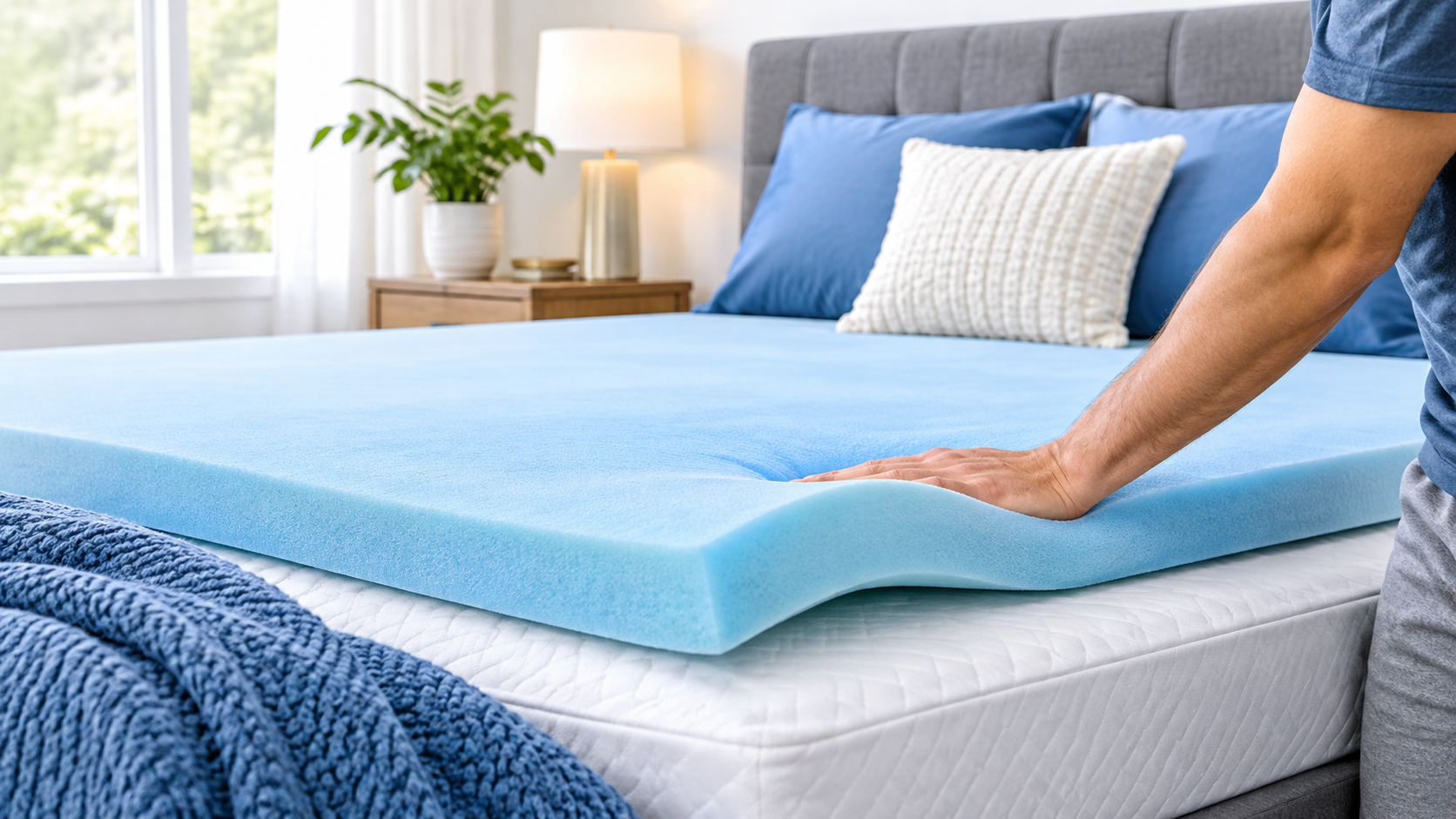
Mattress Topper Buying Guide
The best mattress topper for back pain should provide enough cushioning to reduce pressure while maintaining a stable, comfortable sleeping surface. A mattress that feels too hard may create uncomfortable pressure around the hips and shoulders, while one that is too soft may allow excessive sinking. The right topper can help improve the feel of your existing mattress without the expense of replacing it.
If you wake up with lower back discomfort, stiffness, or pressure around your hips, your mattress may be part of the problem. Before investing in a completely new bed, consider whether a supportive bed topper for back pain could make your current sleeping surface more comfortable.
However, not every mattress topper is suitable for every sleeper. Body weight, sleeping position, mattress condition, foam density, and firmness all influence how a topper feels. These factors are particularly important for heavier sleepers who need sufficient cushioning without excessive sinkage.
In this guide, we’ll compare mattress topper materials, explain what to look for when buying one, and highlight several options worth considering.
Quick Picks: Best Mattress Toppers for Back Pain
| Product | Best For | Main Advantage |
|---|---|---|
| ViscoSoft Select High Density | Support and value | High-density gel memory foam |
| LUCID Gel Memory Foam | Cooling comfort | Ventilated gel-infused foam |
| TEMPUR-Adapt | Body contouring | Responsive-to-body memory foam feel |
Important: These are product options to compare, not a guarantee of pain relief. Check current thickness, firmness, sizing, return terms, and availability before purchasing.
Our Recommended Mattress Toppers for Back Pain
1. ViscoSoft Select High Density Mattress Topper
Best for: Sleepers looking for supportive memory foam and pressure relief
The ViscoSoft Select High Density Mattress Topper is worth considering if your existing mattress feels too firm or does not provide enough cushioning around your lower back and hips.
It uses gel-infused high-density memory foam designed to contour to the body while providing a more supportive feel than many basic soft foam toppers. Its available thickness options also make it easier to choose how much cushioning you want to add.
Key Features to Check
- High-density memory foam construction
- Gel-infused foam for temperature management
- Multiple thickness options, depending on size and listing
- Contouring support for shoulders, hips, and back
- Designed for sleepers who prefer a balance of cushioning and support
Why consider it: A high-density foam topper may be a better starting point than an inexpensive, very soft foam layer if you want cushioning without an overly sinking sensation.
Potential drawback: Memory foam can retain heat, and the level of support still depends on the sleeper’s weight and the condition of the mattress underneath.
2. LUCID Gel Memory Foam Mattress Topper
Best for: Sleepers who want cushioning with additional airflow features
If your mattress feels uncomfortable and you also tend to sleep warm, a gel memory foam topper is another option to consider.
The LUCID Gel Memory Foam Mattress Topper is available in different thickness and construction options. Its ventilated gel-infused foam design aims to provide a more comfortable surface while allowing more airflow through the foam.
Key Features to Check
- Gel-infused memory foam
- Ventilated foam construction on applicable models
- Different thickness options
- Body-contouring comfort
- Multiple standard mattress sizes
Why consider it: The ventilation and gel infusion may appeal to people who enjoy memory foam but want to reduce some of the heat associated with traditional foam.
Potential drawback: Some softer versions may allow too much sinkage for heavier sleepers. If you weigh more or prefer a firmer sleeping surface, compare the firmness and thickness carefully before buying.
3. TEMPUR-Adapt Mattress Topper
Best for: Sleepers who prefer close body contouring
For shoppers interested in a premium memory foam option, the TEMPUR-Adapt Mattress Topper is another model worth comparing.
TEMPUR material is designed to adapt to the body’s shape and provide a close, cushioning feel. This type of construction can be appealing if you experience pressure around your shoulders, hips, or lower back when lying on a firm mattress.
Key Features to Check
- Three-inch memory foam construction on the standard TEMPUR-Adapt model
- Body-contouring foam feel
- Pressure-distributing comfort layer
- Removable cover on applicable versions
- Premium positioning compared with basic foam toppers
Why consider it: The close-contouring feel may suit people who want a more noticeable change to the surface of a firm mattress.
Potential drawback: It is a premium-priced option, and the slow-response feel of memory foam may not appeal to sleepers who frequently change positions. It may also feel warm to some people.
How to Choose a Mattress Topper for Back Pain
Choosing the right mattress topper involves more than simply selecting the thickest or softest option. The goal is to improve comfort without creating excessive sinkage or an unstable sleeping surface.
1. Choose the Right Firmness
Firmness is one of the most important factors when shopping for a mattress topper.
A topper that is too soft may allow your hips and midsection to sink too deeply, particularly if you have a heavier body type. On the other hand, an excessively firm topper may not provide enough cushioning around pressure-sensitive areas.
Consider these general guidelines:
- Soft: May suit lighter side sleepers who need additional cushioning.
- Medium: A versatile starting point for people who want a balance of contouring and support.
- Medium-firm: Worth considering if you prefer less sinkage and a more stable feel.
- Firm: May suit people whose existing mattress is too soft, although it will not repair a damaged mattress.
Remember that firmness labels are not standardized across manufacturers. A medium-firm topper from one brand may feel different from another.
2. Consider Your Body Weight
Body weight can significantly influence how a mattress topper performs.
Heavier sleepers generally place more pressure on the foam, which means a topper that feels supportive for a lighter person may compress more under a larger body.
If you are a Big & Tall sleeper, consider the following:
- Look for higher-density foam rather than choosing based on thickness alone.
- Compare the firmness of the topper and how much it compresses.
- Consider latex if you prefer a more responsive surface.
- Check the manufacturer’s product specifications and warranty.
- Look for secure corner straps or a non-slip design to reduce movement.
Most importantly, do not assume that a topper has a particular weight capacity unless the manufacturer explicitly provides one. Many mattress toppers do not publish a separate maximum sleeper weight.
3. Select an Appropriate Thickness
Mattress toppers commonly come in different thicknesses, with 2-inch and 3-inch options being popular choices.
| Thickness | Typical Use | Consideration |
|---|---|---|
| 1–2 inches | Small comfort adjustment | Less change to the original mattress feel |
| 3 inches | More noticeable cushioning | Changes the mattress feel more significantly |
| 4 inches or more | Substantial surface change | Check compression, stability, and sheet fit |
For heavier sleepers, a thicker topper is not automatically better. A thick but low-density foam layer can still compress excessively. Consider both thickness and material quality when comparing products.
4. Compare Different Mattress Topper Materials
The material determines how a topper feels, how much it contours to your body, and how quickly it responds when you move.
| Material | Main Benefit | Potential Drawback |
|---|---|---|
| Memory Foam | Contours to body shape | May retain heat |
| Latex | Responsive and buoyant feel | Often more expensive |
| Polyfoam | Available in different firmness levels | Quality varies by density |
| Wool | Soft cushioning and temperature regulation | Less contouring than foam |
| Down Alternative | Plush, pillow-like surface | May compress under heavier bodies |
For people who need more structured cushioning, high-density memory foam and latex are two materials worth comparing. If you prefer a softer, hotel-style sleeping surface, down alternative may be more appealing, but it is generally not the first material to consider when substantial support is your priority.
5. Check Mattress Condition Before Buying
A mattress topper can improve the comfort of a mattress that feels too firm or lacks some surface cushioning. However, it cannot reliably fix a mattress with deep sagging, broken springs, or significant structural damage.
If your mattress has a visible dip or your hips sink much lower than the rest of your body, replacing the mattress may be a better long-term investment.
Best Mattress Topper for Different Sleeping Positions
Your sleeping position affects which type of mattress topper may feel most comfortable.
Side Sleepers
Side sleepers often need cushioning around the shoulders and hips. A contouring memory foam topper with a suitable medium or medium-soft feel may be worth considering.
Back Sleepers
Back sleepers may prefer a balanced surface that cushions the lower back while preventing excessive hip sinkage. Medium to medium-firm options are useful starting points.
Stomach Sleepers
Stomach sleepers generally benefit from a more stable surface that limits excessive sinking around the midsection. A firmer, thinner topper may be more suitable.
Combination Sleepers
People who change positions during the night may prefer latex or responsive foam that makes repositioning easier.
Can a Mattress Topper Really Help with Back Pain?
A mattress topper may improve sleeping comfort if your current mattress is too firm, lacks adequate cushioning, or creates uncomfortable pressure points.
For example, a suitable foam topper may allow your shoulders and hips to settle more comfortably into the sleeping surface. This can make the bed feel more accommodating without replacing the entire mattress.
However, there are important limitations:
- A topper cannot diagnose or treat the underlying cause of back pain.
- It cannot repair a damaged or severely sagging mattress.
- A topper that is too soft may make an already unsupportive mattress feel worse.
- Individual comfort and results vary depending on body weight, sleeping position, and mattress condition.
If your back pain is persistent, severe, worsening, or accompanied by other concerning symptoms, seek appropriate medical advice rather than relying on bedding changes alone.
Mattress Topper vs. New Mattress: Which Should You Buy?
Before spending money on a new mattress, consider whether your current mattress is structurally sound.
| Situation | Better Option |
|---|---|
| Mattress feels too firm | Consider a cushioning topper |
| Mattress lacks surface comfort | Consider a suitable topper |
| Mattress has deep sagging | Consider replacing the mattress |
| Broken springs or structural damage | Replace or repair the mattress |
| Want to adjust comfort without buying a new bed | Try a mattress topper |
A mattress topper is generally a more affordable way to change the feel of a mattress. However, if the underlying mattress no longer provides adequate support, investing in a new mattress may be more practical.
What to Look for When Buying a Mattress Topper
Before placing an order, use this checklist to compare different models:
Mattress Topper Buying Checklist
- ✓ Choose a firmness level that complements your existing mattress.
- ✓ Compare foam density and material quality.
- ✓ Check the available thickness options.
- ✓ Confirm mattress dimensions before ordering.
- ✓ Check whether the topper includes corner straps or a non-slip bottom.
- ✓ Review the manufacturer’s warranty.
- ✓ Check return eligibility and trial conditions.
- ✓ Consider whether the material retains heat.
- ✓ Confirm that fitted sheets will accommodate the added height.
For heavier sleepers, material density and resistance to excessive compression deserve particular attention. A topper should make the mattress more comfortable without creating an unstable or overly soft sleeping surface.
Frequently Asked Questions
What is the best mattress topper for back pain?
There is no single best option for everyone. High-density memory foam and latex are two popular materials to compare. The right choice depends on your body weight, sleeping position, mattress firmness, and personal comfort preferences.
Is memory foam or latex better for back pain?
Memory foam offers closer body contouring and pressure cushioning, while latex generally feels more responsive and buoyant. Memory foam may suit people who prefer a hugging sensation, while latex may appeal to those who want easier movement and less sinkage.
Is a firm or soft mattress topper better for back pain?
Neither is universally better. A very soft topper may allow excessive sinking, while an overly firm option may not provide enough cushioning. A medium or medium-firm model can be a useful starting point, but individual needs vary.
What thickness mattress topper is best for back pain?
A 2-inch or 3-inch topper is a common starting point. A thinner topper makes a smaller adjustment to the original mattress feel, while a thicker option can create a more noticeable change. Foam density and firmness matter just as much as thickness.
Are mattress toppers good for heavier people?
They can be useful if the existing mattress is structurally sound and needs additional cushioning. Heavier sleepers should pay particular attention to foam density, firmness, compression, and durability rather than choosing a topper based on thickness alone.
Can a mattress topper fix a sagging mattress?
No. A topper may temporarily change the feel of a mattress, but it cannot restore damaged springs, repair broken support layers, or reliably correct deep sagging. A mattress with significant structural damage may need replacement.
How long does a mattress topper last?
The lifespan depends on the material, foam density, frequency of use, body weight, and maintenance. Higher-quality materials may retain their comfort longer, but all toppers should be checked periodically for permanent indentations, uneven compression, and deterioration.
Final Verdict: Choosing the Right Bed Topper for Back Pain
The best bed topper for back pain is not necessarily the softest, thickest, or most expensive model. It is the one that provides a comfortable balance of pressure cushioning and support for your body and sleeping position.
For shoppers comparing different options, the ViscoSoft Select High Density is worth considering for its high-density memory foam construction. LUCID offers gel-infused foam options for people who want additional cooling features, while TEMPUR-Adapt is worth comparing if you prefer a premium, closely contouring foam feel.
For Big & Tall sleepers, prioritize material quality, compression resistance, and a stable sleeping surface. These factors are more important than simply choosing a thick or plush topper.
Explore More Mattress Guides
Looking for more ways to improve your sleep setup? Explore our mattress topper guides and other Home & Sleep recommendations.
Disclosure: As an Amazon Associate, HeavyDutyChoice earns from qualifying purchases. Product availability, specifications, sizes, and prices may change. Always check the current Amazon listing before purchasing.