Toilet Seat Buying Guide
The best padded toilet seat offers a softer sitting surface than a traditional hard seat, but comfort depends on the padding, outer material, seat shape, and overall fit. Before choosing one, compare the construction, cleaning requirements, mounting stability, and compatibility with your toilet.
Round & elongated
Easy-care options
What Is a Padded Toilet Seat?
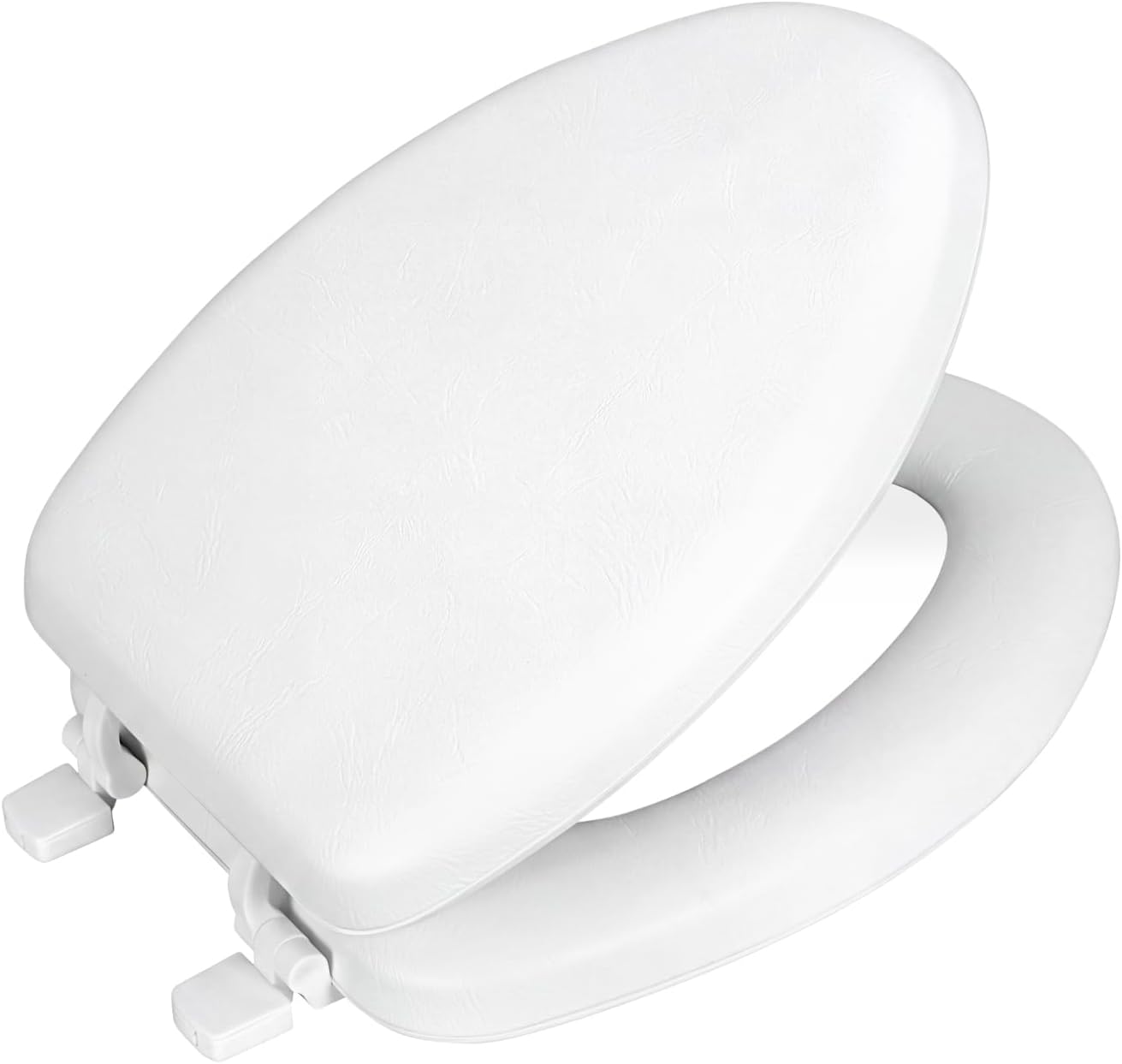
A padded toilet seat has a cushioned sitting surface, commonly made with foam or another soft filling covered by a wipeable outer material. It is designed to feel softer than a conventional hard plastic or molded-wood seat.
Padded seats may appeal to people who find hard surfaces uncomfortable or who prefer a softer feel during everyday bathroom use. However, padding varies considerably between products. A thicker cushion is not automatically more supportive, more durable, or easier to clean.
Best Padded Toilet Seats to Compare
The following categories provide practical starting points for shopping. These are product-category recommendations rather than claims that a particular model has been independently tested. Confirm the exact product specifications, bowl compatibility, and current listing details before buying.
Option 1 · Everyday Comfort
Padded Elongated Toilet Seats
If your toilet has an elongated bowl, start by looking for a padded seat specifically designed for that shape. A correctly fitted seat should align with the bowl and mounting points without excessive overhang or gaps.
- Confirm that the listing explicitly identifies the seat as elongated.
- Compare the cushion material and outer covering.
- Check how the seat attaches to the toilet and whether the hardware is included.
- Review the manufacturer’s instructions for cleaning and drying the surface.
Option 2 · Compact Toilets
Padded Round Toilet Seats
Round padded toilet seats are intended for compatible round bowls, which are generally shorter from front to back than elongated bowls. Choosing the correct shape is essential: a comfortable cushion will not compensate for a seat that does not fit securely.
- Check the product’s round-bowl designation.
- Measure the distance from the mounting holes to the front of the bowl.
- Inspect the cushion covering for seams and areas that may trap moisture.
- Confirm that the hinge and mounting hardware match your toilet.
Option 3 · Simple Maintenance
Wipe-Clean Vinyl Padded Toilet Seats
Many cushioned toilet seats use a vinyl-style outer covering. This type of surface can be convenient for routine wiping, but the quality of the seams, covering, and underlying padding matters. Follow the manufacturer’s care instructions to avoid damaging the material.
- Look for a smooth, intact covering with well-finished seams.
- Check which household cleaners are permitted.
- Review buyer feedback for reports of cracking, peeling, or flattening over time.
- Make sure the cushion does not interfere with the seat’s secure attachment.
Option 4 · Added Support Needs
Padded Seats for Seniors and Adults Who Need Extra Comfort
A padded surface may feel more comfortable for some adults, including people who dislike sitting on a hard seat. However, padding alone does not provide the extra height, side support, or stability that some users need when sitting down or standing up.
- Prioritize secure attachment and a stable fit.
- Consider whether additional seat height or support rails are needed.
- Check any published weight rating rather than estimating it from appearance.
- For mobility concerns, consider a purpose-designed raised toilet seat with suitable support features.
Explore Padded Toilet Seats for Adults
If you need extra height and hand support, see our guide to raised toilet seats with handles.
How to Choose the Best Padded Toilet Seat
1. Measure Your Toilet Before Buying
First, identify whether your toilet has a round or elongated bowl. Measure from the center of the mounting holes to the front edge of the bowl, and check the distance between the mounting holes. Compare your measurements with the product’s fit guide instead of relying on the appearance of the product photos.
Also check whether the seat’s shape and dimensions allow it to sit evenly on the bowl. A mismatch can cause discomfort, movement, or installation problems.
2. Compare the Cushion and Covering
Foam density, cushion thickness, and the outer covering can all affect the sitting experience. A softer cushion may feel comfortable initially but can compress with repeated use. A firmer cushion may retain its shape better but feel less plush.
Look for clear information about the filling and covering. If the listing does not disclose these details, do not assume the seat contains a particular foam type or has a specific durability rating.
3. Check Cleaning Requirements
Bathrooms are humid environments, so the seat’s covering and seams deserve attention. A surface that can be wiped clean is generally more convenient than one that requires special care, but the manufacturer’s cleaning instructions still matter.
- Use only cleaning products approved for the seat material.
- Avoid soaking the cushion unless the manufacturer says it is washable.
- Dry the surface as directed, especially around seams and fasteners.
- Inspect the covering periodically for tears, peeling, or exposed filling.
4. Verify Stability and Weight Capacity
Padded construction does not necessarily mean a toilet seat is designed for higher loads. If you need a seat for a heavier adult, look for an explicit manufacturer-published capacity for the exact model. Do not infer a weight limit from cushion thickness, seat width, or the material’s appearance.
Remember that the seat, hinges, mounting hardware, and toilet itself are separate parts of the installation. A padded seat should not be treated as a mobility aid or a substitute for properly designed support equipment.
For products specifically intended for higher weight requirements, visit our heavy-duty toilet seats guide.
5. Consider the Hinge and Installation
The hinge should keep the seat aligned and attached securely. Check the mounting instructions, hardware included in the package, and whether the manufacturer provides guidance for tightening or replacing components.
If quiet closing is important, compare models with a clearly specified soft-close feature. Not every padded seat has this feature, so verify it on the exact product listing. You can also read our soft-close toilet seat guide.
Padded vs. Standard Toilet Seats
Padded Toilet Seat
- Offers a cushioned sitting surface.
- May suit people who prefer a softer feel.
- Covering and seams require appropriate care.
- Padding may compress or wear with use.
Standard Hard Seat
- Typically has a rigid plastic or molded surface.
- Often has fewer cushion-related care concerns.
- May be simpler to clean, depending on design.
- May feel less comfortable to people who prefer padding.
Common Mistakes to Avoid
- Buying the wrong shape: Verify round or elongated compatibility before ordering.
- Choosing by thickness alone: Cushion thickness does not tell you how well the padding retains its shape.
- Ignoring seams and coverings: These can affect cleaning and long-term appearance.
- Assuming the seat is heavy-duty: Confirm any required weight rating in the manufacturer’s documentation.
- Expecting padding to provide mobility support: A cushion does not replace a raised seat or suitable support rails when those are needed.
- Overlooking the return policy: Review the seller’s return conditions before installation.
Frequently Asked Questions
Are padded toilet seats more comfortable?
They can feel more comfortable to people who prefer a cushioned surface. Comfort is subjective, however, and depends on the padding, covering, fit, and how the seat feels during use.
Are padded toilet seats available for elongated toilets?
Yes, padded seats are sold in different shapes, including elongated styles. Check the product’s stated bowl shape and measurements before purchasing.
Are padded toilet seats easy to clean?
Cleaning requirements depend on the covering, seams, and manufacturer instructions. Wipe-clean surfaces may be convenient, but avoid harsh chemicals or soaking the cushion unless the manufacturer permits it.
Do padded toilet seats support more weight?
Not necessarily. Padding is a comfort feature, not proof of a higher weight rating. If load capacity is important, verify the exact model’s published rating and make sure the toilet and mounting system are suitable as well.
Is a padded toilet seat suitable for an elderly person?
It may suit an older adult who simply prefers a softer sitting surface. If the person has difficulty sitting down or standing up, assess whether added height, stable support rails, or a purpose-designed raised toilet seat would be more appropriate.
Can I get a padded toilet seat with soft-close hinges?
Some products may combine padding with a soft-close mechanism, but the features vary by model. Confirm both features in the exact listing rather than assuming that all padded seats close slowly.
Final Buying Advice
The best padded toilet seat is one that matches your toilet, provides the level of cushioning you prefer, and can be maintained according to the manufacturer’s instructions. Before buying, verify the bowl shape, dimensions, covering, mounting hardware, and any required weight rating.
For more options, visit our Toilet Seats buying guide. If your main priority is quiet closing, read our best soft-close toilet seats guide. For higher-capacity options, see best heavy-duty toilet seats.
Affiliate disclosure: As an Amazon Associate, this site may earn from qualifying purchases. Product availability and specifications can change. Verify current listing details and manufacturer information before purchasing.