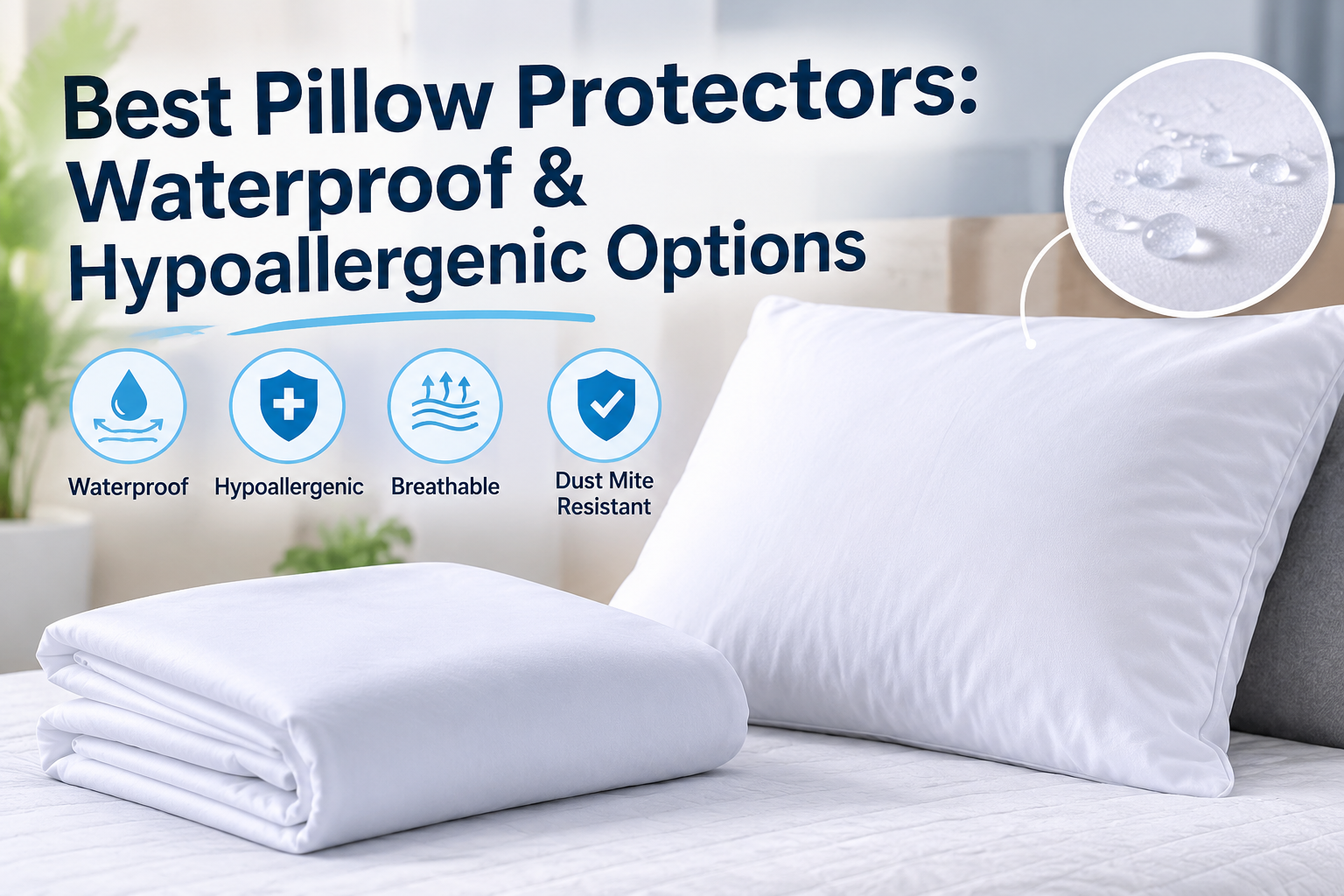
The best pillow protectors help keep pillows cleaner by adding a removable barrier between the pillow and its pillowcase. They can protect against sweat, body oils, spills, stains, and everyday dirt. Certain fully enclosed designs are also made to help limit exposure to dust mites and other allergens inside the pillow.
However, not all pillow protectors offer the same level of protection. A waterproof protector uses a liquid-resistant membrane, while an allergen-barrier encasement relies on its fabric construction and a secure closure. Some products combine both features, but others focus only on keeping the pillow clean.
In this guide, we compare waterproof, hypoallergenic, cotton, and zippered pillow protectors. We also explain how to choose the right size, avoid noisy materials, and find a protector that does not noticeably change the feel of your pillow.
Quick Answer
For everyday moisture protection, consider a zippered waterproof pillow protector with a breathable fabric surface and a quiet membrane. For dust mite and allergen concerns, prioritize a fully enclosed encasement with a documented barrier design and secure zipper. If you mainly want to protect an expensive pillow from sweat and stains, a washable cotton or cotton-blend protector may be sufficient.
Best Pillow Protectors to Compare
These options represent different approaches to pillow protection. Some focus on waterproofing, while others are designed around allergen barriers or everyday fabric protection. They are products to compare rather than a ranking based on HeavyDutyChoice hands-on testing. Check the current Amazon listing for the exact model, size, materials, and care instructions before ordering.
1. Coop Sleep Goods Ultra-Tech Pillow Protector
Best for: Waterproof protection with a soft fabric surface
The Coop Sleep Goods Ultra-Tech Pillow Protector is a strong option to compare if your main concern is keeping sweat and accidental spills away from your pillow. Its construction combines a waterproof polyurethane membrane with a soft fabric surface.
A waterproof membrane is especially useful for protecting foam and other pillow fillings that may be difficult to clean. The fabric surface is also an important consideration because a waterproof layer that feels stiff or makes noise can affect sleep comfort.
This product is worth considering if you want a removable protective layer without relying on a traditional plastic-feeling cover. Confirm the current size and care instructions before buying.
2. SafeRest Premium Zippered Pillow Protector
Best for: Everyday waterproof protection
SafeRest is a recognizable name in protective bedding, and its zippered pillow protector is worth comparing for everyday moisture protection. This style of protector is designed to enclose the pillow rather than simply cover its upper surface.
A zippered design helps keep the protective layer in place when you move during sleep. When comparing versions, check the actual product listing to confirm the waterproof membrane, fabric composition, and whether the zipper fully closes around the pillow.
This type of protector may suit households that want a removable barrier against perspiration, spills, and everyday pillow stains.
3. AllerEase Cotton Allergy Protection Pillow Protector
Best for: Shoppers looking for an allergy-focused cover
AllerEase offers pillow protection products aimed at people who want an additional barrier between their pillow and the sleeping environment. Its cotton allergy protection pillow protector is worth comparing if you prefer a fabric-focused option rather than a waterproof cover.
When shopping for an allergy-oriented protector, look beyond the word “hypoallergenic.” Check whether the product fully encloses the pillow, what barrier claims the manufacturer makes, and whether the zipper closes securely.
If dust mites are a specific concern, choose a product with clearly documented allergen-barrier construction rather than assuming that any cotton pillow cover provides the same protection.
4. Protect-A-Bed AllerZip Waterproof Pillow Protector
Best for: Combining waterproofing with a full enclosure
Protect-A-Bed AllerZip is worth comparing if you want a zippered pillow encasement that focuses on liquid protection. Its fully enclosed style is different from an ordinary slip-on pillow cover.
The combination of a waterproof barrier and a zipper can help protect the pillow from moisture on multiple sides. However, you should still inspect the zipper construction, fabric feel, and washing instructions before buying.
For shoppers who want both moisture protection and a more complete enclosure, this is a useful product to investigate.
5. SureGuard Waterproof Pillow Protectors
Best for: A waterproof multi-pillow setup
SureGuard waterproof pillow protectors are worth considering if you need to protect several pillows in a bedroom. Multi-piece sets can be practical when you want matching protection for a primary bed and spare pillows.
Before choosing a set, check the number of protectors included, the finished dimensions, and whether the listing specifies a waterproof backing and full zipper closure.
A set is only good value if its dimensions match your pillows. Standard, queen, and king labels can vary between manufacturers, so compare the actual measurements.
6. Niagara Sleep Solution Waterproof Pillow Protectors
Best for: Multi-pack household protection
Niagara Sleep Solution offers multi-pack waterproof pillow protectors that are worth comparing if you need several covers at once. Buying a set can simplify replacing worn protectors or protecting multiple beds.
Look closely at the exact pack size and material description. Some listings emphasize waterproof protection, while others may have different fabric surfaces or dimensions. Make sure you are comparing the same version before deciding.
For everyday use, also check whether the protector is machine washable and whether the waterproof backing has specific drying restrictions.
Pillow Protector Comparison
Use this table to compare the main buying considerations. Exact construction, pack size, and product specifications should be confirmed on the current listing.
| Product | Main Focus | What to Check |
|---|---|---|
| Coop Ultra-Tech | Waterproof protection | Membrane, surface feel, care instructions |
| SafeRest Premium | Everyday moisture protection | Waterproof backing and zipper closure |
| AllerEase Cotton | Allergy-focused fabric cover | Barrier details and full enclosure |
| Protect-A-Bed AllerZip | Waterproof zippered encasement | Waterproof construction and fit |
| SureGuard | Waterproof multi-cover option | Pack quantity and dimensions |
| Niagara Sleep Solution | Multi-pack protection | Material, pack size, washing requirements |
What Is a Pillow Protector?
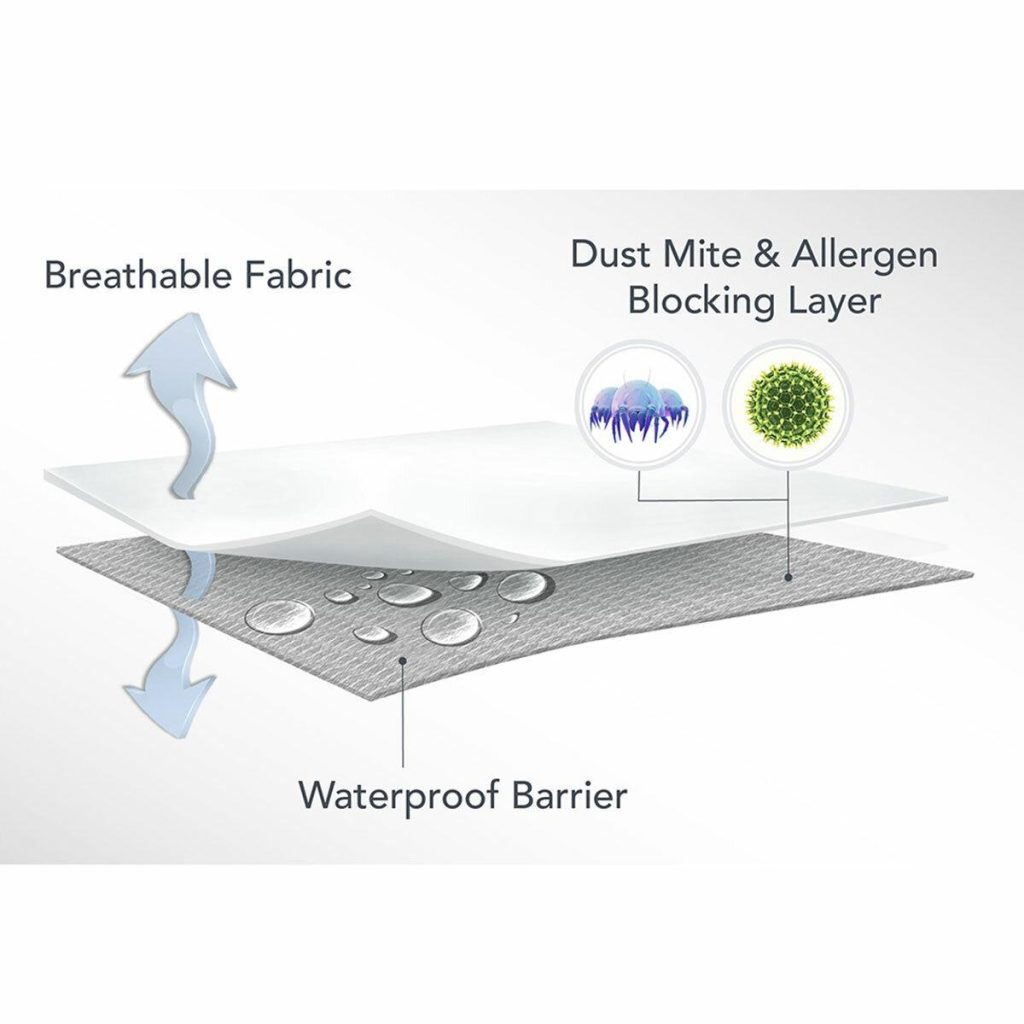
A pillow protector is a removable cover that fits around the pillow underneath the regular pillowcase. It adds an extra layer between the pillow filling and everyday contaminants such as sweat, body oils, makeup, dust, and accidental spills.
Most pillow protectors are designed to be removed and washed separately. This makes them particularly useful for pillows that are difficult to clean, including many memory foam and latex models.
A zippered protector can enclose more of the pillow than an open-ended pillowcase. Some designs also include waterproof membranes or fabrics intended to limit exposure to specific allergens.
Pillow Protector vs. Pillowcase
A pillowcase is the outer fabric layer that touches your face and hair. A pillow protector sits underneath it and is designed to protect the pillow itself.
| Feature | Pillow Protector | Pillowcase |
|---|---|---|
| Main purpose | Protects the pillow | Provides a comfortable sleeping surface |
| Typical closure | Often a zipper or enclosed design | Usually an open end or envelope closure |
| Waterproof options | Available | Less common |
| Allergen barrier options | Available in specific encasements | Not usually designed for this purpose |
| Position on pillow | Under the pillowcase | Outer layer |
For the best everyday setup, use a protector that fits the pillow correctly and place a regular pillowcase over it. The pillowcase can then be changed more frequently without washing the protector every time.
Waterproof vs. Hypoallergenic Pillow Protectors
These two categories are often grouped together in product listings, but they solve different problems.
Waterproof Pillow Protectors
Waterproof pillow protectors use a liquid-resistant layer, commonly a polyurethane-based membrane or another waterproof material. The purpose is to stop liquids from soaking through to the pillow filling.
They can be useful for:
- People who sweat heavily during sleep
- Children’s pillows and guest-room bedding
- People who want extra protection against accidental spills
- Protecting memory foam or other difficult-to-wash pillow fillings
- Households that want to reduce staining and moisture exposure
The main trade-off is that a waterproof membrane can reduce airflow compared with an ordinary fabric cover. Some products may also feel warmer or make noise when the sleeper moves. A soft fabric surface and a quiet membrane are useful features to look for.
Hypoallergenic Pillow Protectors
Hypoallergenic pillow protectors are marketed for people who want to reduce exposure to certain allergens. Some use tightly woven fabric, while others use a fully enclosed encasement with a zipper.
If dust mites are your main concern, the construction matters more than a generic hypoallergenic label. Look for details about the fabric barrier, complete enclosure, zipper design, and any documented testing or specifications.
A regular zippered cover is not automatically a proven dust mite barrier. Similarly, a pillow protector should not be treated as a cure for allergies or asthma. It is one possible part of a broader bedding-cleaning routine.
Important Allergy Note
If you have a diagnosed dust mite allergy, choose a specifically documented allergen-barrier encasement and follow your healthcare professional’s advice. A product described as “hypoallergenic” does not automatically block dust mites or their allergens.
Types of Pillow Protector Materials
The material affects comfort, airflow, moisture protection, and how easy the protector is to maintain. Consider the following differences before buying.
| Material | Typical Feel | Considerations |
|---|---|---|
| Cotton | Soft and familiar | Breathable, but not automatically waterproof |
| Polyester | Smooth and lightweight | Often affordable; airflow depends on construction |
| Bamboo-derived viscose or rayon | Smooth and soft | Check the actual fabric blend and care label |
| Polyurethane membrane | Depends on the fabric surface | Provides a waterproof barrier; may affect airflow |
| Vinyl | Smooth and less fabric-like | Waterproof but may feel warmer or noisier |
| Tightly woven microfiber | Fine and smooth | Barrier performance depends on weave and product specifications |
How to Choose the Right Pillow Protector
1. Choose the Right Size
A protector that is too small can compress the pillow and change its loft. One that is too large may bunch up inside the pillowcase or allow the pillow to shift around.
Check the actual dimensions rather than relying only on labels such as Standard, Queen, or King. Different brands may use slightly different measurements.
2. Decide Whether You Need Waterproofing
If your main concern is sweat, drool, spills, or accidental moisture, choose a protector with a clearly stated waterproof membrane. A plain cotton cover can help catch everyday dirt but should not be assumed to stop liquids.
3. Check the Zipper Design
A zipper helps enclose the pillow and keep the protector in place. For allergen-barrier purposes, look for a design that closes the entire opening and has clear information about the zipper and its closure system.
Inspect the zipper end and seams as well. A gap or incomplete closure can undermine the purpose of a fully enclosed cover.
4. Look for Quiet and Breathable Construction
Some waterproof covers can feel stiff or make a rustling sound when you move. If you are a light sleeper, look for a soft fabric surface and product descriptions that specifically address noise.
Hot sleepers should also consider whether the protector uses a breathable face fabric around the waterproof membrane. No protector can guarantee that you will stay cool, but the material combination can affect how warm it feels.
5. Check Washing and Drying Instructions
Most protectors are designed to be removable and washable, but care instructions vary. Waterproof membranes may be damaged by high dryer temperatures, bleach, or unsuitable cleaning products.
Check the care label before washing. If the manufacturer recommends low-temperature drying, follow that instruction to help preserve the protective layer.
6. Compare Pack Quantity and Value
Many pillow protectors are sold in pairs or multi-packs. Compare the cost per protector rather than the package price alone. Also make sure the pack contains the size you need.
Best Pillow Protectors for Different Needs
There is no single protector that is ideal for every sleeper. Use your main priority to narrow down the choices.
| Your Main Need | What to Look For | Important Detail |
|---|---|---|
| Sweat and spills | Waterproof membrane | Check seams and zipper coverage |
| Dust mite concerns | Documented allergen-barrier encasement | Check fabric barrier and complete closure |
| Hot sleeping | Breathable fabric surface | Avoid assuming all waterproof covers feel cool |
| Everyday pillow care | Washable cotton or blended fabric | Check fit and washing instructions |
| Multiple beds | Two-pack or multi-pack | Compare quantity and actual dimensions |
How to Use and Maintain a Pillow Protector
Using a pillow protector correctly is simple, but a few habits can help it last longer.
- Remove the regular pillowcase before fitting the protector.
- Slide the pillow fully into the protector without forcing the corners.
- Close the zipper completely and check that the fabric is not caught in the teeth.
- Put the regular pillowcase over the protector.
- Wash the protector according to the care label and allow it to dry fully before putting it back on the pillow.
The pillow protector does not replace washing or caring for the pillow itself. Follow the pillow manufacturer’s cleaning instructions, especially if the pillow contains memory foam, latex, down, or other materials that require special care.
Frequently Asked Questions
Are pillow protectors worth buying?
Yes, they can be useful if you want to protect a pillow from sweat, body oils, spills, and everyday dirt. They are especially practical for pillows that are difficult to wash, such as many memory foam and latex models.
What is the difference between waterproof and hypoallergenic pillow protectors?
Waterproof protectors use a liquid-resistant layer to prevent moisture from reaching the pillow. Hypoallergenic or allergen-barrier protectors are designed to limit exposure to specific allergens through their fabric and enclosure. Some products combine both features, but the claims should be checked separately.
Do zippered pillow protectors stop dust mites?
Not every zippered protector is designed or tested as a dust mite barrier. Look for a fully enclosed encasement with documented barrier specifications and a secure closure. A zipper alone does not prove allergen protection.
Do waterproof pillow protectors make you sweat?
Some waterproof protectors may feel warmer because their membrane limits airflow. The result depends on the backing, surface fabric, and overall construction. If you sleep hot, compare breathable fabric surfaces and look for clear information about noise and heat retention.
Can I put a pillowcase over a pillow protector?
Yes. The usual arrangement is pillow, protector, and then pillowcase. The protector provides the protective layer, while the pillowcase provides the outer surface that touches your skin.
How often should I wash a pillow protector?
Washing frequency depends on how much you sweat, whether the pillow becomes soiled, and the manufacturer’s instructions. Wash it whenever it becomes dirty and follow the care label to protect its materials.
Can pillow protectors change how a pillow feels?
They can. A thick quilted protector may add some softness or bulk, while a tightly fitted waterproof cover may slightly change the feel of the pillow. If you want to preserve the original pillow feel, look for a thin, flexible protector that fits correctly.
Do I need a separate pillow protector for a memory foam pillow?
It can be a good idea because many memory foam pillows should not be machine-washed. A removable protector helps catch sweat and stains before they reach the foam. Always check that the protector does not compress the pillow excessively.
Final Verdict: Which Pillow Protector Should You Buy?
The best pillow protector depends on what you want to protect against. If moisture and accidental spills are your main concern, compare waterproof models such as the Coop Ultra-Tech, SafeRest, and Protect-A-Bed AllerZip. If your priority is allergy-related protection, look for a fully enclosed product with clearly documented barrier construction rather than relying on a generic hypoallergenic claim.
For everyday pillow care, a washable cotton or blended protector may be all you need. If you are buying for several beds, multi-packs from brands such as SureGuard and Niagara Sleep Solution are worth comparing.
Before purchasing, confirm the exact dimensions, zipper design, fabric surface, waterproof claims, and washing instructions. A well-fitting protector should protect your pillow without adding unnecessary bulk or making your sleeping surface uncomfortable.
Related Pillow Guides
Disclosure: HeavyDutyChoice may earn a commission from qualifying purchases made through Amazon links in this article, at no additional cost to you. Product availability, specifications, and prices can change. Always confirm the details on the current product listing before purchasing.