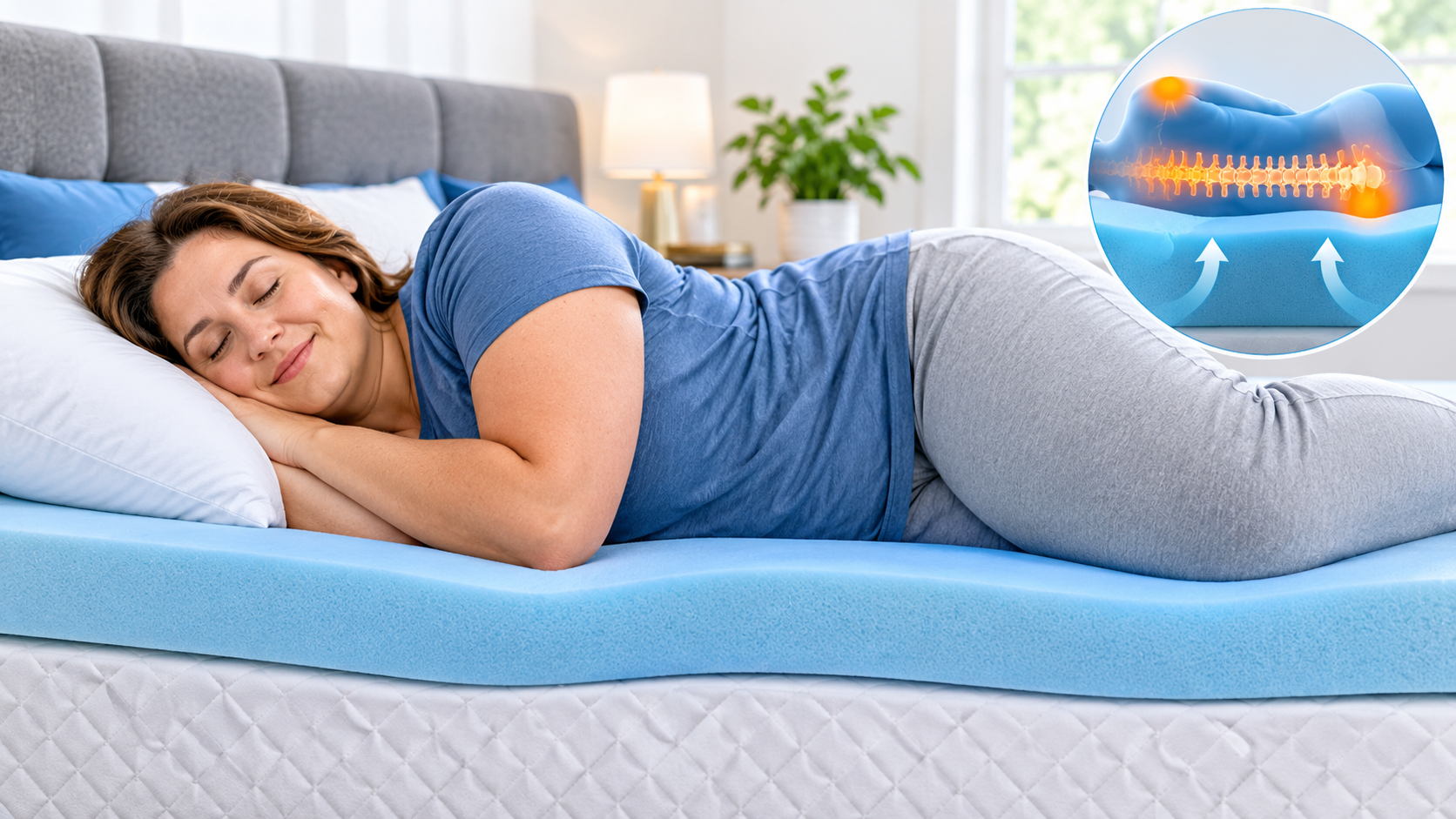
Quick Answer: Which Mattress Topper Offers the Best Pressure Relief?
A good pressure relief mattress topper cushions areas that carry more body weight, such as the shoulders, hips, and lower back. Memory foam is a popular choice because it contours closely to the body, while latex offers a more responsive feel.
- Best overall pressure relief: TEMPUR-Adapt Mattress Topper
- Best high-density foam option: ViscoSoft Select High Density Mattress Topper
- Best alternative to memory foam: Latex Mattress Topper
The best choice depends on your sleeping position, body weight, preferred firmness, and the condition of your existing mattress.
A mattress that feels too firm can create uncomfortable pressure around the shoulders, hips, and other areas where the body makes contact with the sleep surface. Instead of replacing the entire bed, adding a pressure relief mattress topper may be a practical way to improve comfort.
The right topper adds cushioning and helps distribute body weight across a wider surface. This can be especially useful for side sleepers, people with prominent pressure points, and anyone whose current mattress feels harder than expected.
However, not every soft topper provides effective pressure relief. A model that compresses too easily may allow the body to sink too far, while a very firm design may not provide enough cushioning.
In this guide, we’ll compare popular pressure-relieving options, explain how different materials perform, and show you how to choose a topper that matches your sleeping position.
Best Pressure Relief Mattress Toppers: Our Top Picks
These options cover different comfort preferences, from close-contouring memory foam to more responsive materials. Product specifications and available sizes can vary, so check the current listing before purchasing.
| Product | Best For | Main Feature |
|---|---|---|
| TEMPUR-Adapt Mattress Topper | Close-contouring pressure relief | 3-inch TEMPUR memory foam |
| ViscoSoft Select High Density | Cushioning with a denser foam feel | High-density memory foam with multiple thickness options |
| Latex Mattress Topper | Responsive cushioning | Springier feel than traditional memory foam |
1. TEMPUR-Adapt Mattress Topper
Best for: Sleepers who want close body contouring and substantial pressure-relieving cushioning.
The TEMPUR-Adapt Mattress Topper is a strong option for people who prefer the feel of memory foam. Its 3-inch TEMPUR material construction is designed to respond to body shape, weight, and temperature, creating a closer-fitting sleep surface.
This type of contouring can help cushion areas that experience concentrated pressure. Side sleepers may particularly appreciate the way memory foam conforms around the shoulders and hips instead of creating a uniformly hard surface.
Why Consider It?
- Three-inch TEMPUR memory foam construction
- Close contouring around the body
- Designed to distribute pressure across the sleep surface
- Suitable for shoppers who prefer a traditional memory foam feel
Potential drawback: Memory foam responds more slowly than latex, so some people may find it harder to change positions. It can also retain heat, which may be uncomfortable for hot sleepers.
2. ViscoSoft Select High Density Mattress Topper
Best for: Sleepers who want pressure-relieving memory foam with a denser construction.
The ViscoSoft Select High Density Mattress Topper is another option worth comparing if your current mattress feels too firm. Its high-density memory foam is designed to contour around the body while providing a more substantial feel than many basic foam toppers.
The Select model is available in different thickness options, including 3-inch and 4-inch versions. This gives shoppers more flexibility when deciding how much cushioning they want to add to an existing mattress.
For people who experience pressure around the hips or shoulders, a thicker foam layer may provide more room for the body to settle into the surface. However, thickness alone does not determine pressure relief. Firmness and foam construction matter just as much.
Why Consider It?
- High-density memory foam construction
- Multiple thickness options
- Contouring for pressure-sensitive areas
- Removable cover on the Select model
Potential drawback: A denser foam surface may feel different from a plush pillow-top design. If you prefer a very responsive mattress, traditional memory foam may not be your ideal material.
3. Latex Mattress Topper
Best for: People who want pressure-relieving cushioning without the slow-response feel of traditional memory foam.
Latex mattress toppers offer a different type of comfort. Rather than slowly molding around the body, latex generally feels more buoyant and responsive. This can make it easier to move and change sleeping positions during the night.
Latex can also provide a balance between cushioning and support. A suitable firmness may help reduce pressure around the shoulders and hips while preventing the overly sinking sensation some sleepers experience with softer foam.
When shopping, compare natural Dunlop and Talalay latex options, available firmness levels, and thickness. A 2-inch topper may make a modest comfort adjustment, while a thicker model can create a more noticeable change in the mattress surface.
Why Consider It?
- Responsive feel compared with traditional memory foam
- Can provide a balance of cushioning and support
- Often easier to move around on
- Available in different firmness levels and thicknesses
Potential drawback: Latex toppers can cost more than basic foam models. Some sleepers may also find firmer latex options insufficiently plush for sensitive shoulder or hip areas.
Explore Latex Toppers on Amazon
What Is Pressure Relief in a Mattress Topper?
Pressure relief refers to how effectively a sleep surface cushions the body and distributes weight. When a mattress is too firm, certain areas may carry a disproportionate amount of pressure instead of sinking into the comfort layer.
A pressure-relieving topper adds another cushioning layer between your body and the mattress. The material should adapt to your shape without allowing excessive sinking.
Three areas commonly deserve attention:
Shoulders
Side sleepers may need enough cushioning to accommodate the shoulder without creating an overly firm contact point.
Hips
The hips can carry substantial body weight, especially when sleeping on your side.
Lower Back
A suitable topper should cushion the body without allowing the midsection to sink excessively.
The goal is not simply to make a mattress softer. It is to create a more comfortable surface that balances cushioning and support.
How to Choose the Right Pressure Relief Mattress Topper
1. Choose the Right Material
Material selection affects how a topper contours, responds to movement, and manages heat.
| Material | Pressure Relief | Feel | Considerations |
|---|---|---|---|
| Memory Foam | Close contouring | Body-hugging | May retain heat and respond slowly |
| Latex | Cushioning with buoyancy | Springy and responsive | Can feel too firm for some sleepers |
| Polyfoam | Varies by construction | Ranges from soft to firm | Quality and durability vary considerably |
| Fiberfill / Pillow Top | Surface cushioning | Plush and fluffy | May compress and need regular fluffing |
If pressure relief is your main priority, memory foam is a sensible starting point. Latex may be a better alternative if you want a more responsive surface.
2. Match Firmness to Your Sleeping Position
Your sleeping position changes how pressure is distributed across the mattress.
- Side sleepers: Usually benefit from enough cushioning around the shoulders and hips. A very firm topper may create uncomfortable pressure.
- Back sleepers: Often need a balance between surface cushioning and support around the lower back.
- Stomach sleepers: Should be cautious with very soft toppers because excessive sinking around the hips may affect comfort and alignment.
- Combination sleepers: May prefer responsive foam or latex that makes changing positions easier.
3. Select an Appropriate Thickness
Thickness determines how much the topper changes the feel of your existing mattress. A thin model may provide a small adjustment, while a thicker model can create a more noticeable cushioning layer.
| Thickness | Typical Use | Consideration |
|---|---|---|
| 1–2 inches | Minor comfort adjustment | Useful when the mattress is only slightly too firm |
| 3 inches | More noticeable contouring | A common choice for adding substantial cushioning |
| 4 inches | Major surface adjustment | Check firmness and compression carefully |
More thickness does not automatically mean better pressure relief. A thick but excessively soft topper may allow too much sinking, while a thinner, well-designed model may provide the comfort you need.
4. Consider Body Weight
Body weight influences how deeply you compress a topper. A softer model may provide enough cushioning for a lighter sleeper but feel insufficiently supportive for someone heavier.
Heavier sleepers may want to compare higher-density foam and firmer comfort options. Lighter sleepers may prefer a softer surface that allows enough contouring around pressure-sensitive areas.
For more specific recommendations, see our guide to Best Mattress Toppers for Heavy People.
5. Check Cooling and Cover Features
Some memory foam toppers can retain heat. If you tend to sleep warm, look for breathable covers, ventilated foam, or materials designed to improve airflow.
A removable, washable cover is also useful for routine maintenance. Check the care instructions carefully because the foam core itself is often not machine washable.
Pressure Relief vs. Support: What’s the Difference?
Pressure relief and support are related, but they are not the same thing.
Pressure relief describes how a sleep surface cushions the body and reduces concentrated pressure at contact points. Support describes how well the mattress system holds the body in a comfortable, stable position.
A very soft topper may feel comfortable at first but allow excessive sinking. A very firm topper may provide a stable surface but create pressure around the shoulders and hips.
The best option balances both qualities. This is why choosing a topper based only on softness or thickness can lead to disappointment.
Can a Mattress Topper Help with Shoulder and Hip Pressure?
A suitable topper may improve comfort when shoulder or hip pressure is caused by a mattress surface that feels too firm. This is particularly relevant for side sleepers, whose shoulders and hips make concentrated contact with the bed.
Memory foam and some latex designs can contour around these areas, creating a more cushioned surface. However, the result depends on your body shape, sleeping position, topper firmness, and the underlying mattress.
If your mattress has deep sagging or damaged support, a topper is unlikely to solve the underlying problem. It changes the comfort layer, not the mattress’s internal support structure.
Frequently Asked Questions
What type of mattress topper is best for pressure relief?
Memory foam is a popular choice because it contours closely to the body and cushions pressure-sensitive areas. Latex is another option for people who want pressure relief with a more responsive feel.
Are memory foam toppers good for side sleepers?
They can be. Memory foam can cushion the shoulders and hips, which are common pressure points for side sleepers. The right firmness and thickness depend on body weight and the feel of the existing mattress.
Is a softer mattress topper always better for pressure relief?
No. A very soft topper may allow excessive sinking and reduce support. The goal is enough cushioning to relieve concentrated pressure while keeping the body comfortably supported.
How thick should a pressure relief mattress topper be?
A 2-inch topper may be sufficient for a modest comfort adjustment. A 3-inch option can provide more substantial contouring. The best thickness depends on your mattress, body weight, and preferred sleeping position.
Can a mattress topper help with hip pressure when sleeping on your side?
It may help if the underlying mattress is too firm. A contouring topper can add cushioning around the hips, but it should not be so soft that the body sinks excessively.
Does latex provide pressure relief like memory foam?
Latex can provide pressure relief, but it feels different. Memory foam tends to contour more closely, while latex is generally more responsive and buoyant. Your preferred feel will determine which material works better.
Can a mattress topper fix an old, sagging mattress?
No. A topper can change the comfort of the surface, but it cannot repair damaged springs, worn support foam, or deep permanent indentations. A mattress with significant structural problems may need replacement.
Final Verdict: Finding the Best Pressure Relief Mattress Topper
The best pressure relief mattress topper should cushion your body’s contact points without sacrificing the support you need. Memory foam is a strong option for close contouring, while latex offers a more responsive alternative.
The TEMPUR-Adapt Mattress Topper is worth considering if you prefer a close-contouring memory foam feel. The ViscoSoft Select High Density offers another foam option with multiple thickness choices. If you dislike the slow response of memory foam, compare latex toppers instead.
Before purchasing, consider your sleeping position, body weight, preferred firmness, and the condition of your current mattress. A well-matched topper can make a meaningful comfort difference without requiring a complete mattress replacement.
Related Mattress Topper Guides
Disclosure: As an Amazon Associate, HeavyDutyChoice.com earns from qualifying purchases. Product availability, specifications, prices, and return policies may change. Always confirm the current listing before purchasing.