Quick Answer
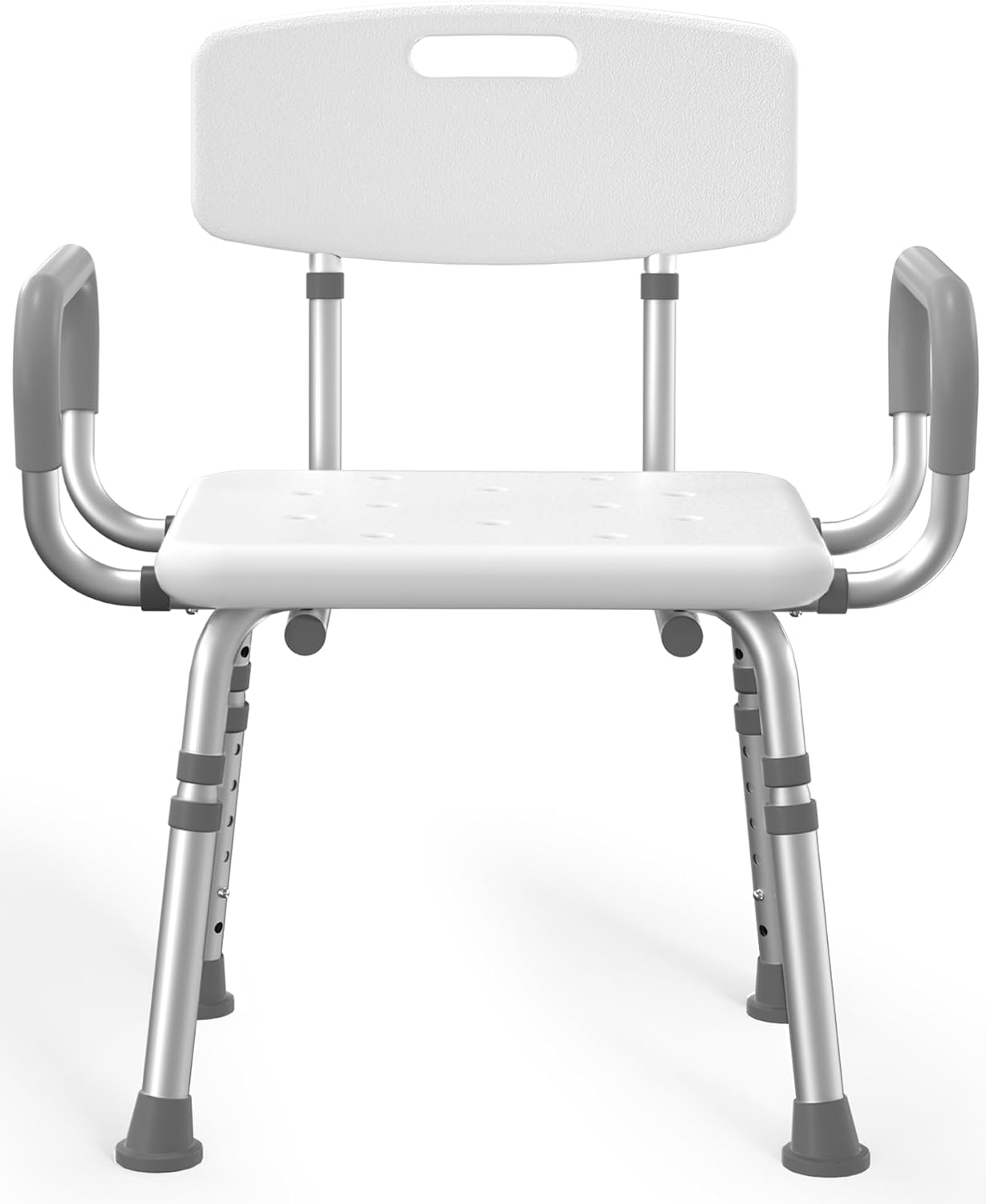
A shower chair with arms can provide a more supportive seated bathing setup than a basic shower stool. The right model depends on the user’s needs, bathroom layout, seat height, weight capacity, and whether a backrest or removable armrests would be useful.
For most buyers, start by comparing adjustable models with non-slip feet, drainage holes, a suitable seat width, and clearly stated weight limits. If you need a chair for a higher body weight, compare heavy-duty models separately rather than assuming every chair with arms offers the same level of support.
Standing in the shower can become uncomfortable or difficult for people who have trouble with balance, fatigue, limited mobility, or prolonged standing. A shower chair with arms provides a place to sit while bathing, with side supports that may make it easier to position the body and provide a handhold when sitting down or standing up.
However, shower chairs are not interchangeable. Some have both a backrest and padded armrests, while others have removable arms, adjustable legs, or a more compact design. Choosing the wrong seat width or height can make a chair uncomfortable or difficult to fit inside a bathtub or shower stall.
This guide explains what to compare before buying, highlights several product lines worth evaluating, and shows how to choose a chair that fits your bathroom and support needs.
In This Guide
Shower Chairs with Arms: 3 Options to Compare
The following are established product lines with features relevant to shoppers looking for a shower chair with arms. They are not a hands-on test ranking. Confirm the exact model, current availability, dimensions, included accessories, and weight capacity on the product page before purchasing.
1. HOMLAND SHC20 Heavy-Duty Shower Chair with Arms
Best for: Buyers who want adjustable height and the option to configure the chair with or without its arms and backrest.
The HOMLAND SHC20 is designed with a widened frame, padded armrests, a backrest, adjustable legs, and removable support components. Its manufacturer lists a 500 lb maximum frame capacity and recommends 400 lb for long-term use. The listed seat height range is 14–19 inches, with a seat measuring 17 inches wide by 13.5 inches deep.
One advantage is its configurable design: the backrest and armrests can be removed to suit different preferences. That flexibility may be useful if you want to compare a fully supported chair with a simpler stool-style setup. Measure the bathroom floor or tub base first; the manufacturer lists a base footprint of 20 by 17 inches and notes a minimum flat tub-bottom width requirement.
Check before buying: Confirm whether the listed capacity and dimensions match the exact version sold. A manufacturer’s maximum frame rating is not a substitute for following its recommended user-weight guidance and assembly instructions.
2. Drive Medical Shower Chair with Back and Removable Padded Arms
Best for: Shoppers who want a conventional shower chair with a backrest and removable padded armrests.
Drive Medical’s model 12445KD-1 includes a molded seat and back, removable padded armrests, drainage holes, and an aluminum frame. Its manufacturer lists a 350 lb weight capacity, a 9.75 lb product weight, and 18.5 inches of width between the arms. The legs adjust in one-inch increments.
The removable arms give buyers more configuration flexibility than a chair with permanently fixed side supports. The space between the arms is especially important to check because overall seat width alone does not tell you how much room the user has when seated.
Check before buying: Verify the item number. Drive Medical sells multiple bath seats and shower-chair configurations, and specifications may differ between models.
3. Medline Aluminum Shower Chair with Arms and Back
Best for: Buyers comparing a traditional adjustable aluminum chair with a backrest and padded armrests.
Medline’s model 6047 is listed with a rust-resistant aluminum frame, padded armrests, a backrest, tool-free assembly, and adjustable legs. The manufacturer’s product information lists a 350 lb weight capacity, an adjustable seat-height range of 16–21 inches, and a seat depth of 13.5 inches.
Its height range is worth comparing with other models if a lower seat would be difficult for the intended user. However, the best height depends on the person’s body proportions, ability to sit and stand, and the available shower space.
Check before buying: Availability can vary by retailer. Confirm the current product listing, model number, armrest design, and exact dimensions before ordering.
A quick buying tip
Compare the actual space between the armrests, the seat-height range, the footprint of the legs, and the product’s weight limit—not just the product title or the maximum capacity displayed in a marketplace listing.
Why Choose a Shower Chair with Arms?
A basic shower stool provides a place to sit, but a chair with armrests adds side supports that may help some users position themselves and push up from the seat. Whether that extra support is useful depends on the user’s mobility, strength, balance, and how they transfer into and out of the chair.
1. Support When Sitting Down or Standing Up
Armrests may offer a handhold when a user lowers onto the seat or rises from it. The chair must still be stable, correctly assembled, and placed on a suitable surface. Do not assume that every armrest is designed to bear the user’s full body weight; follow the manufacturer’s instructions.
2. More Comfortable Seated Bathing
Some chairs combine armrests with a backrest, allowing the user to rest their back while seated. This may be useful for people who become tired while standing. Padded arms can feel more comfortable, but the padding, attachment points, and cleaning requirements should be checked before purchase.
3. More Configuration Options
Some models have removable arms, removable backs, or both. This can help accommodate different preferences or available space. However, only remove components when the manufacturer explicitly permits that configuration, and never use a chair in a setup that conflicts with its instructions.
4. A More Supportive Alternative to a Basic Stool
If the user needs both back support and armrests, a chair with both features may be more suitable than a backless stool. If the main concern is a higher weight requirement or a wider seat, compare dedicated heavy-duty models and verify their exact specifications.
Features to Compare Before Buying
Armrest Design and Width Between Arms
Armrests may be fixed, removable, or padded. Fixed arms offer a consistent configuration, while removable arms can provide more flexibility when the user or bathroom layout requires it. The usable space between the arms matters just as much as the seat’s overall width.
Measure the user’s seated width and compare it with the manufacturer’s width-between-arms measurement. Allow enough room to sit comfortably without squeezing against the sides, but do not choose a chair based on width alone if it cannot fit safely in the shower.
Backrest or No Backrest
A backrest gives the user a place to rest while sitting. A backless chair may have a smaller profile and can be easier to position in some bathrooms. If the user needs back support, prioritize a model with a backrest rather than assuming armrests alone will provide adequate support.
Adjustable Seat Height
An adjustable shower chair can be set to a height that better fits the user and the bathroom. Check the full height range and the adjustment increments. The correct setting should allow the intended user to sit with a stable posture and use the chair as directed.
Never adjust the legs unevenly unless the manufacturer specifically allows it. Before each use, confirm that all adjustment pins or locking mechanisms are fully engaged.
Weight Capacity and Frame Construction
Always check the manufacturer’s stated weight capacity for the exact model. Do not assume that all shower chairs with arms support the same amount of weight, even when they look similar. Consider the manufacturer’s instructions for regular use, not just a maximum figure shown in a product title.
If you need a wider seat or a higher weight capacity, see our guide to heavy-duty shower chairs for a more focused comparison.
Non-Slip Feet and Drainage Holes
Rubber or other non-slip feet are intended to help the chair remain in position on an appropriate surface. Drainage holes help water flow off the seat instead of collecting on top. Neither feature makes a chair completely slip-proof: the feet, floor, and assembly still need to be checked regularly.
Assembly and Cleaning
Tool-free assembly can make setup easier, but it does not remove the need to follow the manual. Check that all legs, armrests, and backrest connections are securely installed. Smooth surfaces and accessible drainage holes may also make routine cleaning easier.
How to Choose the Right Shower Chair with Arms
For someone who needs back support
Look for a model with both a backrest and armrests. Check the width between the arms, seat depth, height adjustment, and the way the backrest attaches to the frame.
For a smaller shower stall
Measure the available floor area and the chair’s full footprint, including the legs. A compact stool may fit more easily than a chair with a wide back and armrests, but make sure the user has enough room to sit and move safely.
For a user who needs a higher weight capacity
Compare models designed for heavier users and verify the exact capacity, seat width, and frame construction. Visit our heavy-duty shower chair guide for more focused options.
For an older adult
Consider the person’s ability to sit down, stand up, and transfer safely. Armrests and a backrest may be helpful, but individual mobility needs vary. Our shower chair guide for elderly adults covers additional selection considerations.
For someone who needs help transferring into a bathtub
A standard shower chair is designed for seated bathing within the shower area. If the user needs to move across the side of a bathtub, a tub transfer bench may be more appropriate. Compare the transfer method, available tub space, and professional guidance before choosing between them.
Shower Chair with Arms vs. Shower Stool vs. Transfer Bench
| Type | Main Features | What to Check |
|---|---|---|
| Shower chair with arms | Seated bathing with side supports; many models also include a backrest. | Arm spacing, seat height, back support, and total footprint. |
| Shower stool | Usually a simpler seat with fewer components and a smaller profile. | Whether the user can sit and stand safely without armrests or a backrest. |
| Tub transfer bench | Designed to help a person transfer across a bathtub edge while seated. | Tub dimensions, edge clearance, leg placement, and the manufacturer’s transfer instructions. |
Bathroom Fit and Safety Checks
Before ordering a shower chair with arms, measure the bathroom and review the manufacturer’s instructions. A chair that fits in the shopping photo may not fit safely in your shower stall or bathtub.
- Measure the available space: Check the shower or tub’s usable floor area, door opening, fixtures, and room needed to sit down or stand up.
- Check the full footprint: Use the base dimensions, not only the seat width.
- Confirm the seat height: Make sure the adjustment range suits the intended user and the bathroom setup.
- Inspect the floor and feet: Place the chair only on a firm, level surface that is appropriate for the model.
- Follow assembly instructions: Confirm all legs, locking pins, armrests, and backrest components are secure before use.
- Recheck the chair regularly: Look for loose connections, damaged feet, cracks, corrosion, or other signs of wear.
- Get help when needed: If the user has substantial balance or transfer difficulties, ask a qualified healthcare professional or occupational therapist to help assess the safest setup.
Important Safety Note
A shower chair can provide a seated bathing option, but it does not eliminate the risk of falls. Do not use a chair with a loose frame, unstable legs, or an unsuitable fit. Follow the manufacturer’s weight limits and transfer instructions. If independent transfers are difficult, seek individualized advice before choosing a chair.
Frequently Asked Questions
Are shower chairs with arms better than shower stools?
They may be more suitable for users who benefit from side supports or need a place to rest their hands while positioning themselves. A stool may be more compact, but it lacks armrests and may not provide enough support for some users. The right choice depends on mobility, balance, bathroom space, and professional advice where appropriate.
Should I choose a shower chair with both a back and arms?
If the user needs back support while seated, a model with both a backrest and armrests is worth considering. Check the seat depth, width between arms, height adjustment, and bathroom fit. Armrests alone do not guarantee that a chair will be comfortable or safe for every user.
Are removable armrests a good idea?
Removable armrests can provide configuration flexibility, especially if the user’s needs or available space change. However, removal should only be done when the manufacturer permits it. Always follow the specified assembly configuration and do not use the chair with missing parts unless that setup is approved.
How do I know what weight capacity I need?
Check the exact model’s manufacturer specifications and follow its stated user-weight limits. Do not rely on a generic product title or assume that similar-looking chairs have identical ratings. If you need a wider seat or higher capacity, compare purpose-built heavy-duty models and verify all dimensions before purchasing.
Can a shower chair with arms fit inside a bathtub?
Some models can be used inside a bathtub, but fit depends on the tub’s flat-bottom width, interior dimensions, seat footprint, and leg placement. Measure the usable space and compare it with the manufacturer’s dimensions. Never assume a chair fits every standard bathtub.
Can a shower chair prevent falls?
A shower chair may reduce the need to stand for the entire shower, but it cannot guarantee fall prevention. Correct fit, stable placement, appropriate transfer technique, and the user’s individual needs all matter. Follow the product instructions and seek professional advice if there are significant mobility or balance concerns.
What is the difference between a shower chair and a transfer bench?
A shower chair is generally placed within the shower area. A transfer bench extends across a bathtub edge to help a person move into or out of the tub while seated. The two products serve different purposes, so choose based on the bathroom layout and the user’s transfer needs.
Final Verdict
The best shower chair with arms is the one that fits the user, the bathroom, and the required support—not necessarily the one with the most features. Start by checking the space between the armrests, seat height, backrest design, weight capacity, and base dimensions. Then confirm that the chair can be assembled and used according to the manufacturer’s instructions.
The HOMLAND SHC20 is worth comparing if you want removable support components and a higher listed frame capacity; Drive Medical’s 12445KD-1 is a conventional option with removable padded arms; and Medline’s model 6047 is another adjustable aluminum chair with a backrest and padded armrests. Confirm the current listing and specifications before choosing a model.
For a broader overview of bathing seats, visit our Shower Chairs buying guide. If your main priority is higher weight capacity, see Best Heavy-Duty Shower Chairs. For additional guidance focused on older adults, visit Best Shower Chairs for Elderly Adults.
Affiliate Disclosure
As an Amazon Associate, HeavyDutyChoice earns from qualifying purchases. Product availability, prices, specifications, and included accessories can change. Always verify the current manufacturer’s information and retailer listing before purchasing.