
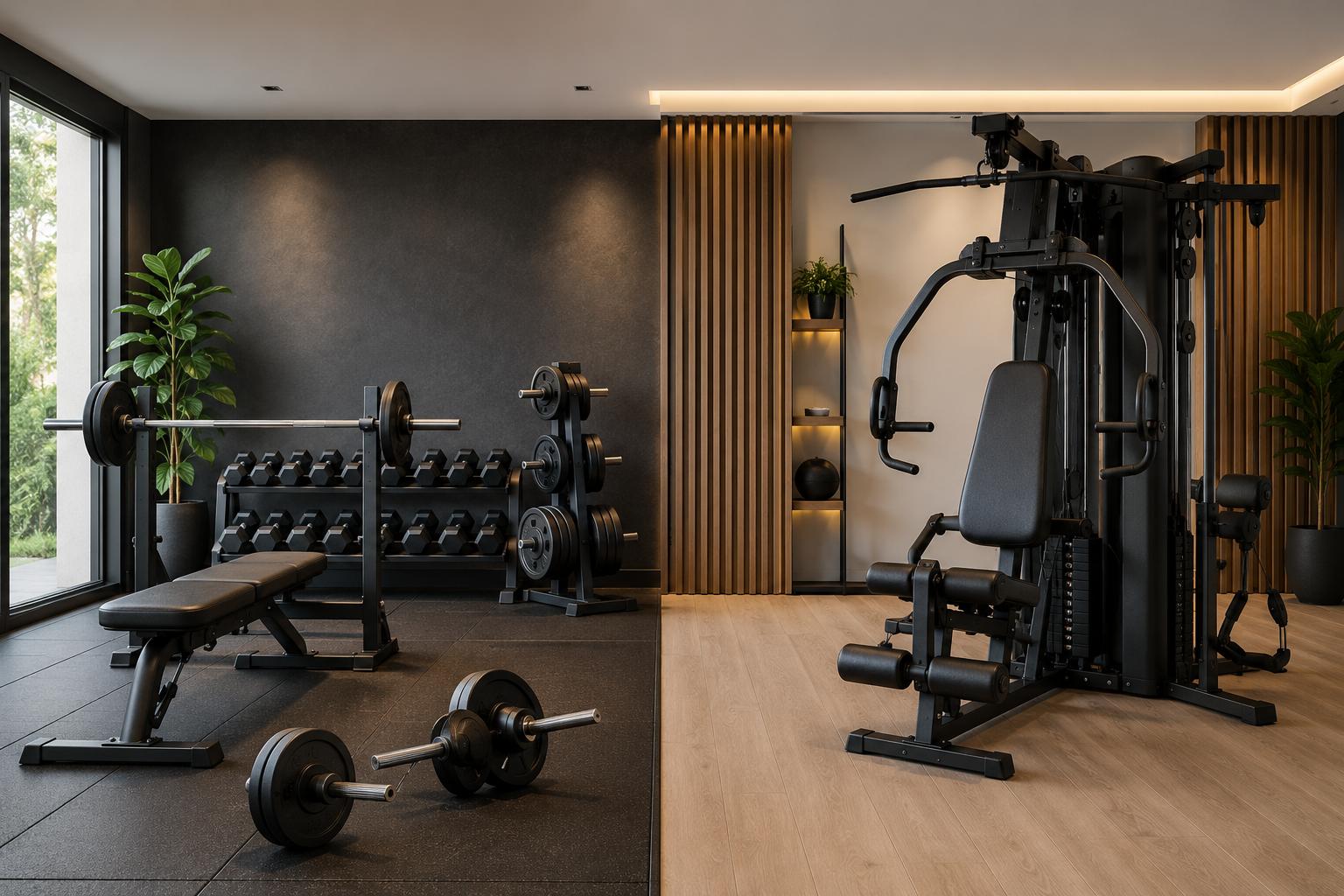
When building a strength training routine, one common question is whether free weights or weight machines are better. Both can help you build muscle, improve strength, and develop a consistent workout routine, but they work in different ways.
Free weights include equipment such as dumbbells, barbells, kettlebells, and weight plates. Machines use a guided movement path, often with a weight stack, cables, or plate-loaded resistance system.
The right choice depends on your experience, fitness goals, available equipment, and training preferences. In this guide, we compare free weights vs. machine weights to help you decide which option makes the most sense.
Quick Answer: Free Weights vs. Machines
- Choose free weights for flexible movement, independent muscle control, and versatile full-body training.
- Choose machines for guided movements, convenient resistance adjustments, and focused exercises.
- Choose both if you want a balanced strength training program with different exercise options.
1. What Are Free Weights?
Free weights are resistance training tools that are not attached to a fixed movement track. You control the direction and movement of the equipment throughout each repetition.
Common examples include:
Dumbbells
Separate handheld weights used for curls, presses, rows, lunges, and many other exercises.
Barbells
Long bars loaded with weight plates for squats, deadlifts, bench presses, and other compound movements.
Kettlebells
Handled weights suitable for swings, carries, squats, and dynamic strength exercises.
Weight Plates
Loading discs used with compatible barbells, dumbbell handles, and plate-loaded equipment.
The main characteristic of free weights is that your body must control the equipment’s movement. This can involve coordination and stabilization from muscles beyond the primary muscles performing the exercise.
For a closer look at the different options, read our guide to types of weights.
2. What Are Machine Weights?
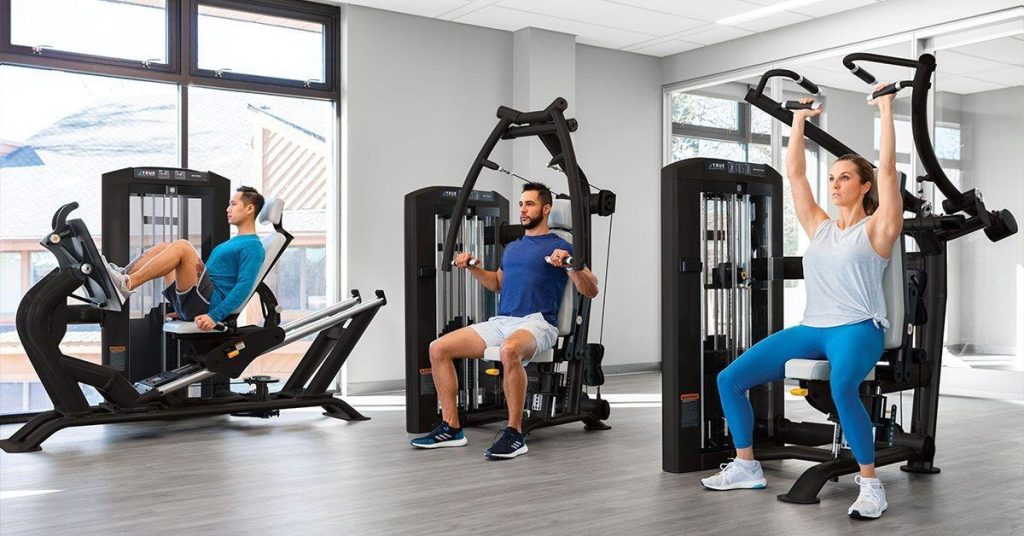
Weight machines use a designed movement path to guide resistance through an exercise. Many machines use a selectorized weight stack, while others use cables, adjustable pulleys, or removable weight plates.
Common examples include:
- Chest press machines: Provide resistance during pressing movements.
- Lat pulldown machines: Allow users to train the back and upper-body pulling muscles.
- Leg press machines: Provide resistance during a guided leg-press movement.
- Leg extension machines: Focus on knee extension and the quadriceps.
- Seated row machines: Provide resistance during horizontal pulling exercises.
- Cable machines: Use pulleys and adjustable attachments for a wide range of movements.
Machines vary considerably. Some provide a highly fixed movement path, while cable systems allow more freedom in exercise direction and body position.
3. Free Weights vs. Machine Weights: Key Differences
The biggest difference is how the equipment controls resistance and movement. Free weights require you to guide the load, while machines provide varying levels of movement guidance.
| Comparison | Free Weights | Weight Machines |
|---|---|---|
| Movement | Generally more freedom of movement | Often follows a guided path |
| Stabilization | Requires active control of the load | Some stabilization demands may be reduced |
| Exercise variety | Very versatile | Depends on machine design |
| Weight adjustment | May require changing dumbbells or plates | Often uses a selector pin or plate changes |
| Space requirements | Can be compact or require substantial storage | Many machines require dedicated floor space |
| Learning curve | Some movements require technique practice | Often easier to understand initially |
| Home gym cost | Can start with a relatively small setup | Some systems require a larger investment |
These are general differences rather than universal rules. Adjustable dumbbells, cable machines, and multifunctional home gym systems can overlap in their features.
4. Advantages of Free Weights

Greater Movement Flexibility
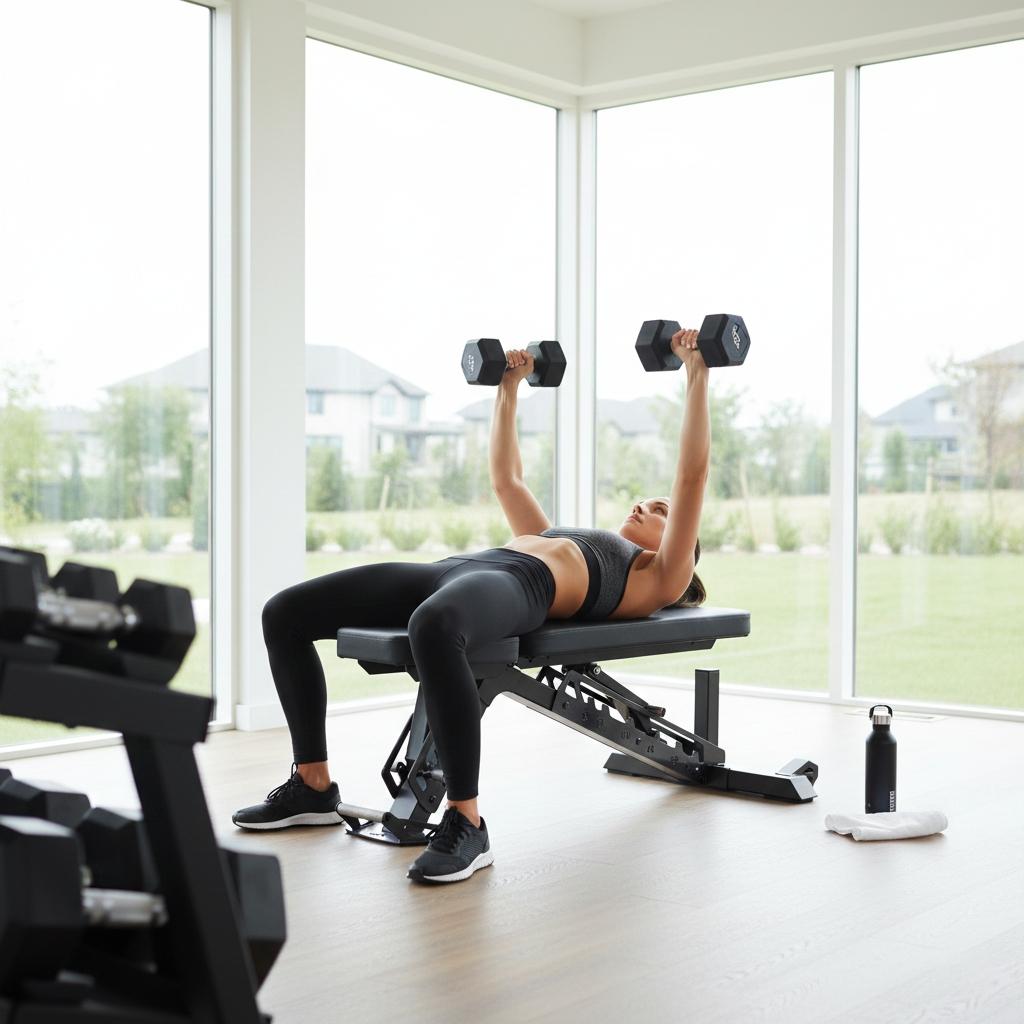
Free weights allow you to perform exercises through different movement patterns. Dumbbells, for example, can be used for presses, rows, curls, carries, and unilateral exercises.
Useful for Compound Exercises
Barbells and dumbbells are commonly used for compound movements that involve several joints and muscle groups. Examples include squats, deadlifts, presses, and rows.
Independent Side-to-Side Training
Dumbbells allow each arm or leg to work independently. This can help you notice differences in strength and control between sides.
Flexible Home Gym Options
A basic free-weight setup can be relatively simple. A pair of adjustable dumbbells or a small collection of fixed weights can support many exercises without requiring a large machine.
Good option for: People who want versatile workouts, compound lifting, independent movement, and a flexible home gym setup.
5. Disadvantages of Free Weights
Free weights are versatile, but they also have limitations.
- Technique matters: Exercises such as squats and deadlifts require appropriate movement control and technique.
- Stabilization demands: Controlling an independent load can make some exercises more challenging.
- Storage can become difficult: Multiple dumbbells and weight plates may require a rack or dedicated storage area.
- Weight changes can take time: Fixed dumbbells require switching equipment, while plate-loaded systems require adding or removing plates.
- Some exercises need additional equipment: Heavy barbell lifts may require a suitable rack, bench, collars, and safety supports.
6. Advantages of Weight Machines

Guided Movement
Many machines guide the equipment through a defined movement path. This can make certain exercises easier to learn and perform consistently.
Convenient Resistance Changes
Selectorized machines often allow users to change resistance by moving a pin. This is convenient when performing several sets at different resistance levels.
Focused Muscle Training
Some machines are designed to emphasize a particular movement or muscle group. Leg extensions, leg curls, and chest fly machines are common examples.
Useful for Structured Workouts
Machines can make it easier to repeat a particular exercise with consistent equipment positioning and resistance settings.
Good option for: People who prefer guided movements, convenient weight adjustments, or focused exercises within a structured workout routine.
7. Disadvantages of Weight Machines
Although machines are useful, they are not automatically better or safer for every person.
- Less movement freedom: Some machines restrict the movement path and may not fit every user’s body proportions or preferred range of motion.
- Dedicated space: Many machines are large and difficult to move once installed.
- Higher upfront cost: A collection of commercial-style machines can be expensive.
- Limited exercise options: A machine generally performs a smaller range of exercises than a versatile free-weight setup.
- Adjustment is important: Seat position, handles, and range-of-motion settings must be appropriate for the user.
A machine that does not fit your body properly may feel uncomfortable. Always adjust the equipment and use a controlled range of motion.
8. Which Is Better for Muscle Growth?
Both free weights and machines can support muscle growth when used with appropriate resistance, sufficient training volume, consistent effort, and recovery.
You do not have to choose one type of equipment exclusively to build muscle. A well-designed routine can use both.
Why Free Weights Work Well for Muscle Building
- Allow a wide variety of compound and isolation exercises.
- Make it easy to train one side of the body independently.
- Support progressive resistance through additional weight or repetitions.
Why Machines Work Well for Muscle Building
- Offer convenient resistance adjustments.
- Allow focused training of specific muscle groups.
- Can make it easier to maintain a consistent movement pattern.
The most important factor is choosing exercises you can perform consistently with appropriate technique and a suitable level of effort. Equipment alone does not determine muscle growth.
9. Which Is Better for Beginners?
Beginners can benefit from both types of equipment. The right starting point depends on the exercises, available instruction, and individual comfort.
Machines may be easier to approach initially because many provide a guided movement path and straightforward resistance adjustments. However, beginners can also learn basic dumbbell exercises with manageable weights and proper instruction.
A Simple Beginner Equipment Approach
- Start with a small number of manageable resistance exercises.
- Learn basic movement patterns with controlled resistance.
- Use machines or light dumbbells based on comfort and proper technique.
- Increase resistance gradually as your strength and confidence improve.
- Keep a record of exercises, repetitions, and resistance levels.
10. Which Is Better for a Home Gym?
For many home gyms, free weights offer a practical starting point because they can provide several exercise options in a relatively small area. However, compact cable systems and multifunctional machines can also be useful.
Small Home Gym
Adjustable dumbbells and a foldable bench can support a variety of exercises while keeping storage requirements manageable.
Dedicated Garage Gym
A barbell, weight plates, rack, bench, and dumbbells can provide a flexible setup for different strength training routines.
All-in-One Training Space
A multifunctional cable or home gym machine can offer guided exercises without requiring multiple separate machines.
Example Free-Weight Equipment
PowerBlock Elite EXP Adjustable Dumbbells: A compact adjustable dumbbell system. Stage 1 covers 5–50 lb per hand, with additional expansion kits sold separately.
Check PowerBlock Elite EXP on Amazon
FLYBIRD Adjustable Weight Bench: A bench option for users who want to add supported dumbbell pressing and other bench exercises. Check the exact model’s dimensions and weight capacity before ordering.
Check FLYBIRD Weight Benches on Amazon
For a complete equipment comparison, see our guide to the best free weight sets with bench.
11. Can You Combine Free Weights and Machines?
Yes. Combining both types of equipment is a practical way to build a balanced strength training routine.
For example, a workout might include:
- Dumbbell chest presses for upper-body pressing.
- Seated cable rows for horizontal pulling.
- Goblet squats for lower-body strength.
- Leg curls for focused hamstring training.
- Dumbbell lateral raises for shoulder training.
This approach gives you the flexibility of free weights and the focused resistance options offered by machines.
You do not need a large number of machines to benefit from this combination. Even one adjustable cable system alongside a few free weights can provide additional exercise choices.
12. Frequently Asked Questions
Are free weights better than machines?
Not necessarily. Free weights offer more movement flexibility and versatility, while machines provide guided resistance and convenient adjustments. Both can be effective for building strength and muscle.
Can you build muscle with machines only?
Yes. A well-planned machine-based routine can train major muscle groups and support muscle growth. The quality and consistency of your training matter more than using one specific equipment type.
Are machines safer than free weights?
Machines can provide more movement guidance, but they are not automatically safer in every situation. Poor equipment adjustment, excessive resistance, or unsuitable movement ranges can still cause problems. Free weights can also be used safely with appropriate technique and equipment.
Do free weights burn more calories than machines?
There is no universal rule that free weights burn more calories. Energy expenditure depends on factors such as exercise selection, resistance, repetitions, rest periods, workout duration, and individual characteristics.
Should beginners start with machines or dumbbells?
Either can work. Machines may offer a more guided starting point, while light dumbbells can help beginners learn basic movement patterns. Choose exercises that can be performed comfortably and with proper technique.
Are free weights enough for a home gym?
For many people, yes. Adjustable dumbbells, a bench, and possibly a barbell setup can support a wide range of strength exercises. The equipment needed depends on your goals and available space.
Final Verdict: Free Weights or Machine Weights?
Free weights and machine weights both have an important place in strength training. Free weights offer versatility, independent movement, and useful options for compound exercises. Machines provide guided movement, convenient resistance changes, and focused training opportunities.
If you are building a home gym, adjustable dumbbells and a bench are a practical starting point for many routines. If you have more space and want additional exercise options, consider adding a cable system or selected weight machines.
Ultimately, the best equipment is the equipment that fits your goals, allows you to train consistently, and supports good exercise technique.
Explore More Free Weight Guides
As an Amazon Associate, HeavyDutyChoice earns from qualifying purchases. Product availability, specifications, and package contents may change. Check the current Amazon listing before ordering.