
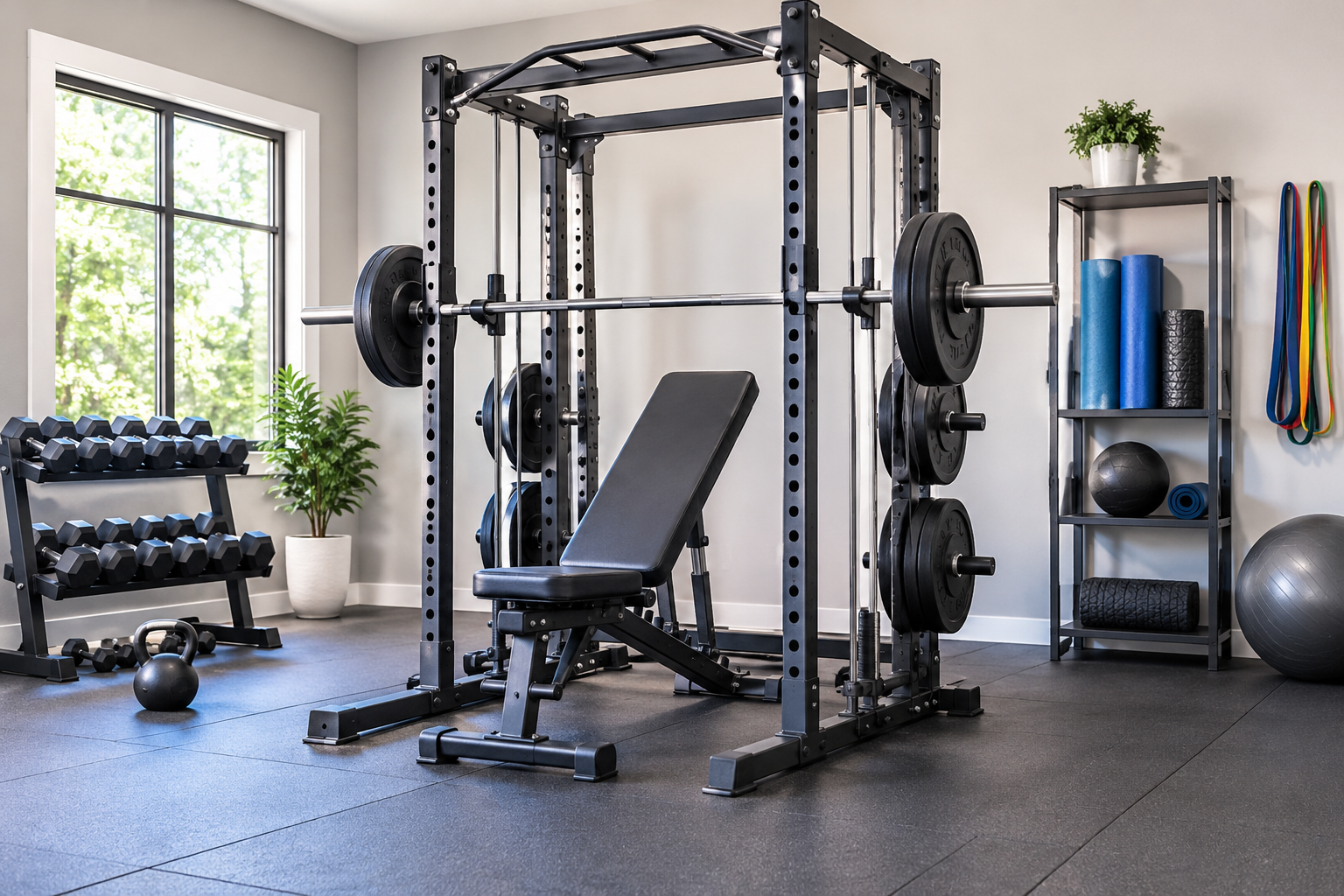
Home squat machines can make lower-body training more convenient, especially if you want a dedicated setup for squat variations. But the right machine depends on your training experience, available space, budget, and the movements you want to perform.
Before choosing equipment, compare the machine’s movement pattern, adjustment options, footprint, and safety features. A machine that fits your routine is more useful than one with features you are unlikely to use.
Quick Guide: Choosing a Home Squat Machine
- Choose a machine based on the squat variation you want to train.
- Check the manufacturer’s stated user and weight limits.
- Measure the workout area, including space needed to enter, exit, and adjust the machine.
- Look for clear setup instructions and appropriate safety stops or supports.
- Start with a manageable resistance level and learn the movement before increasing the load.
What Is a Home Squat Machine?
A home squat machine is a piece of exercise equipment designed to support one or more squat-style movements. Different designs guide the movement in different ways, so they are not interchangeable. Some use a guided track, while others use a platform, lever, or cable-based resistance system.
Think about the exercises you want to perform before comparing machines. A compact device intended for one movement may not replace a more versatile strength-training setup.
Common Types of Home Squat Equipment
Smith machine
Uses a guided bar path and may support several barbell exercises, depending on the model and setup. Check its safety catches and installation requirements.
Hack squat machine
Typically supports a squat variation with the body positioned against a back pad. These machines can require substantial floor space.
Belt squat machine
Loads resistance through a belt around the hips. Designs vary, so compare how resistance is added and how the user gets into position.
Compact squat trainer
May be designed for a narrower range of movements or a smaller footprint. Confirm what exercises it actually supports before buying.
These categories describe common designs, not a ranking. Equipment features and dimensions vary by model.
Features to Compare Before Buying
1. Resistance and loading method
Check how resistance is added and adjusted. Depending on the design, the machine may use weight plates, a weight stack, or another resistance system. Make sure the setup matches your training needs and that any required weights or accessories are included or available separately.
2. Adjustability and fit
Review the adjustment points and the manufacturer’s guidance for user fit. A machine should allow you to set up in a controlled position without forcing an uncomfortable range of motion.
3. Safety features
Look for clearly described safety stops, catches, locking mechanisms, or supports where applicable. Read the instructions and learn how to use these features before training with resistance.
4. Footprint and installation
Measure the intended space and compare it with the machine’s listed dimensions. Include room for movement, loading weights, and getting on or off. Also check whether the machine needs assembly, a particular floor surface, or additional clearance.
5. Capacity and construction
Check the stated user-weight limit and maximum resistance or load capacity, where provided. These are different specifications; do not assume one automatically describes the other. Follow the manufacturer’s instructions for use and maintenance.
Home Squat Machine Options on Amazon
Use these searches to compare available designs, listings, and current specifications. Review each listing carefully, since product names and included components can differ.
Smith machines
Compare guided-bar designs, safety catches, dimensions, and included accessories.
Hack squat machines
Check the footprint, entry and exit, adjustment range, and loading method.
Belt squat machines
Compare belt fit, resistance setup, stability, and space requirements.
Do You Need a Dedicated Squat Machine?
Not necessarily. Beginners may be able to start with bodyweight squats, dumbbells, or other basic strength equipment, depending on their goals and training plan. A dedicated machine may make sense if you want its specific movement pattern, have enough space, and expect to use it regularly.
If you are still building a home gym, consider how a squat machine fits with the rest of your equipment. A large single-purpose machine may be less practical than a smaller, more versatile setup for a limited workout area.
Safety Tips for Training at Home
- Read the assembly and operating instructions before using the machine.
- Check that the equipment is stable and that safety mechanisms are set correctly.
- Begin with a light resistance level and practice the movement under control.
- Do not exceed the manufacturer’s stated limits.
- Stop if you experience pain, dizziness, or an unusual symptom, and seek appropriate guidance.
Frequently Asked Questions
What is the best home squat machine?
The best option depends on the squat variation you want to perform, your available space, budget, and the machine’s fit and safety features. Compare the specifications of individual models rather than relying on the product category alone.
Are home squat machines suitable for beginners?
Some may be suitable, but beginners should learn the machine’s setup and movement first, use manageable resistance, and follow the manufacturer’s instructions. A machine is not a substitute for learning safe technique.
Will a squat machine fit in a small home gym?
It depends on the model. Check the listed dimensions and allow extra space for access, movement, and loading. Compact designs may still require more room than expected during use.
Can a squat machine replace free weights?
A squat machine can support specific squat variations, but it may not provide the same exercises or movement options as free weights. Choose equipment based on the overall training routine you want to build.
Final Verdict
A home squat machine is worth considering when its movement, fit, safety features, and footprint match your training plan. Compare the actual specifications of each model, measure your space, and start with a setup you can use consistently. If you are still learning what equipment you need, a simpler home gym may be a more flexible starting point.
Related Guides
As an Amazon Associate, HeavyDutyChoice earns from qualifying purchases.