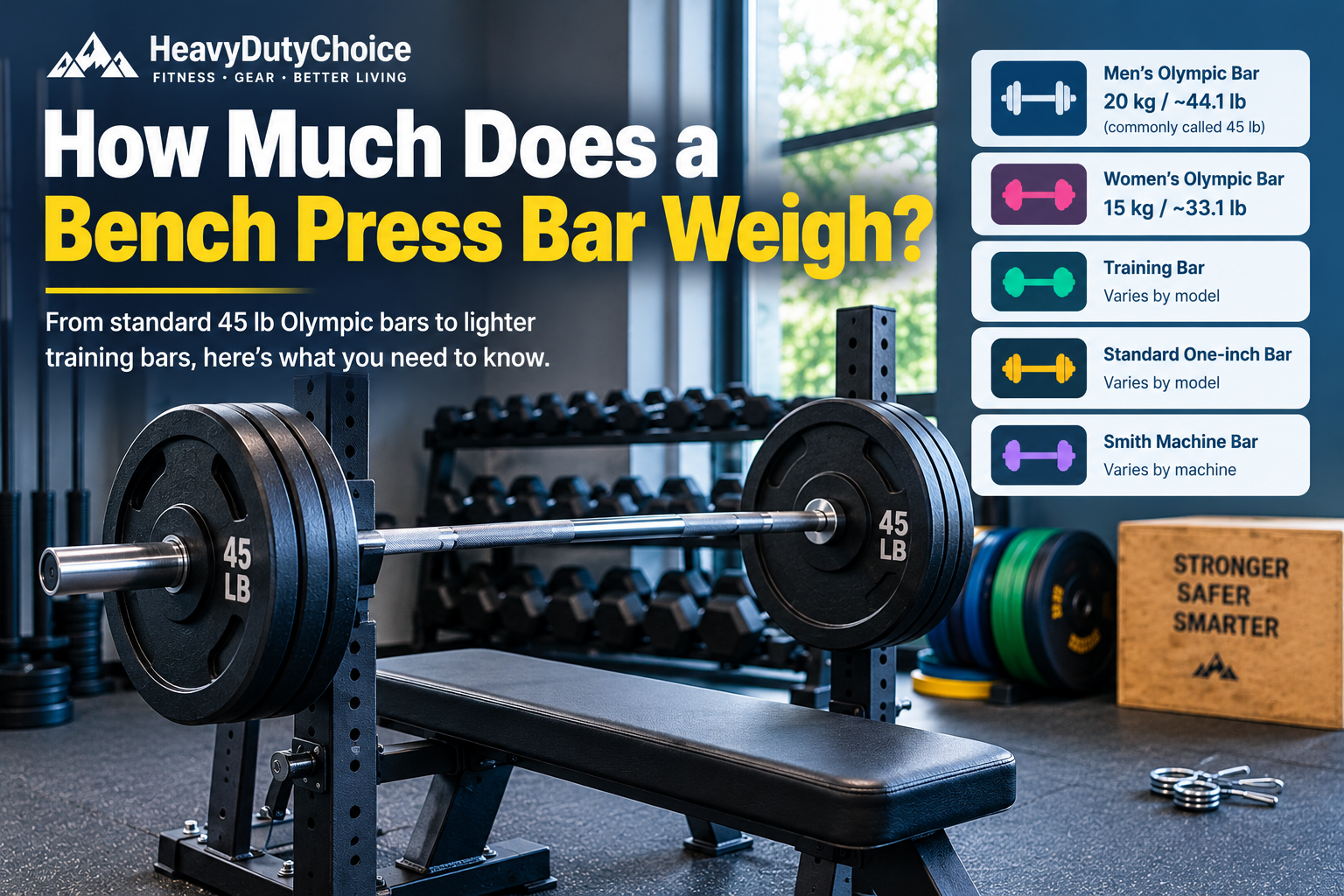
If you have ever wondered how much a bench press bar weighs, the most common answer is 45 pounds (about 20 kg). That is the familiar Olympic barbell found at many commercial gyms and home gyms.
However, not every bar weighs the same. Women’s Olympic bars, lighter training bars, standard one-inch bars, and Smith machine bars can all have different weights. Knowing which bar you are using helps you calculate your total bench press weight accurately.
- Men’s Olympic bar: 20 kg, approximately 44.1 lb, commonly called a 45 lb bar.
- Women’s Olympic bar: 15 kg, approximately 33.1 lb.
- Technique or training bar: Varies by model; lighter options are available.
- Standard one-inch bar: Varies by design and manufacturer.
- Smith machine bar: Varies by machine and counterbalancing system.
Always check the bar’s markings or manufacturer specifications when the exact weight matters.
For equipment recommendations, visit our Weight Benches guide. If you are building a home gym around a barbell, you may also want to compare weight benches with squat racks.
1. How Much Does a Standard Bench Press Bar Weigh?
In many gyms, a standard bench press setup uses a men’s Olympic barbell. This bar has a nominal weight of 20 kg, which converts to approximately 44.1 pounds. In the United States, it is commonly referred to as a 45 lb bar.
The bar’s weight counts toward the total load you lift, even when there are no plates attached. For example, pressing a 45 lb bar without additional plates means you are lifting approximately 45 pounds, not zero pounds.
The distinction between kilograms and pounds can cause small differences in training logs. A 20 kg bar is approximately 44.1 lb, although many gym programs use 45 lb as the convenient rounded figure.
2. Common Bench Press Bar Weights Compared
Different bars are designed for different equipment setups and training needs. The following table gives typical reference points rather than a guarantee for every product.
| Bar Type | Common Weight | What to Know |
|---|---|---|
| Men’s Olympic bar | 20 kg / about 44.1 lb | Often called a 45 lb bar |
| Women’s Olympic bar | 15 kg / about 33.1 lb | Usually has a thinner shaft |
| Technique bar | Varies by model | Designed for learning movement and technique |
| Standard one-inch bar | Varies by model | Often used with compatible home-gym plates |
| Smith machine bar | Machine-specific | Counterbalancing can change effective resistance |
| Fixed-weight barbell | Read the label | The displayed weight usually refers to the complete bar |
These differences matter when you compare workouts. If one gym uses a 20 kg Olympic bar and another uses a lighter bar, the same plate setup will not necessarily produce the same total weight.
3. How Much Does a Women’s Bench Press Bar Weigh?
A women’s Olympic barbell typically weighs 15 kg, or approximately 33.1 pounds. It is commonly described as a 33 lb bar, although some people round it to 35 pounds in casual conversation.
Women’s Olympic bars are generally shorter and have a thinner shaft than men’s Olympic bars. These differences can affect grip comfort and how the bar feels during a lift.
The name does not mean that the bar can only be used by women. A 15 kg bar may be a useful option for anyone who prefers a thinner grip or needs a lighter starting load.
When choosing a bar, check the actual weight and dimensions instead of relying on labels such as men’s or women’s alone.
4. How Much Does a Smith Machine Bar Weigh?
A Smith machine uses a bar that travels along fixed rails. Unlike a free-weight Olympic barbell, its effective starting resistance depends on the machine’s design and whether the bar is counterbalanced.
Some Smith machines have counterweights that reduce the resistance felt by the user. Other machines may have a different starting resistance. There is no single universal Smith machine bar weight that applies to every brand and model.
To find the correct figure:
- Check the machine’s label or user manual.
- Look for the stated starting resistance or effective bar weight.
- Ask gym staff if the information is not displayed.
- Record the machine and its starting resistance when tracking your workouts.
Do not automatically use the 45 lb Olympic bar figure for a Smith machine. The machine’s stated starting resistance is the more useful number for calculating your workout load.
5. How to Calculate Your Total Bench Press Weight
To calculate the total weight of a free-weight bench press, add the bar weight to the weight of all the plates loaded on both sides.
Total weight = bar weight + left-side plates + right-side plates
Use the same unit for every value. If the bar and plates are listed in pounds, calculate the total in pounds. If they are listed in kilograms, calculate the total in kilograms.
Example 1: A 45 lb bar with one 25 lb plate on each side
Bar: 45 lb. Left plate: 25 lb. Right plate: 25 lb.
Total = 45 + 25 + 25 = 95 lb.
Example 2: A 45 lb bar with two 45 lb plates on each side
Bar: 45 lb. Each side has two 45 lb plates, so the plates weigh 90 lb per side.
Total = 45 + 90 + 90 = 225 lb.
Example 3: A 20 kg bar with 20 kg of plates on each side
Bar: 20 kg. Left-side plates: 20 kg. Right-side plates: 20 kg.
Total = 20 + 20 + 20 = 60 kg.
These examples exclude collars unless their weight is specifically included. If you need a precise total, include the weight of the collars or clips when applicable.
6. Do You Count the Bar When You Bench Press?
Yes. For a free-weight bench press, the total load includes the bar and all plates attached to it. The bar is part of the resistance you lift, even when no plates are added.
For example, if you bench press with a 45 lb bar and add a 10 lb plate to each side, your total is 65 lb:
- Bar: 45 lb
- Left plate: 10 lb
- Right plate: 10 lb
- Total: 65 lb
For Smith machines, use the machine’s stated starting resistance rather than assuming the bar weighs 45 lb. Also be consistent with your training log so that comparisons between workouts are meaningful.
7. How to Identify the Bar in Your Gym
If you are unsure how much your bench press bar weighs, use these checks before adding plates.
Check the end cap or markings
Some barbells display their weight on an end cap or label. This is the quickest way to identify a marked bar.
Check the equipment manual
For home-gym equipment, look up the exact model and its specifications. Do not assume that every bar from the same brand has the same weight.
Look at the bar and sleeve design
Length, shaft diameter, and sleeve size can help you distinguish between common bar types, but appearance alone cannot confirm the exact weight.
Ask gym staff
If the bar is unmarked or the machine’s starting resistance is unclear, ask staff rather than guessing.
Knowing the bar’s sleeve diameter is also important if you are buying plates. Olympic plates and standard one-inch plates are designed for different sleeve sizes, so confirm compatibility before ordering.
8. Choosing a Bar for a Home Bench Press Setup
The right bar depends on your bench, rack, plates, available space, and training goals. Before purchasing a barbell, check these points:
- Plate compatibility: Match the bar sleeves to your plates. Olympic bars generally use sleeves designed for Olympic-size plates; standard bars use a different sleeve size.
- Bar length: Make sure the bar is compatible with your rack and has sufficient clearance for loading and unloading plates.
- Weight rating: Check the manufacturer’s stated capacity and use the bar within its limits.
- Bench and rack compatibility: Confirm that the complete setup fits your intended exercises and training space.
- Safety equipment: Use appropriate rack safeties or spotter arms where suitable, and use a competent spotter when needed.
If you are putting together a complete home gym, our guide to weight benches with squat racks can help you compare integrated and separate setups.
If your priority is saving room, you can also read our guide to foldable flat weight benches. Remember that the bar and plates also need safe storage space, even if your bench folds away.
9. Common Bench Press Bar Weight Mistakes
Assuming every bar weighs 45 lb
Many Olympic bars are described as 45 lb bars, but lighter training bars, women’s bars, standard bars, and Smith machines may differ. Verify the exact equipment.
Counting plates but forgetting the bar
The bar is part of the total free-weight load. Add its weight when recording a bench press set.
Mixing kilograms and pounds
Make sure all values use the same unit before adding them together. A 20 kg bar is approximately 44.1 lb, not 20 lb.
Ignoring collars
Collars or clips may add weight. If precise loading matters, include them in your calculation when their weight is known.
Assuming a Smith machine has the same resistance as a free bar
Smith machine starting resistance depends on its design and counterbalancing. Use the machine’s documented starting resistance when available.
Frequently Asked Questions
How much does a bench press bar weigh without weights?
A common men’s Olympic bar weighs 20 kg, approximately 44.1 lb and commonly rounded to 45 lb. Other bars can weigh less or more, so check the exact model.
Is a 20 kg bar the same as a 45 lb bar?
They are commonly treated as equivalent for everyday training, but 20 kg converts to approximately 44.1 lb. The 45 lb figure is a convenient rounded value.
How much does a women’s Olympic bar weigh?
A women’s Olympic bar typically weighs 15 kg, approximately 33.1 lb. Confirm the manufacturer’s specification for the exact bar you use.
Does the bench press weight include the bar?
Yes. For a free-weight bench press, the total includes the bar and the plates on both sides. Include collar weight too if you are calculating a precise total and know its weight.
How much does a Smith machine bar weigh?
There is no single standard starting resistance for all Smith machines. The bar’s effective resistance depends on the model and counterbalancing system. Check the machine’s label or manual.
Can beginners use a lighter bench press bar?
Yes. A suitable lighter training bar can help someone learn bar control and technique before progressing to a heavier bar. Choose equipment designed for the intended exercise and follow safe lifting practices.
Final Thoughts
The most common bench press bar in many gyms is the 20 kg Olympic bar, often called a 45 lb bar. However, other bar types and Smith machines can have different weights or starting resistance.
For accurate training records, identify the bar before adding plates, use consistent units, and calculate the total load rather than counting plates alone. If you are building a home gym, check bar-and-plate compatibility and make sure your bench and rack are appropriate for your planned training.
Explore more equipment advice in our Weight Benches guide, or compare weight benches with squat racks for a complete home workout setup.
Affiliate Disclosure: As an Amazon Associate, we earn from qualifying purchases.