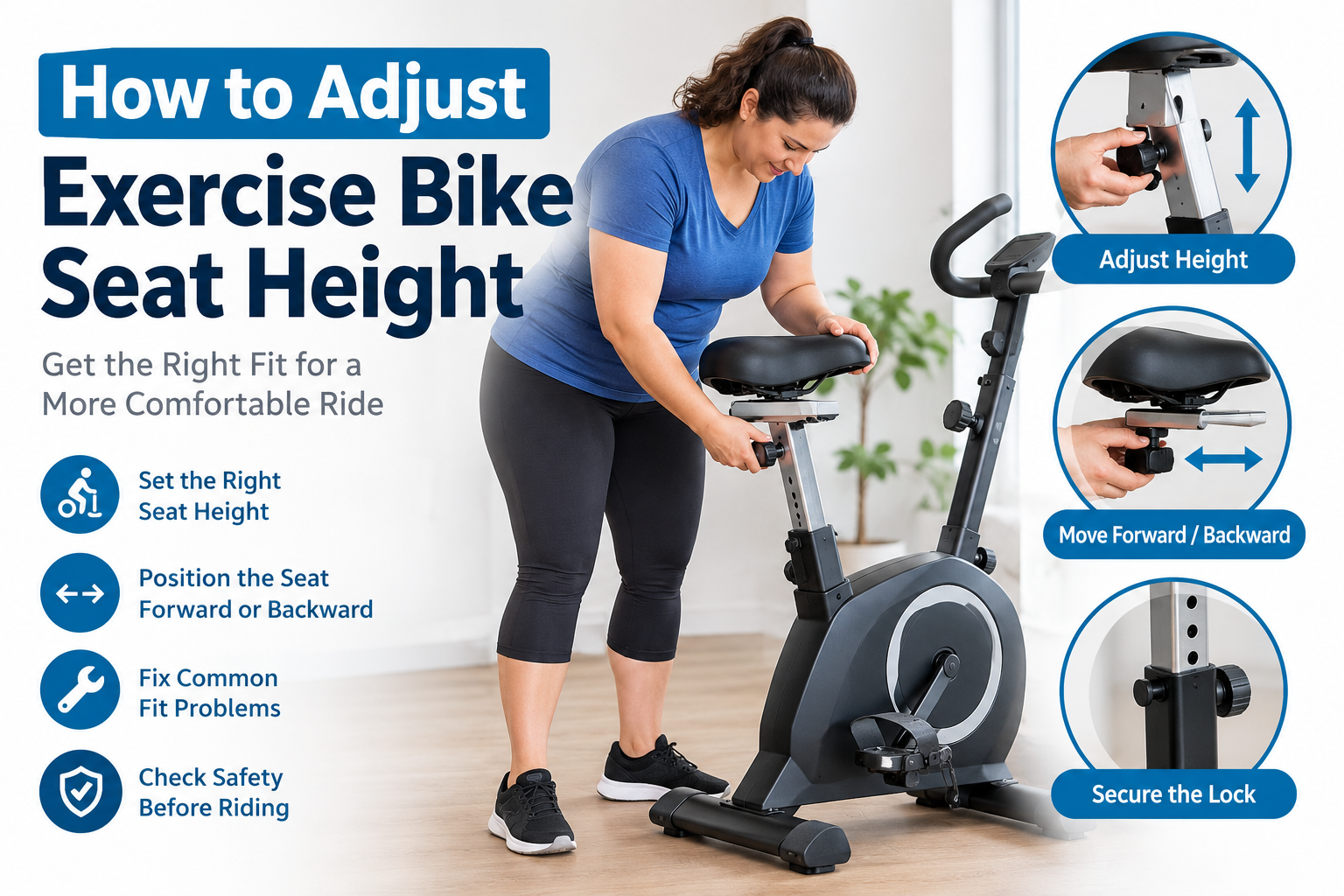
# How to Adjust Exercise Bike Seat Height
Learning how to adjust exercise bike seat height can make indoor cycling more comfortable and help you maintain a smoother pedaling motion. If your seat is too low, your knees may remain excessively bent. If it is too high, you may rock your hips or reach awkwardly for the pedals.
This guide explains how to set the right starting height, adjust the seat forward or backward, troubleshoot common fit problems, and check the seat securely before riding. Always follow the instructions for your specific exercise bike.
Disclosure: As an Amazon Associate, HeavyDutyChoice may earn from qualifying purchases made through links on this page.
Quick Answer: How High Should an Exercise Bike Seat Be?
For most upright and indoor cycling bikes, start by adjusting the seat so your knee remains slightly bent when the pedal reaches the bottom of its rotation and the ball of your foot is positioned on the pedal. You should be able to complete a full pedal stroke without locking your knee, stretching to reach the pedal, or rocking your hips from side to side.
This is a starting point rather than a universal measurement. Your ideal position depends on your leg length, riding style, bike design, and the adjustment range provided by the manufacturer.
How to Adjust Exercise Bike Seat Height Step by Step
Step 1: Stop the Bike and Get Off
Stop pedaling and dismount before making adjustments unless your manufacturer’s instructions explicitly specify another safe procedure. Keep the bike stable and make sure the pedals have stopped moving.
Locate the seat adjustment knob, lever, or locking mechanism. Many upright exercise bikes use a seat post that slides up and down, while some models use a different design.
Step 2: Set a Starting Height
Stand beside the bike and set the saddle approximately level with your hip bone as an initial reference if your bike has a conventional bicycle-style seat. This is only a starting point; you must verify the position while seated and pedaling.
Loosen the adjustment mechanism according to the user manual. Raise or lower the seat post to a comfortable starting position, making sure not to exceed the maximum height or minimum insertion mark.
Step 3: Secure the Seat Post
Release the locking pin or lever as directed and tighten the adjustment knob. If the seat post has numbered holes, make sure the pin engages fully in one of them rather than resting between positions.
Never ride with a loose seat post. If the locking mechanism will not engage securely, stop and consult the manufacturer’s instructions or customer support.
Step 4: Check Your Knee Bend
Sit on the bike and place the ball of each foot on the pedals. Rotate the pedals slowly until one pedal reaches its lowest position.
- Seat may be too low: Your knee remains deeply bent at the bottom of the stroke.
- Seat may be too high: You have to reach for the pedal, lock your knee, or rock your hips to complete the rotation.
- Seat is closer to the right height: Your leg extends comfortably while your knee retains a slight bend.
Make small adjustments, then pedal slowly again to check the result. Avoid changing the seat height while riding.
Step 5: Test the Position During an Easy Ride
Once the initial height is set, pedal at a low resistance for a few minutes. Pay attention to whether your hips stay stable, your feet remain comfortably positioned, and you can complete each pedal stroke without stretching or compressing your knees excessively.
If the position feels awkward, stop and make another small adjustment. The correct setting should allow controlled, natural movement rather than forcing you to reach for the pedals.
How to Adjust the Seat Forward or Backward
Seat height is only one part of bike fit. If your bike allows horizontal adjustment, moving the saddle forward or backward can help you reach the pedals and handlebars more comfortably.
- Stop pedaling and get off the bike.
- Locate the horizontal seat adjustment lever or knob.
- Loosen it according to the user manual.
- Slide the seat a small distance forward or backward.
- Secure the mechanism firmly before sitting down again.
- Test the position at low resistance and make another small adjustment if needed.
On a conventional upright or indoor cycling bike, the seat should allow you to reach the handlebars without excessive stretching. If the saddle is too far forward, your knees may feel crowded. If it is too far back, you may overreach toward the pedals or handlebars.
Not all exercise bikes offer horizontal adjustment. Recumbent bikes commonly use a sliding seat or seat-frame adjustment instead, so follow the procedure for your particular model.
Exercise Bike Seat Height Problems and Fixes
| Problem | Possible Cause | What to Check |
|---|---|---|
| Knees feel cramped | Seat may be too low or too far forward | Check knee bend and seat position |
| Hips rock side to side | Seat may be too high | Lower it slightly and retest |
| You stretch to reach the pedals | Seat may be too high or too far back | Check height and horizontal position |
| Seat slips during a workout | Locking mechanism may be loose or not engaged | Stop riding and inspect the adjustment hardware |
| Knees feel uncomfortable despite adjustment | Fit, resistance, or another issue may be involved | Recheck setup and reduce intensity; seek advice if pain persists |
These symptoms can have more than one cause. Change one setting at a time and retest rather than making several large adjustments at once. Stop exercising if you experience significant pain, dizziness, or unusual symptoms.
Tips for Heavier Riders
For heavier riders, proper seat adjustment should be combined with checks of the bike’s overall stability and rated user capacity. A correctly adjusted seat cannot compensate for a bike that is unsuitable for your body weight or riding needs.
- Check the rated capacity. Confirm the maximum user weight in the manufacturer’s specifications. Do not assume that changing the saddle increases the bike’s capacity.
- Secure the seat mechanism. Check that the adjustment pin, lever, or knob locks properly before each ride.
- Make small adjustments. A single adjustment notch can change how your knees and hips move through the pedal stroke.
- Check seat comfort separately. If the height is correct but the saddle remains uncomfortable, investigate compatible seat options rather than raising or lowering it to compensate.
- Mount and dismount carefully. Keep the bike stable and use the designated support points provided by the manufacturer.
If you are shopping for equipment, browse our Exercise Bikes category to explore options for home workouts.
Upright vs. Recumbent Exercise Bike Seat Adjustment
The basic goal is to pedal smoothly without overreaching, but the adjustment process differs between bike types.
| Bike Type | Typical Adjustment | Fit Check |
|---|---|---|
| Upright exercise bike | Seat post raises or lowers | Slight knee bend at the bottom of the pedal stroke |
| Indoor cycling bike | Often vertical and horizontal saddle adjustment | Comfortable leg extension and a stable hip position |
| Recumbent exercise bike | Seat or seat frame slides forward and backward; some models also adjust vertically | Reach the pedals without locking the knees or shifting the hips |
Do not apply upright-bike saddle instructions mechanically to a recumbent bike. Recumbent designs vary, and the manufacturer’s manual should determine how to adjust and secure the seat.
Frequently Asked Questions
Should my feet touch the floor when I sit on an exercise bike?
Not necessarily. On many upright exercise bikes, the seat is positioned for pedaling rather than for placing both feet flat on the floor while seated. Use the pedal position and your knee bend to set the height, and follow the instructions for your specific bike.
How do I know if my exercise bike seat is too high?
Your seat may be too high if you have to point your toes excessively, reach for the pedals, lock your knee, or rock your hips from side to side. Lower the seat slightly and retest.
Can a low exercise bike seat cause knee discomfort?
A seat that is too low can leave your knee excessively bent through the pedal stroke and may contribute to discomfort. However, knee pain can have several causes. Recheck your fit and resistance, and seek appropriate advice if symptoms persist.
How often should I adjust my exercise bike seat?
Recheck the setting when multiple people use the bike, after moving or servicing the equipment, or whenever your riding position changes. Also check that the seat remains securely locked before workouts.
Can I adjust the seat while sitting on the bike?
For most exercise bikes, the safer approach is to stop pedaling and get off before adjusting the seat. Follow your model’s manual and always confirm that the locking mechanism is engaged before riding again.
Final Thoughts
To adjust exercise bike seat height, start with a reasonable height, check your knee bend at the bottom of the pedal stroke, and make small changes until you can pedal smoothly without rocking your hips or overextending your leg. Adjust the seat forward or backward if your bike supports it, and secure every locking mechanism before riding.
For heavier riders, also verify the bike’s rated user capacity and overall stability. Proper setup can improve comfort, but the bike must still be appropriate for your body weight and intended use.