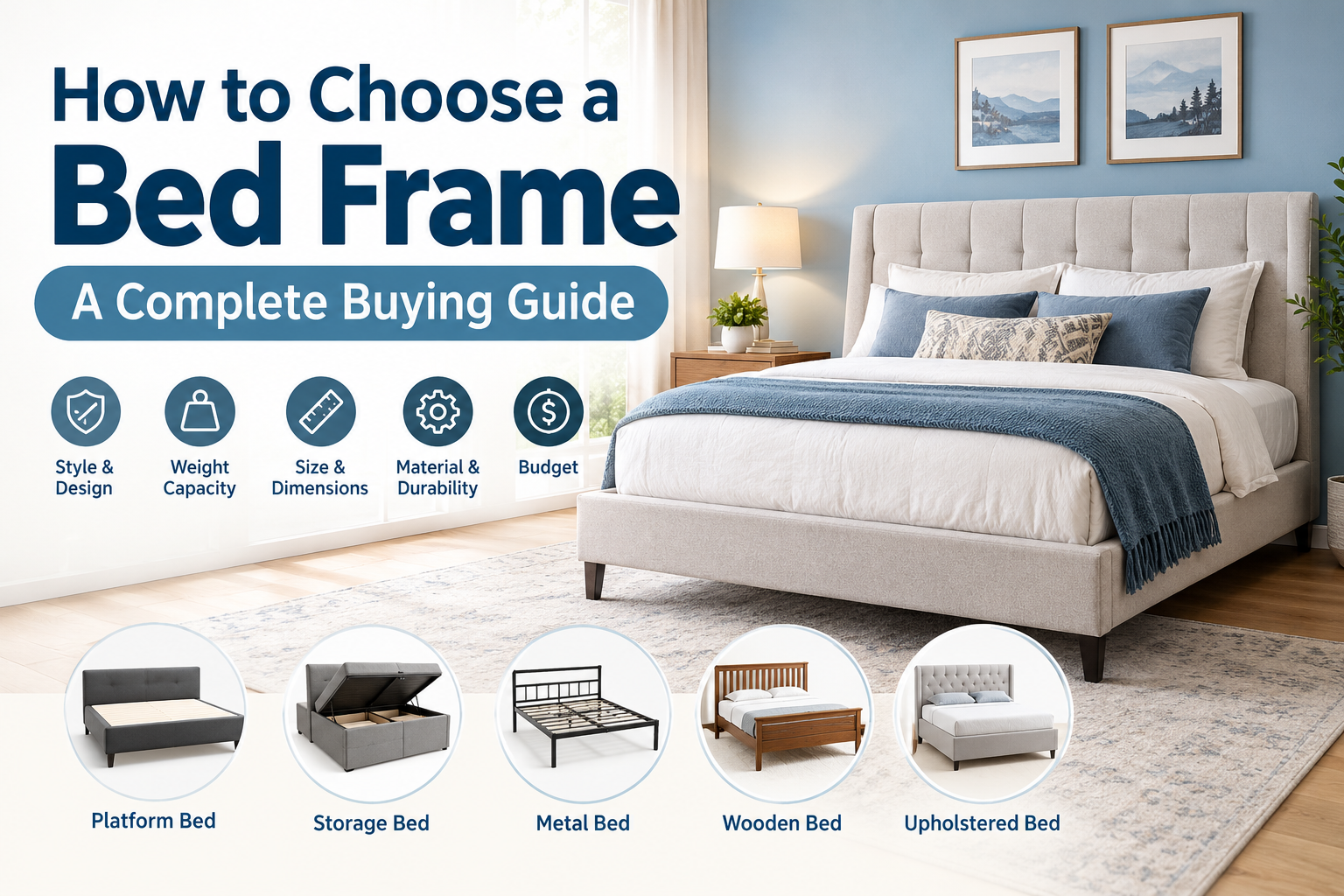
How to Choose a Bed Frame: A Practical Buying Guide
Choosing a bed frame involves more than picking a style you like. The right frame should fit your mattress, provide the required support, accommodate the people sleeping on it, and work with your room’s layout and budget. Material, height, assembly, storage, and weight capacity can all affect which option makes sense for your home.
If you are wondering how to choose a bed frame, start with the mattress you already own or plan to buy. Then compare frame size, construction, support design, and useful features. This guide walks through each decision so you can narrow your options without paying for features you do not need.
Quick Checklist: What to Consider Before Buying
- Size: Match the frame to your mattress dimensions.
- Support: Confirm slat spacing, center support, and foundation requirements.
- Material: Compare metal, solid wood, engineered wood, and upholstered designs.
- Weight capacity: Check the rating for the exact size and model.
- Height: Consider mattress height, ease of getting in and out, and under-bed clearance.
- Features: Decide whether you need storage, a headboard, or adjustable positioning.
- Budget: Account for delivery, assembly, accessories, and possible foundation costs.
1. Choose the Right Bed Frame Size
The first step is matching the frame to your mattress. A frame that is too small may not support the mattress properly, while one that is too large can allow unwanted movement or leave gaps. Check the manufacturer’s dimensions instead of relying only on the product name.
| Mattress Size | Typical Mattress Dimensions | Usually Suits |
|---|---|---|
| Twin | 38 × 75 in | One sleeper, children, and compact rooms |
| Twin XL | 38 × 80 in | One taller sleeper or many dorm setups |
| Full | 54 × 75 in | One sleeper who wants more width |
| Queen | 60 × 80 in | Couples and many primary bedrooms |
| King | 76 × 80 in | Couples who want more personal space |
| California King | 72 × 84 in | Couples who prefer extra mattress length |
These are common US mattress dimensions. Actual frame dimensions vary by design, so measure the room and verify the selected product’s specifications before ordering.
Measure the Room, Not Just the Mattress
A larger bed can feel cramped if there is not enough space to walk around it, open drawers, or reach closets. Measure the available floor area and account for the frame’s outside dimensions, which may exceed the mattress size because of a headboard, footboard, or side rails.
If you are choosing a King frame, compare the room layout and the exact frame dimensions before committing. You can explore our guide to King metal bed frames or our guide to King wood bed frames.
2. Select a Material That Fits Your Needs
Bed frames commonly use metal, solid wood, engineered wood, or upholstered construction. No material is automatically best for everyone. Compare the actual frame design, joinery, support system, finish, maintenance needs, and product documentation.
Metal Bed Frames
Metal frames are available in simple platforms, folding structures, and decorative designs. Depending on the model, they may be relatively easy to assemble and straightforward to clean. However, metal frames differ significantly in rail thickness, joint design, center support, and stability.
Before buying, check the published capacity for your mattress size, the number and placement of support legs, and whether the frame is designed to work with your mattress directly.
Explore heavy-duty metal bed frames if you want to compare metal designs built around sturdier support requirements.
Solid Wood Bed Frames
Solid wood frames appeal to shoppers who prefer natural wood construction and a traditional appearance. Wood species, rail dimensions, slat design, and joinery all influence the finished product. A solid wood label alone does not establish how much weight a particular frame can safely support.
Inspect the product description to determine which parts are solid wood and whether other components use plywood, MDF, or other engineered materials. Also consider the frame’s weight, assembly process, finish, and care requirements.
Compare solid wood King bed frames if natural wood construction is a priority.
Engineered Wood and Upholstered Frames
Engineered wood frames can offer a range of styles and price points. Upholstered frames add fabric or other padding-covered surfaces, which may suit a softer bedroom aesthetic. Their durability depends on the underlying structure, materials, hardware, and manufacturing quality.
For either type, look closely at the construction details, cleaning instructions, warranty, and available replacement parts. If you prefer a padded headboard, consider whether the fabric is practical for your household and how it will be maintained over time.
3. Understand the Support System
The frame must support your mattress in the way its manufacturer specifies. Two frames made from similar materials can perform differently because of differences in slat spacing, center rails, support legs, and overall construction.
Platform Bed vs. Traditional Frame
A platform bed generally provides a built-in surface or slat system intended to support a mattress. Some mattresses can sit directly on a platform, while others have specific foundation requirements.
A traditional bed frame may be designed to work with a separate foundation or box spring. That setup can be appropriate when it matches the mattress manufacturer’s instructions, but it may add cost and height.
Do not assume that every platform frame eliminates the need for a separate foundation, or that every mattress can be used on every slatted frame. Confirm compatibility for the exact combination you plan to use.
Check Slats and Center Support
For slatted frames, confirm the maximum permitted gap between slats and whether a center support rail or additional legs are required. Larger mattresses often need support through the middle, but the exact requirements depend on the frame design and manufacturer instructions.
- Look for clear assembly instructions and a complete list of support components.
- Check whether the center rail reaches the floor through support legs.
- Verify the slat spacing against the mattress manufacturer’s guidance.
- Inspect customer feedback for recurring complaints about sagging, loose joints, or broken slats.
- Make sure replacement hardware or parts are available if needed.
4. Check Weight Capacity Carefully
Weight capacity is an important part of choosing a bed frame, especially when multiple people share the bed or when the mattress itself is heavy. Use the manufacturer’s published rating for the exact model and size rather than assuming that similar-looking frames have the same capacity.
Also confirm what the rating includes. Some product listings may describe a maximum supported load without clearly explaining whether the mattress is included. When the documentation is unclear, ask the manufacturer rather than guessing.
Weight Capacity Checklist
- Confirm the rating for the exact frame size.
- Check whether the published load includes the mattress.
- Follow any requirements for center support or specific assembly conditions.
- Consider the combined load of the sleepers and other items placed on the bed.
- Do not treat a high advertised number as proof of superior comfort or quality.
If you need a frame designed for higher load requirements, start with our guide to heavy-duty bed frames or compare our recommendations for bed frames for heavy people.
5. Choose the Right Bed Height
The total height of your bed affects how it looks and how easy it is to use. Remember that the finished height comes from the frame, any foundation, and the mattress combined—not just the frame’s advertised height.
A lower frame can create a streamlined look and may suit rooms with low ceilings. A taller frame can make under-bed storage easier to access, but an overly high sleeping surface may be inconvenient for some people. If mobility is a concern, consider how comfortably you can sit on the edge of the bed and stand up.
Measure your current bed height if it feels comfortable, then use that measurement as a reference. If you plan to add a thick mattress or foundation later, account for that extra height before choosing a frame.
6. Decide Whether You Need Storage or an Adjustable Base
Storage Bed Frames
Storage beds can be useful in smaller rooms or homes where closet space is limited. Common designs include drawers, lift-up platforms, and open space beneath the bed for storage bins.
Before choosing one, measure the space needed to open drawers or lift the platform. Consider the weight of stored items, ease of access, and whether the storage mechanism will fit your room layout. A storage frame may not be ideal if you need frequent access to items beneath the bed or prefer a simple, lightweight design.
Adjustable Bed Bases
Adjustable bases allow the head or foot of the bed to move on compatible models. They can be useful for shoppers who prefer changing their resting position, but they generally cost more and require careful mattress compatibility checks.
Before purchasing, verify the supported mattress types, weight rating, remote controls, warranty coverage, and return policy. If you do not expect to use the adjustment features, a conventional platform may offer a simpler and less expensive setup.
7. Set a Realistic Budget
The purchase price is only one part of the total cost. Depending on the design, you may also need to budget for delivery, assembly, a compatible foundation, a headboard, or additional support components.
A practical way to compare options is to separate essential features from optional ones. Correct size, mattress compatibility, adequate support, and suitable weight capacity should come before decorative extras.
- Basic metal frames: Consider them if you prioritize a straightforward setup and functional support.
- Wood platform frames: Compare construction, finish, and the quality of joints and slats.
- Upholstered frames: Include fabric maintenance and cleaning in your decision.
- Storage frames: Evaluate whether the storage capacity justifies the additional cost and complexity.
- Adjustable bases: Compare motor features, warranty coverage, and mattress compatibility carefully.
Compare the total cost and documented specifications rather than choosing solely by the lowest advertised price. Check the seller’s return conditions and whether return shipping or restocking fees could apply.
8. Read Reviews and Verify Product Details
Customer reviews can help reveal practical issues that are not obvious in product photos. Look for recurring feedback about assembly, missing hardware, noise, stability, damaged deliveries, and how well the frame fits the advertised mattress size.
Give more weight to reviews that identify the same model and size you plan to buy. A review for a Twin version may not confirm the support design or capacity of a King version. Likewise, a review of an older revision may describe a product that has since changed.
Before placing an order, verify:
- Exact model name and mattress size
- Frame dimensions and total assembled height
- Materials and support construction
- Weight capacity and rating conditions
- Required foundation and permitted slat spacing
- Assembly instructions and included hardware
- Warranty, delivery terms, and return policy
Common Bed Frame Buying Mistakes
Buying the Wrong Size
A mattress size label does not tell you the frame’s full outside dimensions. Measure the room and compare the exact product measurements before ordering.
Ignoring Mattress Requirements
A mattress may require a particular foundation, support spacing, or center rail. Check the mattress documentation before deciding on the frame.
Assuming All Frames Have the Same Capacity
Capacity can differ by size and model, even within the same product family. Verify the rating for the exact item rather than relying on a general brand description.
Paying for Features You Will Not Use
Storage drawers, motorized adjustments, and decorative details can increase cost and complexity. Choose them when they solve a real need, not simply because they are available.
Frequently Asked Questions
What should I look for when buying a bed frame?
Start with the correct mattress size, suitable support construction, compatible foundation requirements, and documented weight capacity. Then compare height, material, storage, appearance, assembly, warranty, and budget.
Is a metal or wood bed frame better?
Neither is universally better. Metal frames offer a range of simple and decorative designs, while wood frames provide different finishes and construction styles. The exact support structure, materials, capacity, and quality matter more than the material label alone.
Do I need a box spring with a platform bed?
Many platform beds are designed to support a mattress directly, but requirements vary by frame and mattress. Check both manufacturers’ instructions before using or omitting a separate foundation.
How do I know if a bed frame is sturdy enough?
Check the stated weight capacity for the exact size, center support design, support-leg placement, frame materials, and assembly instructions. Customer feedback can provide additional clues about wobbling, noise, and long-term reliability.
Should I buy a bed frame with storage?
Storage can be worthwhile if you need extra space and can comfortably access the drawers or lift mechanism. Measure the surrounding area first and consider the additional cost, weight, and complexity.
How long should a bed frame last?
Lifespan depends on materials, construction, use, maintenance, and assembly. Inspect the frame periodically for loose fasteners, damaged slats, cracks, corrosion, or other signs of wear, and follow the manufacturer’s maintenance guidance.
Final Thoughts: Choose a Bed Frame That Fits Your Needs
The best way to choose a bed frame is to start with the mattress and room, then narrow your options by support design, construction, weight capacity, height, and budget. A well-matched frame should meet the mattress manufacturer’s requirements and provide stable support without unnecessary features or expense.
If you are still comparing options, browse our bed frame guides, including King metal bed frames, solid wood King bed frames, and heavy-duty bed frames for heavier loads.
Affiliate Disclosure: HeavyDutyChoice may earn from qualifying purchases made through affiliate links. Product availability, prices, specifications, and return policies may change. Confirm current details with the seller and manufacturer before purchasing.