
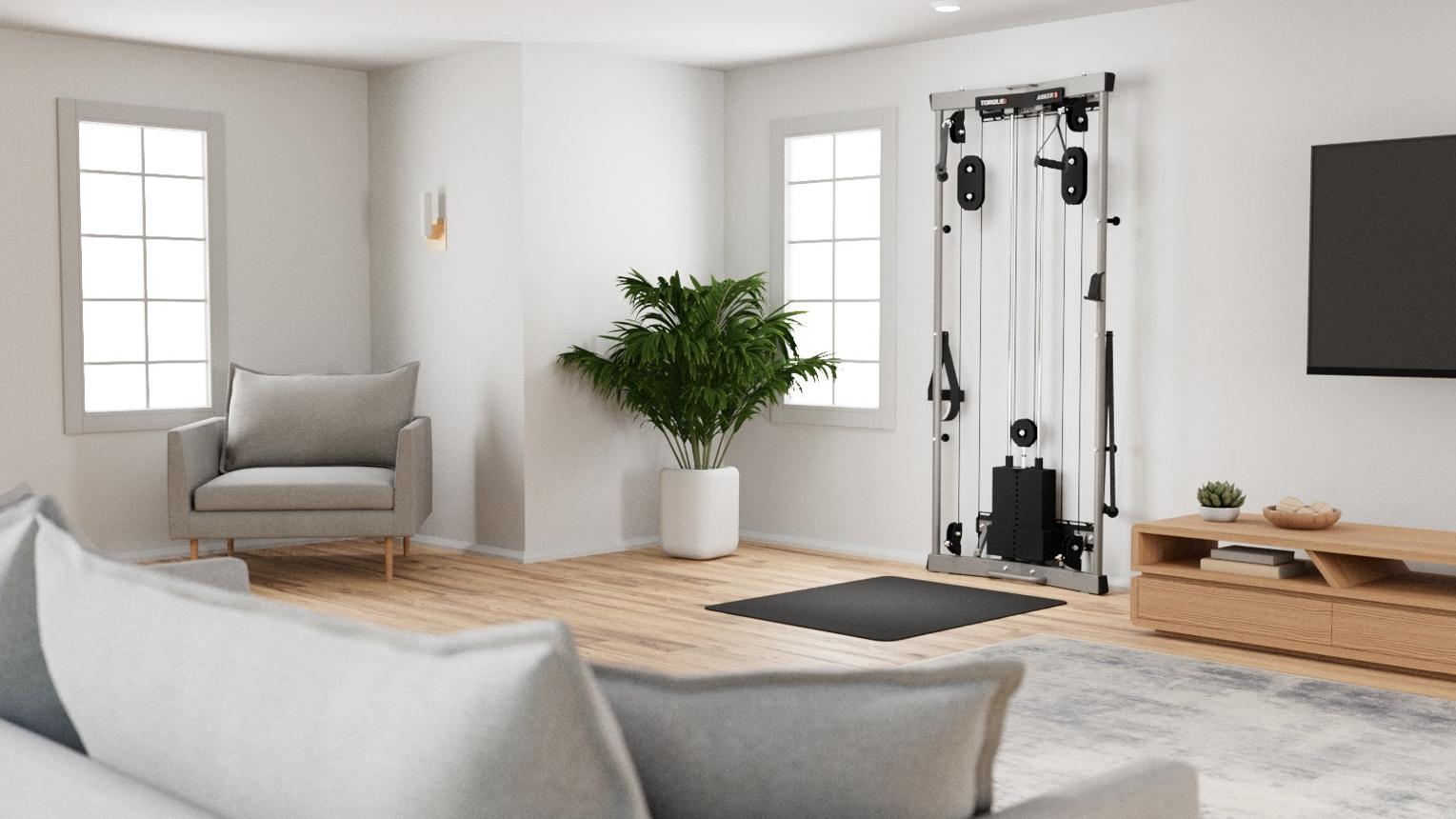
Setting up a home gym in a small room can be challenging. A traditional power rack or functional trainer may take up more floor space than you can spare. A wall mounted home gym offers a practical alternative by moving much of the equipment onto the wall and keeping more of your floor available for other activities.
Wall-mounted systems range from simple pulley attachments to adjustable cable stations and folding squat racks. The right choice depends on the exercises you want to perform, the strength of your wall, your available ceiling height, and whether you need equipment that can fold away after a workout.
Quick Guide: Which Wall-Mounted Home Gym Should You Choose?
- Best for versatile cable workouts: A dual-pulley wall-mounted cable station.
- Best for a compact budget setup: A basic wall-mounted pulley system.
- Best for strength training: A folding wall-mounted squat rack with cable attachments.
- Best for an existing home gym: A wall-mounted pulley attachment that works with your current weight plates.
What Is a Wall-Mounted Home Gym?
A wall-mounted home gym is exercise equipment attached directly to a suitable wall or wall-supported structure. Instead of standing on a large freestanding frame, the equipment uses the wall for support.
Common designs include:
Wall-Mounted Cable Stations
Adjustable pulleys allow exercises such as cable rows, triceps pushdowns, curls, chest flyes, and pulldowns, depending on the design.
Folding Squat Racks
Wall-mounted racks can fold toward the wall when not in use. Some models add pull-up bars or cable attachments.
Basic Pulley Systems
Simple pulley kits provide a more affordable way to add cable exercises to an existing home gym.

Best Wall-Mounted Home Gyms for Small Spaces
The following options represent different types of wall-mounted training equipment. They are not identical machines, so compare their exercise capabilities and installation requirements before choosing one.
Wall-mounted
1. Mikolo M-G3 Wall-Mounted Cable Station
The Mikolo M-G3 is worth considering if you want a more versatile cable-training setup without dedicating an entire corner to a freestanding functional trainer.
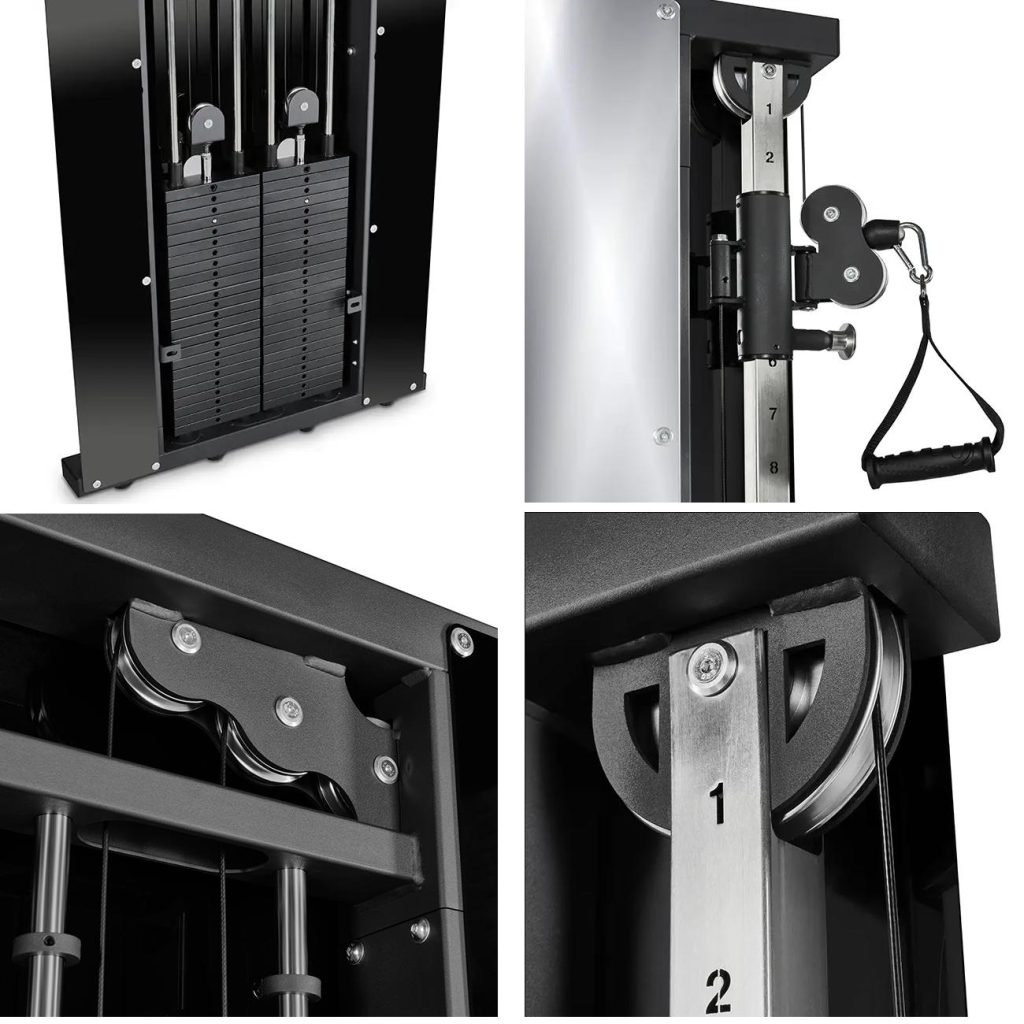
Its adjustable pulley arrangement is designed for different cable exercises, making this style of equipment useful for upper-body training and accessory movements. Check the exact listing configuration to confirm which attachments and mounting hardware are included.
Why consider it:
- Wall-mounted design helps preserve floor space.
- Multiple pulley positions provide more exercise options than a fixed pulley.
- Suitable for people who want cable exercises in a compact workout area.
Things to check: Confirm the wall-mounting requirements, plate compatibility, cable travel, and the actual load specifications for the version you are buying.
Plate-loaded
2. Valor Fitness BD-62 Wall-Mounted Cable Station
The Valor Fitness BD-62 is a wall-mounted cable option for people who already own weight plates and want to add pulley exercises without buying a large weight-stack machine.
Its compact wall-mounted format makes it appealing for garage gyms and smaller workout rooms. The published product information describes adjustable pulley positions and plate-loaded resistance. Verify the current listing for exact dimensions, compatible plates, and included accessories.
Why consider it:
- Uses a wall-mounted design rather than a large freestanding frame.
- Plate-loaded resistance can work well with an existing weight collection.
- Adjustable pulley positions support different cable movement angles.
Things to check: Make sure the mounting brackets can be secured to suitable structural supports. Also check whether your weight plates fit the loading system.
Dual-pulley style
3. GOIMU WM1 Wall-Mounted Cable Station
The GOIMU WM1 is another option for buyers who want a compact cable station with adjustable pulley positions. This type of system can be useful when you want to perform several cable movements without keeping a large machine on the floor.
Before purchasing, review the specific WM1 version carefully. Listings may differ in attachments, pulley configuration, resistance ratio, and included mounting components.
Why consider it:
- Designed for wall-mounted cable training.
- Adjustable pulley height adds flexibility for different exercises.
- A useful format for a compact garage or spare-room gym.
Things to check: Confirm whether the version includes the attachments you need and whether its resistance setup matches your training goals.
Folding rack
4. Mikolo Folding Wall-Mounted Squat Rack with Cable System
If you want more than cable exercises, a folding wall-mounted rack may be a better fit. The Mikolo folding rack with cable attachments combines a rack-style strength-training setup with pulley functionality.
This configuration can be useful for people who want to perform barbell movements and cable exercises in one workout area. When folded, the rack is designed to take up less room than a permanently extended power rack.
Why consider it:
- Combines rack-based strength training and cable exercises.
- Folding construction helps reclaim floor space between workouts.
- May reduce the need to purchase separate rack and cable equipment.
Things to check: This is a more involved installation than a basic pulley system. Check the full assembled dimensions, folded dimensions, mounting requirements, rack accessories, and the exact cable configuration before ordering.
Pulley kit
5. Basic Wall-Mounted Pulley System
A basic wall-mounted pulley system is worth considering if you have a limited budget or already own a bench, dumbbells, and weight plates. Rather than purchasing a complete gym station, you add a pulley setup to support selected cable movements.
Some systems are designed for high and low pulley exercises, while others provide a simpler single-pulley arrangement. The number of exercises depends on the pulley layout, cable length, mounting height, and available attachments.
Why consider it:
- Usually simpler than buying a complete functional trainer.
- Can complement existing home gym equipment.
- Useful for selected movements such as pulldowns, rows, and curls when the setup supports them.
Things to check: A pulley kit is not automatically a complete home gym. Inspect the cable, pulley wheels, loading pin, mounting hardware, and stated load limits. Do not assume that a low-cost kit is suitable for heavy training.
Wall-Mounted Home Gym Comparison
| Equipment | Best For | Space Advantage | Main Consideration |
| Mikolo M-G3 | Versatile cable training | Wall-mounted format | Check plate and attachment configuration |
| Valor Fitness BD-62 | Plate-loaded cable workouts | Compact wall installation | Wall support and plate compatibility |
| GOIMU WM1 | Adjustable cable exercises | Uses wall space | Verify exact model configuration |
| Mikolo Folding Rack | Rack and cable workouts | Folds toward the wall | More complex installation |
| Basic Pulley System | Simple cable exercises | Minimal equipment footprint | Limited functionality varies by kit |
How to Choose a Wall-Mounted Home Gym
1. Check Your Wall Construction First
This is the most important step. Wall-mounted gym equipment transfers pulling forces into the structure supporting it. A machine that looks compact can still place substantial force on its mounting points during exercise.
Important installation warning
Never mount a loaded cable machine or squat rack using drywall anchors alone. Follow the manufacturer’s installation instructions and secure the equipment to suitable structural framing, masonry, or another specifically approved support. If you are unsure about the wall, ask a qualified installer to assess it before use.
Wood-stud walls, concrete walls, and masonry walls require different mounting methods. Do not assume that hardware supplied with one product is appropriate for every wall type.
2. Measure the Working Area, Not Just the Machine
A small machine can still require a surprisingly large workout area. You need room to stand, move your arms, extend cables, position a bench, and load or remove weight plates.
Measure these areas before ordering:
- Wall width: Check the total mounting width and the location of structural supports.
- Projection depth: Measure how far the equipment extends into the room.
- Ceiling height: Allow enough clearance for overhead movements and attachments.
- Exercise clearance: Leave room in front of the machine for the movements you plan to perform.
- Access: Make sure doors, windows, storage, and walking paths remain usable.
3. Choose the Right Pulley Configuration
Not every wall-mounted pulley system offers the same training options.
Single Pulley
A straightforward choice for selected high- or low-pulley exercises.
Adjustable Pulley
Allows the pulley position to change for different movement angles.
Dual Pulley
Can support two-sided movements such as cable flyes, depending on the machine design.
If you want to perform a wide range of upper-body exercises, an adjustable dual-pulley system may be more useful than a basic fixed pulley. However, a more complicated system is not automatically better if you only need a few movements.
4. Understand Weight Capacity and Resistance Ratio
Pay attention to the difference between the maximum plate load, the cable system’s stated capacity, and the resistance you actually feel at the handle.
Some pulley systems use a different mechanical ratio, which means the resistance at the handle may not equal the weight loaded onto the machine. Check the manufacturer’s explanation instead of comparing machines using a single capacity number.
Also inspect the cable, pulley wheels, loading pin, carabiners, and attachment points. These components are important to the overall safety and durability of the equipment.
5. Consider the Attachments Included
Useful attachments may include:
- Single-grip handles
- Straight cable bars
- Lat pulldown bars
- Triceps ropes
- Footplates or low-row supports
Check the product listing carefully. Some machines include only basic handles, while other configurations may include a more complete accessory package.
6. Decide Whether You Need a Folding Design
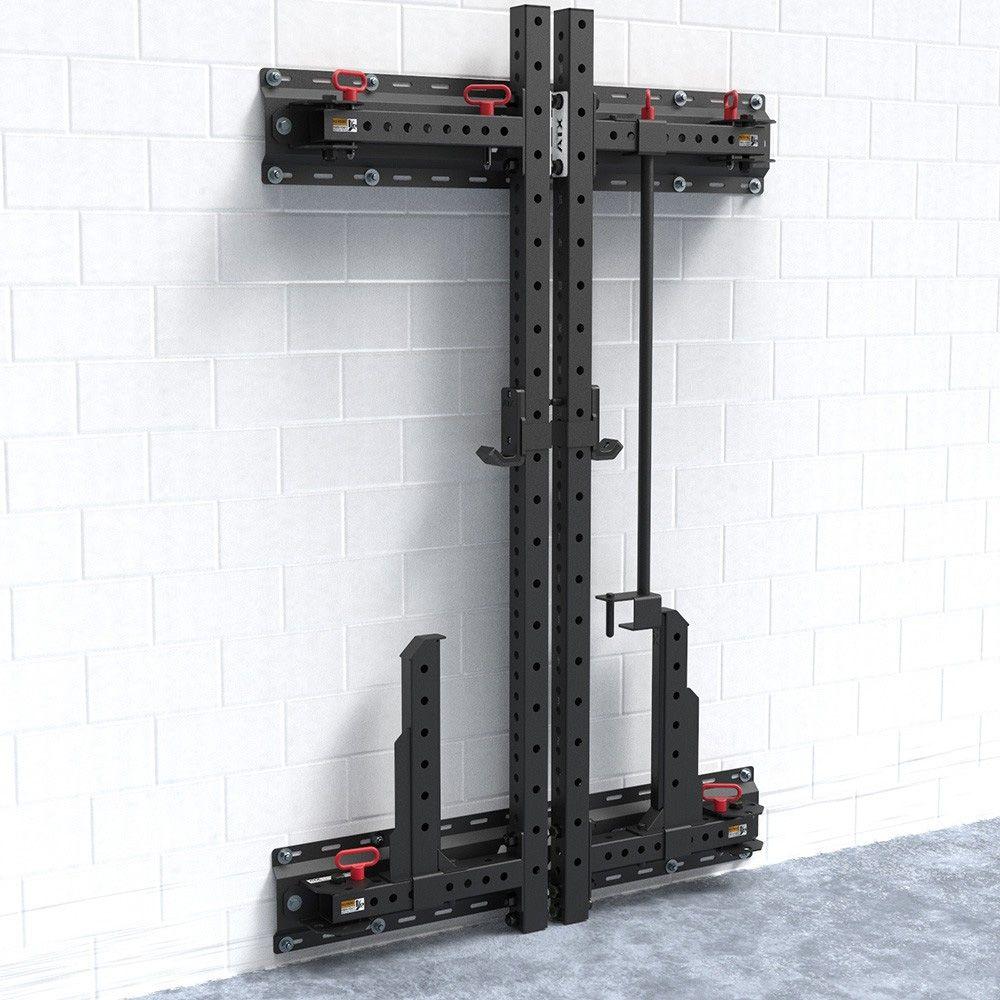

A folding rack is useful when the same room serves as a gym, office, storage area, or general living space. It can be moved closer to the wall when not in use.
However, a folding rack still needs enough room to open safely. Check the folded and unfolded dimensions, hinge design, locking mechanism, and mounting instructions before buying.
What Exercises Can You Do With a Wall-Mounted Home Gym?
The exercises available depend on the machine’s pulley positions, attachments, and resistance system. A properly configured cable station may support several of the following movements:
Upper Body
- Triceps pushdowns
- Biceps curls
- Cable chest flyes
- Face pulls
Back Training
- Lat pulldowns
- Seated cable rows
- Straight-arm pulldowns
- Single-arm rows
Lower Body and Core
- Cable kickbacks
- Standing cable crunches
- Woodchoppers
- Selected cable leg exercises
Not every wall-mounted station supports all these exercises. Check the cable travel, pulley height, and available attachments before planning a workout around a particular movement.
Wall-Mounted vs. Freestanding Home Gyms
Both designs can work well, but they solve different space and installation problems.
FeatureWall-MountedFreestandingFloor spaceUsually lower permanent footprintRequires dedicated floor spaceInstallationRequires suitable wall supportUsually assembled on the floorPortabilityDifficult to relocate after installationSome models can be movedRental-friendlyOften less suitableOften easier to install without drillingBest useCompact, fixed workout areasDedicated gym rooms
If you cannot drill into a wall or confirm its structural strength, a freestanding machine may be the safer and more practical option. You can explore more equipment options in our Home Gym Equipment category.
Common Mistakes to Avoid
Mounting to Drywall Only
Drywall alone is not a suitable mounting structure for loaded gym equipment.
Ignoring Working Clearance
The machine may fit against the wall but still leave insufficient room for safe exercise.
Buying by Weight Capacity Alone
Cable ratio, hardware quality, mounting structure, and actual resistance all matter.
Forgetting Ceiling Height
Tall equipment and overhead movements need enough vertical clearance.
Frequently Asked Questions
Are wall-mounted home gyms good for small spaces?
Yes. They can preserve more usable floor space than large freestanding machines. Adjustable cable stations and folding racks are especially useful when you want multiple exercise options in a compact room. You still need enough clearance in front of the equipment to exercise safely.
Can you install a wall-mounted home gym on drywall?
Do not attach loaded gym equipment to drywall alone. The equipment must be secured to a suitable structural support using the manufacturer’s specified installation method. If you cannot identify the supporting structure, have the wall assessed before installation.
Do wall-mounted cable machines need weight plates?
Many compact wall-mounted cable stations are plate-loaded, so you need compatible weight plates. Other systems use different resistance arrangements. Check the product listing to see whether plates are included and which sizes the loading system accepts.
Can a wall-mounted home gym replace a full gym?
A versatile cable station can support many upper-body and accessory exercises, but a basic pulley kit cannot replace every function of a full gym. If you want barbell squats, bench presses, and cable movements, consider a properly installed folding rack with compatible attachments.
Are wall-mounted home gyms suitable for apartments?
They can work in apartments if the building permits drilling and the wall is suitable for the equipment. However, renters should check their lease and obtain permission before making structural modifications. A freestanding or portable alternative may be more practical when drilling is not allowed.
How much space do I need for a wall-mounted cable machine?
The required space varies by machine. Measure the frame, its projection from the wall, and the area needed for your intended exercises. Also account for the bench, weight plates, attachments, and clearance for safe movement.
Final Verdict: Are Wall-Mounted Home Gyms Worth It?
A wall-mounted home gym can be an excellent solution when floor space is limited but you still want resistance training at home. The biggest advantage is not necessarily the number of exercises it supports; it is the ability to add useful training equipment without permanently filling a large section of the room.
For versatile cable workouts, compare adjustable wall-mounted stations such as the Mikolo M-G3 and GOIMU WM1. If you already own weight plates, the Valor Fitness BD-62 is another option worth examining. For people who want both rack-based strength training and cable exercises, a folding wall-mounted rack may offer more functionality.
Before buying, measure the room, check the wall structure, and verify the exact model’s installation requirements. A properly selected and securely installed system will be much more useful than a machine that looks compact but does not fit your actual workout space.
Explore More Home Gym Guides
Affiliate Disclosure: As an Amazon Associate, HeavyDutyChoice earns from qualifying purchases. This means we may receive a commission when you purchase through links on this page, at no additional cost to you.