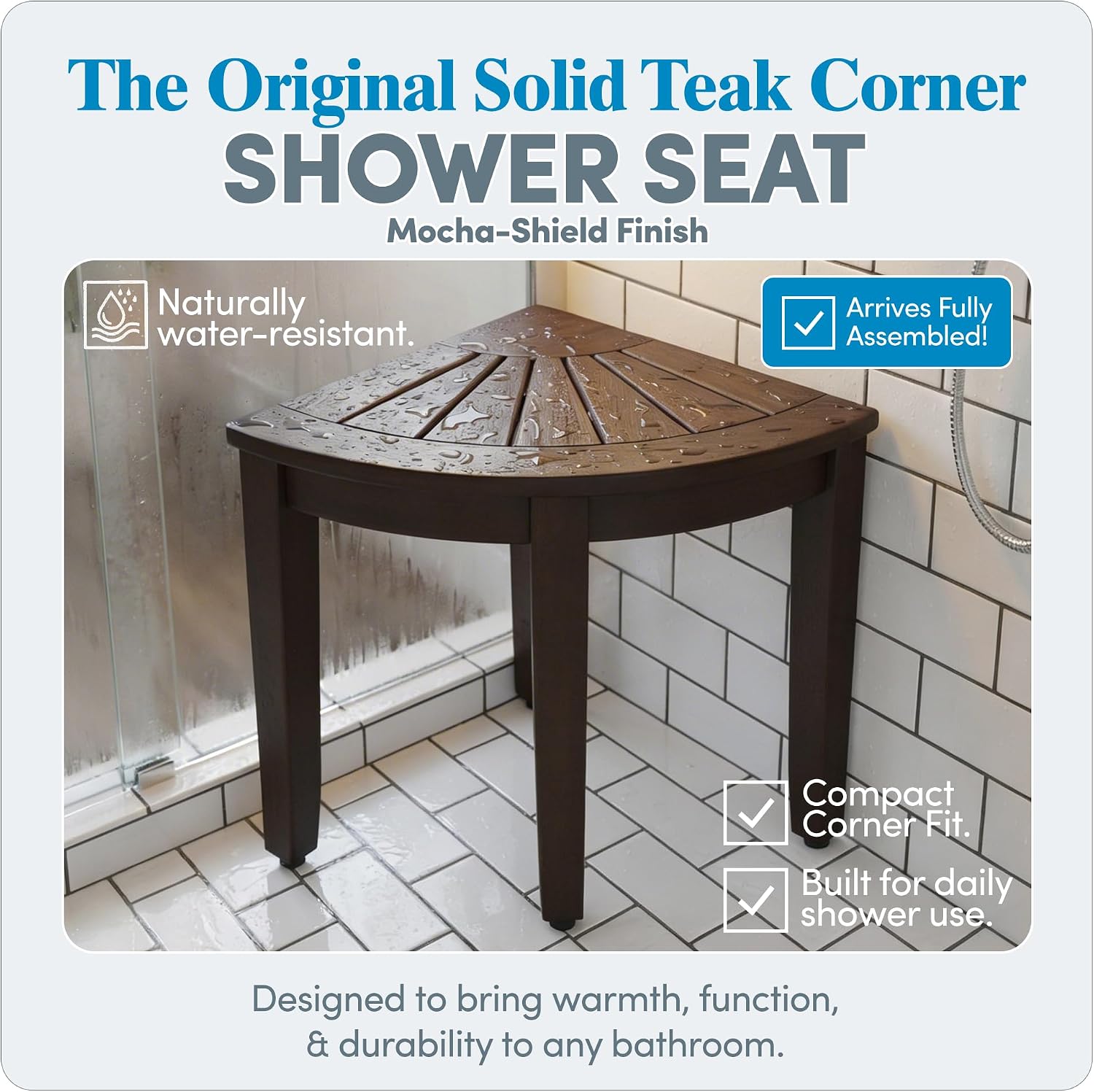
Make Better Use of Your Shower’s Corner Space
A corner shower bench can provide a convenient place to sit without taking up as much central floor space as a full-width bench. The right design can also keep toiletries within reach while leaving more room to move around the shower.
This guide compares corner shower bench options by footprint, seat dimensions, weight capacity, stability, and storage. It focuses on freestanding corner benches rather than built-in shower seating or wall-mounted benches.
Important: A compact footprint does not automatically mean a bench is safe for every user. Check the exact model’s weight rating, assembly requirements, feet, and stability. If the bench is intended for someone with balance or mobility limitations, consider whether a purpose-built shower chair or transfer bench would be more appropriate.
What to Look for in a Corner Shower Bench
A corner shower bench is designed to sit where two shower walls meet. Some models have a triangular or angled footprint, while others use a compact square design with two sides positioned toward the walls. These shapes can help preserve usable floor space, but the actual fit depends on the shower’s dimensions and layout.
Compact Footprint
Measure how far the bench extends from each wall and how much standing space remains.
Weight Capacity
Use the manufacturer’s stated capacity for the exact model, not an estimate based on appearance.
Stable Feet
Look for suitable non-slip feet and adjustable leveling where the manufacturer provides them.
Useful Seat Area
Make sure the seat is wide and deep enough for the intended use, not merely small enough to fit.
Corner Shower Benches to Compare
The following models illustrate different corner-bench sizes and configurations. They are comparison candidates, not products ranked from hands-on testing. Check current availability, exact dimensions, weight capacity, and assembly details before purchasing.
1. AquaTeak Kai Corner Teak Shower Bench
Published dimensions: Approximately 15.5 × 15.5 × 18 inches
Published weight capacity: 300 lb
The Kai corner bench is designed for compact spaces and uses an angled corner-friendly shape. Its approximately 15.5-inch footprint on each side makes it a useful option to consider when a larger rectangular bench would occupy too much of the shower.
The standard version has no lower shelf, so the seating area is the main consideration. AquaTeak also sells related Kai versions with different finishes and configurations; do not assume every version has identical dimensions or features.
Consider it if: You need a small freestanding corner seat and want a published capacity to compare against your requirements.
2. AquaTeak Kai Corner Teak Shower Bench with Shelf
Published dimensions: Approximately 15.5 × 15.5 × 18 inches
Published weight capacity: 300 lb
This version adds a lower shelf beneath the seat. It may suit showers where keeping a few bathing products off the floor is a priority, while retaining a compact corner-oriented design.
The shelf is useful for storage, but it does not replace the need to check the seat’s usable area and the bench’s stability. Make sure stored items do not interfere with the user’s feet or the bench’s supporting legs.
Consider it if: You want a compact corner bench with extra storage for toiletries.
3. AquaTeak Kai Elevated Corner Shower Bench
Published dimensions: Approximately 15.5 × 15.5 × 21 inches
Published weight capacity: 300 lb
The elevated version offers a taller seat than the standard 18-inch Kai model. Seat height can affect how comfortable it is to sit down and stand up, so compare the published height with the user’s needs rather than choosing by footprint alone.
A taller seat is not automatically the right choice for everyone. Confirm the exact model’s dimensions and ensure the user can sit securely with an appropriate foot position.
Consider it if: You prefer a taller corner seat and the manufacturer’s dimensions match your intended use.
4. Teakworks4u Deluxe Teak Corner Shower Bench
Published dimensions: Approximately 30.5 inches long × 21.5 inches wide × 15 inches deep × 17.75 inches high
This larger corner-bench design is worth comparing when a very small stool would not provide enough seating area. Its broader shape may work better in a spacious shower, but it requires more room than a compact 15.5-inch corner bench.
The manufacturer listing provides dimensions, but verify the applicable weight capacity directly before purchase. Do not assume that a larger seat necessarily supports more weight.
Consider it if: You have a larger shower and want a broader freestanding corner bench.
5. EcoDecors SnazzyCorner Teak Shower Bench
Design: Corner-style bench with a lower shelf on selected versions
The SnazzyCorner line is another compact corner-bench option to research if you want a different design and storage arrangement. Confirm the exact model’s dimensions, weight rating, feet, and assembly instructions from the current product listing before comparing it with the AquaTeak options.
Retailer listings can show different sizes or configurations under similar product names. Make sure the selected version is actually a shower bench and that the listed dimensions fit your shower corner.
Consider it if: You want to compare another compact corner design, particularly one with a lower storage shelf.
Product selection note: Published specifications can change by model or finish. Verify all dimensions and capacity claims on the exact product page before relying on them. These products have not been presented as hands-on test winners.
How to Measure for a Corner Shower Bench
Measure the shower before choosing a bench. A product may have a compact footprint but still interfere with the shower door, fixtures, or the space needed to stand and turn safely.
Measurement checklist
- Measure both walls: Record the available distance from the corner along each wall.
- Check the footprint: Compare the product’s width and depth with the usable floor area.
- Check the seat height: Compare the published height with the user’s needs.
- Allow movement space: Make sure the bench does not block the entry, shower door, or normal movement.
- Account for the floor slope: Ensure the feet can sit securely on the shower floor and any adjustment is permitted by the manufacturer.
For a triangular or angled model, check the dimensions along both sides as well as the front edge. For a larger rectangular corner bench, measure the entire seating area and the space projecting into the shower.
How Much Weight Can a Corner Shower Bench Support?
Weight capacity varies by design and model. For example, AquaTeak lists a 300 lb capacity for the Kai corner bench family. That number should not be applied to other corner benches simply because they look similar or use the same material.
Before purchasing, verify the manufacturer’s stated user capacity for the exact model. Also consider the condition of the floor, the stability of the legs, and whether the bench is assembled according to instructions.
A freestanding corner bench is not automatically a bariatric or medical transfer seat. If a higher weight capacity or additional support is needed, look specifically for products with documented ratings and features that match those needs.
Corner Shower Bench vs. Built-In Shower Bench
Freestanding Corner Bench
- Can often be assembled and repositioned according to the instructions.
- Available in compact footprints.
- Requires floor space and stable placement.
Built-In Shower Bench
- Integrated into the shower design during construction or renovation.
- Requires careful planning for dimensions, waterproofing, and drainage.
- Not a portable alternative to a freestanding bench.
If you are planning a permanent seat as part of a shower renovation, read our Built-In Shower Bench guide. It covers planning considerations that are different from choosing a movable corner seat.
Corner Bench vs. a Regular Shower Bench
A corner bench is designed to make use of the area where two walls meet. A conventional rectangular shower bench may offer a longer, more continuous seat, but can occupy more central floor space.
Choose based on the actual dimensions and the way you intend to use the seat. If you need a broader seat or a specific weight rating, compare those requirements before prioritizing a compact footprint.
For a broader overview of shower bench materials and styles, visit our Shower Benches buying guide. For a more general comparison of teak models, see Best Teak Shower Benches.
Common Buying Mistakes to Avoid
- Choosing by appearance alone: A stylish bench may not have the seat size, height, or capacity you need.
- Ignoring the full footprint: Measure how far the bench extends into the shower, not just its advertised width.
- Assuming every model has the same capacity: Verify the exact model’s published rating.
- Forgetting about leveling: Check the feet and follow the manufacturer’s instructions for uneven or sloped floors.
- Overlooking assembly: Confirm whether tools or assembly are required and recheck all fasteners as directed.
- Using a small decorative stool as a mobility aid: If the user needs substantial support during transfers, choose equipment specifically designed for that purpose.
Frequently Asked Questions
What is the best size for a corner shower bench?
There is no single best size for every shower. Compact models around 15.5 inches on each side may suit tight corners, while larger designs can provide a broader seat but take up more floor space. Measure your shower and compare the exact product dimensions.
Are corner shower benches stable?
Stability depends on the design, assembly, feet, floor surface, and intended load. Look for clear manufacturer instructions, check the stated weight capacity, and make sure the bench sits securely before use. Do not use a bench that rocks or shifts.
How much weight can a corner shower bench hold?
Capacity varies by model. AquaTeak lists 300 lb for its Kai corner bench models, but other products may have different ratings. Always verify the exact version’s manufacturer specifications.
Is a corner shower bench suitable for elderly adults?
It depends on the individual’s balance, mobility, and need for support. A compact freestanding bench may provide a place to sit, but it may not offer the backrest, armrests, or transfer assistance some people need. Consider a purpose-built shower chair or transfer bench when additional support is required.
Should I choose a corner bench with a shelf?
A lower shelf can keep toiletries off the shower floor, but it may reduce clearance around the user’s feet or legs. Choose a shelf configuration only if it fits your space and does not interfere with safe use.
Is a freestanding corner bench better than a built-in bench?
A freestanding bench is generally easier to move or remove, while a built-in bench is planned as part of the shower construction or renovation. The better option depends on whether you need a movable seat or a permanent design feature.
Final Buying Advice
For a small shower, start by measuring the two walls that meet at the corner and checking the bench’s full footprint. Then compare seat height, usable seating area, published capacity, feet, and assembly requirements.
The AquaTeak Kai corner bench family offers compact configurations, including a standard seat, a version with a lower shelf, and an elevated model. Verify the exact version’s dimensions and capacity before buying. For a broader overview of seating options, visit our Shower Benches guide.
Disclosure: This article contains Amazon affiliate links. As an Amazon Associate, the site may earn from qualifying purchases. Product details are based on manufacturer information where available and should be verified against the exact model before purchase. This guide is informational and does not replace individualized accessibility or transfer advice.