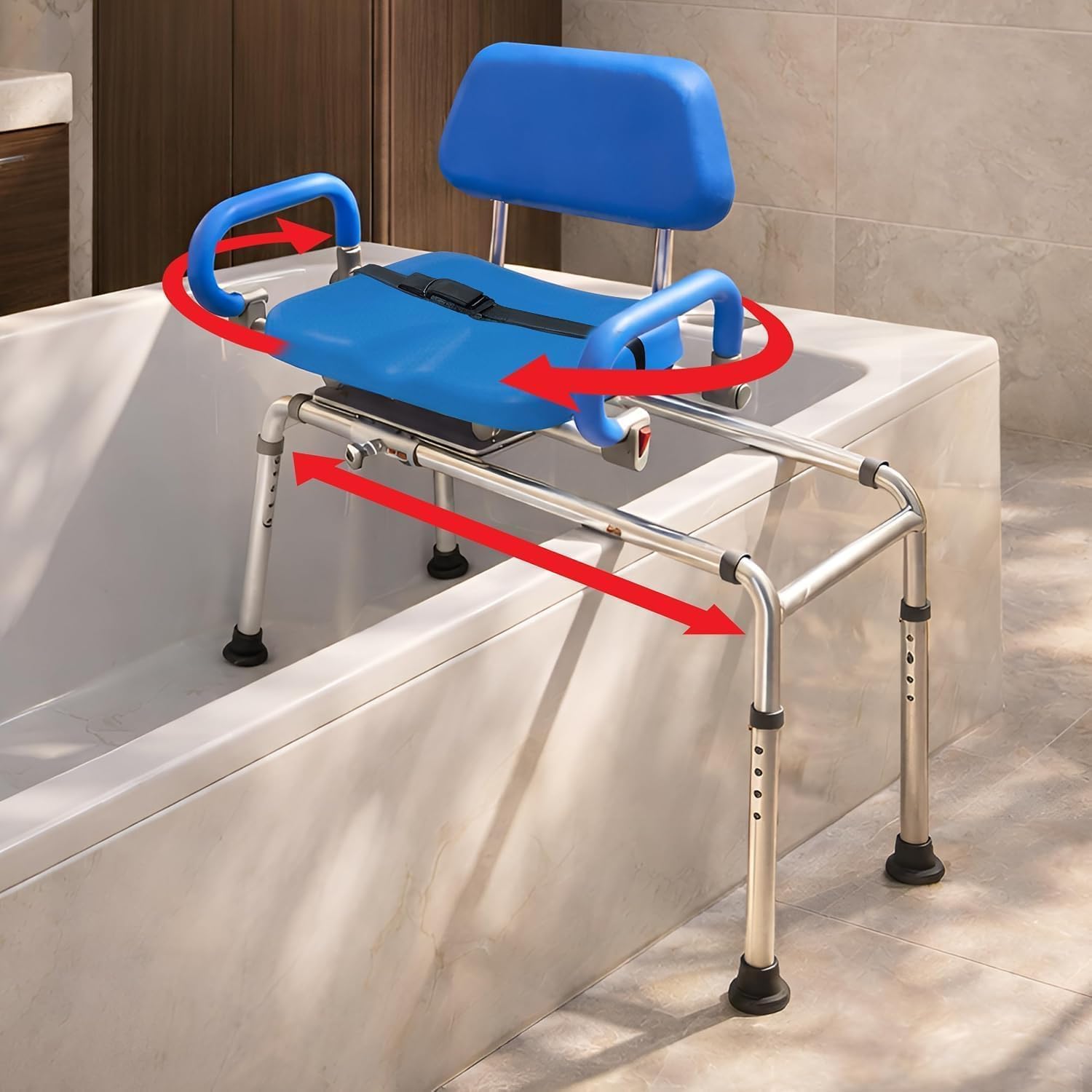
What Is a Sliding Shower Chair?
A sliding shower chair is designed to help users move into or out of a bathing area while remaining seated. Unlike a standard shower chair that stays in one position, a sliding transfer bench typically uses a seat that moves along a frame spanning the bathtub or shower entrance.
The right model depends on the bathroom layout, the user’s mobility, the required weight capacity, and the amount of assistance needed during transfers. This guide explains what to compare before buying and highlights sliding transfer benches worth researching.
Safety first: A sliding shower chair is not automatically suitable for every user or bathtub. Follow the manufacturer’s instructions for setup, locking, weight limits, and transfers. If the user cannot maintain a stable seated position or needs hands-on assistance, consult an appropriate healthcare or accessibility professional before choosing equipment.
Quick Guide to Sliding Shower Chairs
Before comparing products, decide which type of seating you need. Some products slide across a bathtub wall to assist with entry and exit. Others are conventional shower chairs that adjust in height but do not provide a sliding transfer mechanism.
Sliding Transfer Bench
The seat moves along a frame to help the user transfer across the bathtub edge while seated.
Swivel-and-Slide Seat
Some designs combine sliding movement with seat rotation to provide different transfer positions.
Standard Shower Chair
Provides stationary seating inside the shower but generally does not help the user slide across a tub wall.
If you need a conventional chair rather than a transfer device, start with our Shower Chairs buying guide. If transferring across a bathtub edge is the main concern, a sliding or standard transfer bench may be more appropriate.
Sliding Shower Chairs Worth Comparing
The products below illustrate different sliding-seat approaches. These are comparison candidates, not hands-on test winners. Confirm the exact model, current availability, published specifications, and installation instructions before purchasing.
1. Drive Medical Folding Universal Sliding Transfer Bench (RTL12075)
Published weight capacity: 300 lb
Published seat dimensions: 22.5 inches wide × 18.5 inches deep
Published seat-height range: 21–25 inches
This model uses a seat that slides along the frame to help with entry into and exit from the bathtub. Drive Medical lists a folding design, adjustable seat height, a reversible setup, a seat belt, a removable soap dish, and a safety net for dropped items.
Its folding frame may be useful when storage space matters. However, the overall frame needs room to span the tub and extend onto the bathroom floor. Measure the tub width, rim height, and available floor area before deciding whether it fits.
Best for comparing: Buyers who want a sliding transfer bench with folding storage and adjustable height.
2. Platinum Health Carousel Sliding Transfer Bench
The Carousel is another sliding transfer bench to investigate if you want to compare a different seat and transfer mechanism. Check the exact version offered, including whether the seat slides, swivels, or combines both movements.
Before buying, verify the current manufacturer’s weight rating, seat dimensions, height adjustment range, locking mechanism, and compatibility with your tub. Do not assume its capacity or features are the same as another sliding bench.
Best for comparing: Buyers who want to evaluate a different sliding-seat configuration alongside a conventional sliding transfer bench.
3. Sliding Transfer Bench with a Seat Belt
If a seat belt is important to your setup, compare models that explicitly include one and explain how it should be used. The Drive Medical RTL12075 is one example with a manufacturer-listed seat belt.
A seat belt is not a substitute for appropriate supervision, correct positioning, or a suitable transfer technique. Confirm whether the belt is appropriate for the intended user and follow the manufacturer’s instructions.
Best for comparing: Shoppers who want to evaluate included positioning features in addition to the sliding mechanism.
Product note: The second and third entries are comparison paths rather than independently verified model rankings. Check the manufacturer’s current documentation and exact listing before relying on any capacity or feature claim.
How to Choose the Right Sliding Shower Chair
1. Measure the Bathtub and Bathroom Floor
A sliding transfer bench usually spans the bathtub wall, with one part of the frame resting outside the tub and another part inside. That makes measurements especially important.
- Measure the bathtub’s overall width and rim height.
- Check the space available outside the tub for the legs and seat.
- Confirm that the bench can sit level and that all feet contact a suitable surface.
- Check whether the shower curtain, door, or nearby fixtures interfere with the frame or seat movement.
Do not assume a product described as universal will fit every bathtub. Follow its installation guide and verify the actual measurements.
2. Confirm the Weight Capacity
Always check the published capacity for the exact model. The Drive Medical RTL12075 lists a 300 lb capacity. Other models may have different limits, and their ratings should not be inferred from the brand or product category.
The capacity must meet the user’s needs and all manufacturer restrictions. If a higher capacity is required, compare purpose-built bariatric transfer benches rather than assuming a sliding model is suitable.
You can also explore our Best Shower Transfer Benches guide for additional transfer-bench options.
3. Check Seat Height and Adjustment
Seat height affects both comfort and the position of the transfer surface relative to the bathtub rim. Compare the manufacturer’s adjustment range with the actual bathroom measurements.
Make sure all legs can be adjusted and secured according to the instructions, and that the bench remains level when installed. Do not improvise adjustments outside the approved range.
4. Understand the Sliding and Locking Mechanism
The seat should move as described by the manufacturer and engage any required locks before and during the transfer. Some products slide along a frame, while other designs may combine sliding with rotation.
- Check how the seat is released and locked.
- Verify whether the seat can be reversed for your bathroom layout.
- Inspect the track, rollers, or moving parts for damage or obstruction.
- Follow the prescribed transfer sequence and never force a stuck mechanism.
5. Decide Whether You Need a Backrest or Armrests
A backrest or armrest can provide useful support for some users, but not every sliding transfer bench has the same seating configuration. Compare the exact model’s seat design and determine whether it meets the user’s balance, positioning, and transfer needs.
If you need a conventional shower chair with a back and arms, our guide to shower chairs with arms may be a better starting point.
6. Consider Folding and Storage
Some sliding transfer benches fold to reduce storage space, while others are intended to remain assembled. A folding design can be convenient, but check the folded dimensions, locking instructions, and whether the frame is manageable for the person who will store it.
Never fold or reposition a transfer bench while someone is sitting on it unless the manufacturer specifically states that the action is designed for use in that condition.
Sliding Shower Chair vs. Standard Transfer Bench
A Sliding Shower Chair May Be Appropriate If…
- The user needs help moving across a bathtub edge while seated.
- The bathroom can accommodate the frame and sliding travel.
- The user can use the mechanism safely, independently or with appropriate assistance.
A Standard Transfer Bench May Be Enough If…
- The user can transfer across the tub edge while seated without a sliding mechanism.
- A simpler seat and frame meet the user’s needs.
- The available bathroom space or budget makes a sliding model less suitable.
The distinction is important: a sliding seat can change how a transfer is performed, but it does not remove the need for correct setup, suitable support, and a safe transfer plan.
Common Buying Mistakes to Avoid
- Buying before measuring: A bench may not fit the tub rim, available floor area, or shower opening.
- Ignoring capacity: Verify the exact manufacturer’s rating rather than relying on photos or general product descriptions.
- Confusing sliding with height adjustment: A chair with adjustable legs is not necessarily a sliding transfer chair.
- Overlooking locking instructions: Understand how the seat is secured before the transfer.
- Assuming a seat belt guarantees safety: Follow the manufacturer’s directions and consider the user’s individual needs.
- Choosing a product without considering the user: The best design depends on mobility, balance, transfer ability, and whether assistance is needed.
Frequently Asked Questions
What is a sliding shower chair used for?
It is generally used to help someone move into or out of a bathtub or bathing area while seated. The seat slides along a frame, reducing the need to step over the tub wall while standing. Whether it is suitable depends on the user’s abilities and the product’s instructions.
Is a sliding shower chair the same as a transfer bench?
A sliding shower chair is a type of transfer bench or transfer seat with a moving seat mechanism. Standard transfer benches typically provide a stationary seat that spans the tub wall, while sliding models allow the seat to move along the frame.
How much weight can a sliding shower chair support?
Capacity varies by model. For example, Drive Medical lists a 300 lb capacity for the RTL12075 Folding Universal Sliding Transfer Bench. Always verify the exact model’s current specifications and follow its usage instructions.
Can a sliding shower chair fit any bathtub?
No. Tub width, rim height, surrounding floor space, fixtures, and the transfer bench’s dimensions all affect compatibility. Measure the bathroom and compare the results with the manufacturer’s installation guide before buying.
Should I choose a sliding shower chair or a regular shower chair?
Choose based on the main task. A regular shower chair provides stationary seating inside the shower. A sliding transfer chair is designed to help with movement across a bathtub edge. If the user only needs a stable place to sit, a conventional shower chair may be simpler.
Final Buying Advice
When choosing a sliding shower chair, start with the bathtub measurements and the user’s transfer needs. Then compare published weight capacity, seat height, sliding and locking mechanisms, backrest and armrest configuration, and storage requirements.
The Drive Medical RTL12075 is a clearly documented comparison option with a 300 lb published capacity, a 22.5 x 18.5 inch seat, and a 21–25 inch height range. Verify its fit and all current specifications before ordering. If a sliding mechanism is unnecessary, explore our Shower Chairs guide for other seating options.
Disclosure: This article contains Amazon affiliate links. As an Amazon Associate, the site may earn from qualifying purchases. Product details are based on manufacturer information where available and should be verified against the exact model before purchase. This guide is informational and does not replace individualized accessibility or transfer advice.