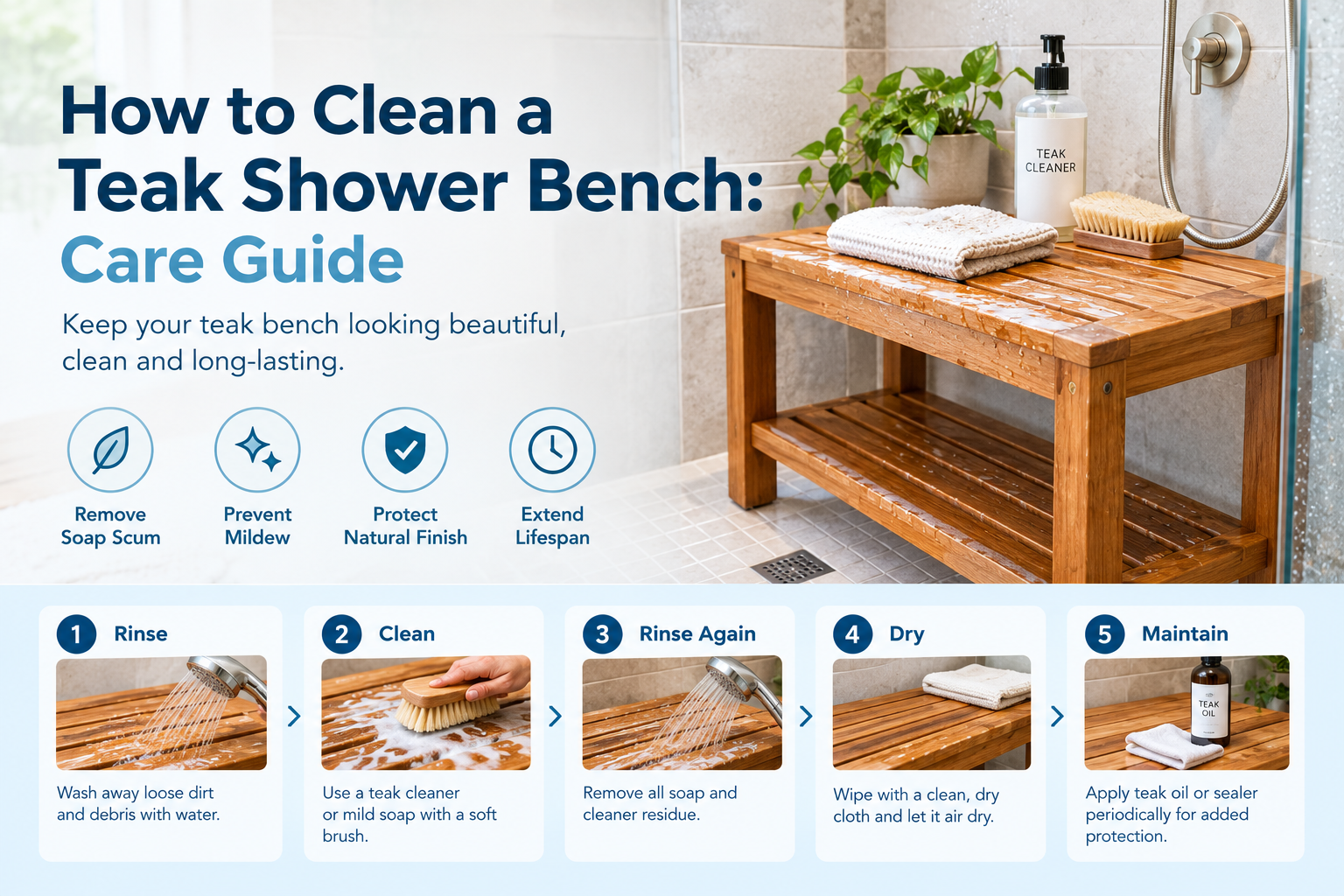
Teak Shower Bench Care Guide
A simple cleaning routine helps keep a teak shower bench looking good and ready for everyday use.
To clean a teak shower bench, start with a soft cloth or brush, mild soap, and water. Remove soap residue, rinse gently, and allow the bench to dry thoroughly. Avoid harsh chemicals, aggressive scrubbing, and leaving the wood constantly wet. Always follow the care instructions for your specific bench and finish.
Teak is a popular material for shower benches because of its warm appearance and natural resistance to moisture compared with many other woods. However, teak is not maintenance-free. Soap residue, body oils, hard-water deposits, and prolonged dampness can affect its appearance over time.
Learning how to clean a teak shower bench helps you maintain the wood without unnecessarily damaging its surface. This guide covers routine cleaning, deeper cleaning, mildew prevention, color changes, and common maintenance mistakes.
Quick cleaning checklist
- Use mild soap, water, and a soft cloth or non-abrasive brush.
- Remove soap and shampoo residue instead of letting it build up.
- Rinse away cleaner without soaking the wood unnecessarily.
- Allow the bench to dry in a well-ventilated area.
- Check the manufacturer’s instructions before applying oils, sealers, or wood cleaners.
How to Clean a Teak Shower Bench Step by Step
For routine maintenance, you usually do not need an aggressive cleaner or complicated treatment. Start with the gentlest method that removes the residue.
1. Remove loose dirt and residue
Wipe away loose debris, hair, and visible soap buildup with a soft cloth. Check between the slats and around joints, where residue can collect.
2. Clean with mild soap and water
Mix a small amount of mild soap with water and gently wipe or brush the surface. Use a soft-bristled brush for grooves and corners. Avoid steel wool, abrasive pads, and harsh household cleaners.
3. Rinse away the cleaning solution
Use a damp cloth or gentle rinse to remove remaining soap. Avoid leaving detergent in the joints or soaking the bench longer than necessary.
4. Dry the surface and underside
Wipe away excess water and let the bench air-dry completely. Pay attention to the underside, feet, joints, and areas that remain damp after a shower.
5. Inspect the bench before using it again
Look for loose fasteners, cracks, rough areas, or signs of deterioration. Stop using the bench if it becomes unstable or damaged.
How often you clean the bench depends on how frequently it is used and how much soap or mineral residue accumulates. A quick wipe after use and a more thorough cleaning when needed are practical starting points.
How to Care for a Teak Shower Bench
Good teak shower bench care is mainly about controlling residue and moisture. Even naturally moisture-resistant wood benefits from airflow and regular inspection.
Improve airflow
Use the bathroom exhaust fan when appropriate and allow air to circulate around the bench. Avoid storing it in a persistently damp, enclosed area.
Reduce residue
Rinse off shampoo and soap splashes instead of allowing a sticky film to build up on the seat or slats.
Inspect the hardware
Check screws, joints, feet, and any protective pads regularly. Follow the manufacturer’s guidance for tightening or replacing components.
Follow finish-specific instructions
Some teak benches are unfinished, while others have oil, sealant, or a proprietary coating. Choose cleaning and maintenance products accordingly.
For more help choosing a model that fits your bathroom, see our Best Teak Shower Benches guide.
How to Remove Soap Scum and Water Marks
Soap scum and mineral deposits can leave a cloudy or uneven appearance on a teak shower bench. The best approach depends on the type of residue and the bench’s finish.
- For fresh soap residue: Start with a soft cloth, mild soap, and water. Wipe gently, then remove the remaining cleaner.
- For light water marks: Wipe the surface with a clean damp cloth and dry it thoroughly. Avoid aggressive scrubbing that may change the wood’s appearance.
- For stubborn deposits: Check the manufacturer’s recommended cleaning method before using specialized teak cleaner. Test any approved product on a small, inconspicuous area first.
- For rough or discolored patches: Do not immediately sand the surface. First determine whether the change is residue, natural weathering, finish damage, or a deeper wood issue.
Avoid mixing household cleaning products. In particular, do not combine bleach with ammonia or acidic cleaners. If a specialized product is needed, follow its label and the bench manufacturer’s instructions.
What If Your Teak Shower Bench Develops Mildew?
Dark spots or surface discoloration may be caused by mildew, trapped residue, mineral deposits, or changes in the wood itself. Appearance alone does not always identify the cause.
If you notice suspected mildew:
- Move the bench to a well-ventilated area if it can be moved safely.
- Clean the affected area with mild soap and water first, following the manufacturer’s care guidance.
- Dry the bench completely and improve bathroom ventilation.
- If discoloration persists, consult the manufacturer’s recommended treatment rather than applying an unapproved chemical.
If the wood is soft, the joints are deteriorating, the bench has a persistent musty odor, or visible growth keeps returning, stop using it until the problem is assessed. A shower bench must remain structurally sound to support its user safely.
Will Teak Turn Gray in the Shower?
Yes. Teak can gradually develop a lighter, silver-gray appearance as its surface ages and is exposed to moisture, air, and everyday use. This color change is not automatically a sign that the wood has failed.
Whether the original honey-brown color remains important is a matter of preference and finish. If you want to preserve a particular color, check whether the manufacturer recommends a teak-specific maintenance oil or protective treatment for that model.
Do not apply oil or sealant simply because the wood looks gray. Some products can change the surface, affect slip characteristics, or be unsuitable for a particular coating. Follow the product instructions and allow any treatment to dry fully before using the bench.
Should You Oil a Teak Shower Bench?
Not every teak shower bench needs oil. The correct maintenance depends on whether the wood is unfinished, previously oiled, or covered with a protective finish.
Before applying teak oil
- Check the manufacturer’s maintenance instructions.
- Confirm that the product is intended for the bench’s wood and finish.
- Test the product in a hidden area if permitted by the instructions.
- Keep the bench out of use until the treatment has been applied and dried as directed.
- Never assume that oil makes a bench waterproof or removes the need for cleaning and ventilation.
If you are uncertain about the finish, contact the manufacturer before using oil, stain, varnish, or sealant. An incompatible product can change the appearance or make future maintenance more difficult.
Common Teak Shower Bench Care Mistakes
Using harsh cleaners too quickly
Strong chemicals may damage a finish or change the wood’s color. Start with a gentle cleaning method and follow manufacturer guidance.
Leaving the bench wet all day
Persistent dampness can encourage unwanted growth and contribute to long-term deterioration. Improve airflow and let the bench dry between uses.
Scrubbing with abrasive materials
Steel wool and rough scouring pads can scratch the surface or affect a protective finish. Use a soft cloth or suitable brush instead.
Ignoring loose joints or feet
Cleaning cannot fix a structural problem. Stop using an unstable bench and follow the manufacturer’s repair or replacement guidance.
Frequently Asked Questions
How often should you clean a teak shower bench?
Wipe away excess water and visible residue regularly, and clean the bench more thoroughly whenever buildup appears. The appropriate frequency depends on use, ventilation, and the manufacturer’s care instructions.
Can I use vinegar to clean teak?
Do not assume vinegar is suitable for every teak bench or finish. Start with mild soap and water, and check the manufacturer’s instructions before applying acidic cleaners or other home remedies.
Does teak need to be sealed for shower use?
Not all teak benches use the same finish or require the same treatment. Follow the instructions for the exact product rather than applying a sealer automatically.
Can I sand a teak shower bench to remove stains?
Sanding may alter the surface and remove an existing finish. Identify the cause of the stain and check the manufacturer’s instructions before sanding. For valuable or finished benches, ask the manufacturer about suitable restoration methods.
Explore More Shower Bench Guides
Compare bench styles, dimensions, and bathroom layouts before choosing the right seating option.
Care note: Cleaning and refinishing methods vary by teak product and finish. Follow the manufacturer’s instructions, and do not use a bench that is unstable, cracked, or structurally damaged.