Quick Answer
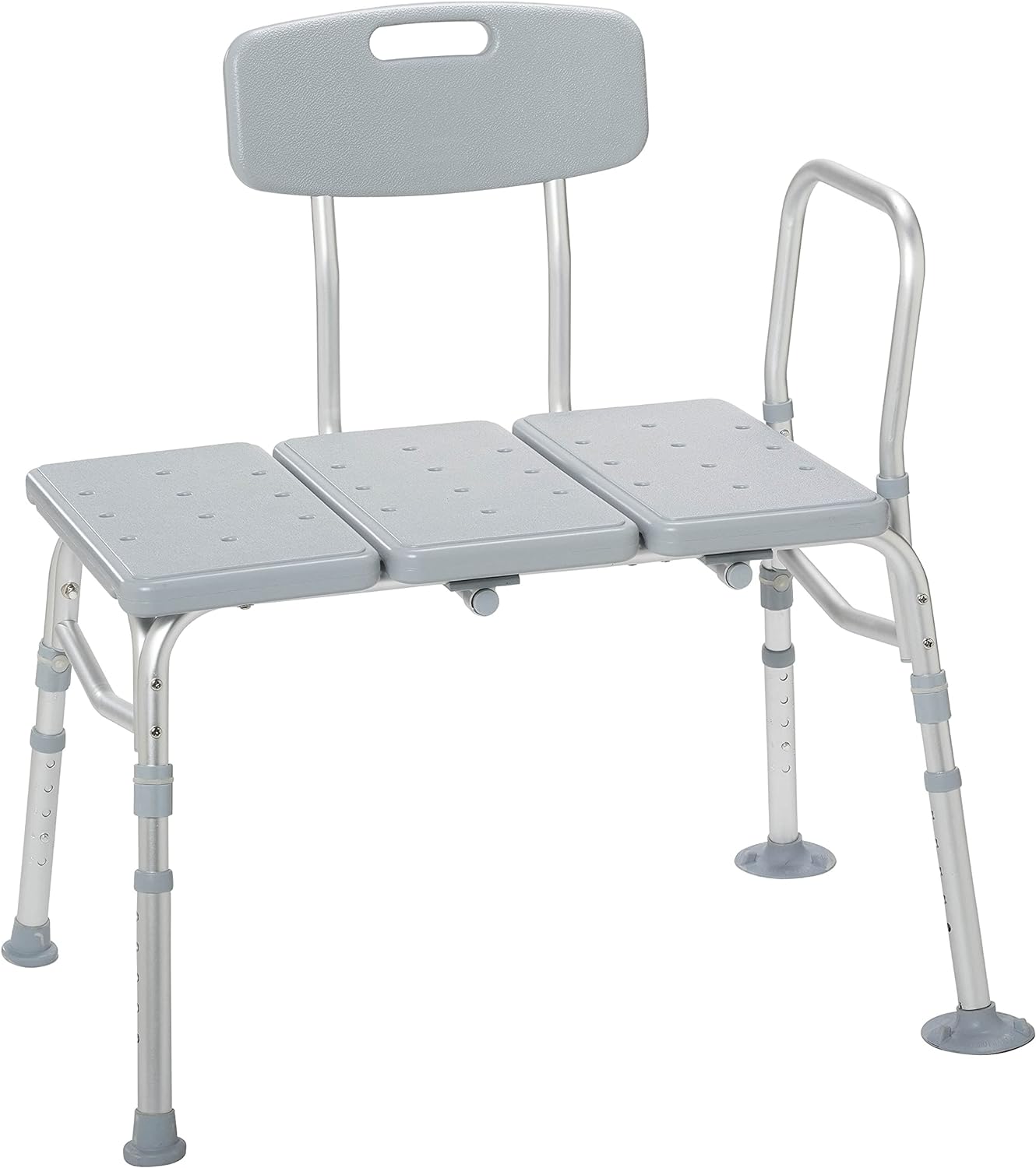
A shower chair and a transfer bench serve different purposes. A shower chair sits inside the shower or bathing area and provides a place to sit while washing. A transfer bench extends across the side of a bathtub, allowing the user to sit outside the tub and move across the bench before bringing their legs inside.
Choose a shower chair if the main need is seated bathing and the user can enter the shower safely. Consider a transfer bench if stepping over the bathtub wall is the main challenge. Measure your bathroom carefully: a transfer bench usually takes up substantially more space than a compact shower stool.
When comparing a shower chair vs transfer bench, the biggest difference is how each product helps someone get into the bathing area. Both provide a place to sit, but they are designed for different bathroom layouts and mobility needs.
A shower chair may be a simple stool, a chair with a backrest, or a model with armrests. It generally sits within the shower or bathtub area. A transfer bench has a longer seat that spans the bathtub wall, so the user can sit down before moving across the seat into the tub.
This guide explains the differences, compares representative products, and helps you decide which design is worth considering for your bathroom. Always check the manufacturer’s instructions and the exact model dimensions before purchasing.
In This Guide
Shower Chair vs. Transfer Bench: Key Differences
| Feature | Shower Chair | Transfer Bench |
|---|---|---|
| Main purpose | Provides a seat inside the bathing area | Helps the user sit and move across a bathtub wall |
| Typical placement | Inside the shower or approved bathing area | Spans the bathtub wall, with legs inside and outside |
| Space required | Varies from compact stools to full chairs | Usually requires more length and clearance beside the tub |
| Best suited to | Users who need to sit while bathing | Users who have difficulty stepping over a tub wall |
| Common features | Adjustable legs, drainage holes, optional back and arms | Long seat, backrest, optional armrest and reversible orientation |
| Main limitation | Does not by itself solve the challenge of crossing a high tub wall | Can be too large for a narrow bathroom or unsuitable tub |
The important distinction is that a transfer bench is primarily an entry-and-exit aid, while a shower chair is primarily a seated bathing aid. Some products combine features, but you should not assume that an ordinary shower chair can safely be used as a transfer bench.
When Should You Choose a Shower Chair?
A shower chair may be the better choice when the user can enter the bathing area safely but needs to sit while showering. It is also worth considering when the bathroom has a walk-in shower and limited floor space.
You Have a Walk-In Shower
A shower chair sits inside the shower and does not need to bridge a bathtub wall. Choose a model that fits the usable floor area and leaves enough room for safe entry, movement, and access to the shower controls.
You Want a Compact Seat
A simple shower stool can have a smaller footprint than a transfer bench. Check the outside dimensions of the legs rather than relying only on the seat measurements. A compact stool may be unsuitable if the user needs a backrest, armrests, or help transferring.
You Need Adjustable Seat Height
Many shower chairs have adjustable legs. This can help you select a suitable sitting height within the manufacturer’s approved range. Check the adjustment mechanism and ensure that all legs are securely set before use.
You Need a Backrest or Armrests
Shower chairs come in several configurations. If the user needs additional support while sitting, compare models with a backrest and appropriate armrests rather than choosing a backless stool solely to save space.
For more options, see our Best Shower Chairs with Arms guide, Shower Chairs Without a Back guide, and Best Shower Chairs for Small Showers guide.
When Should You Choose a Transfer Bench?
A transfer bench is worth considering when getting over the side of a bathtub is the main difficulty. Instead of having to step directly into the tub before sitting, the user can sit on the portion of the bench outside the tub and move across the seat.
You Have a Bathtub with a High Side
A bathtub wall can be a significant obstacle for someone with limited mobility. A properly fitted transfer bench may make the entry process more manageable by allowing the user to sit first. The user still needs to be able to move safely across the seat, and some people may need assistance or a different transfer aid.
You Need a Seat That Extends Outside the Tub
Unlike a standard shower chair, a transfer bench has a longer seat that spans the tub wall. Its legs must be positioned as instructed, with secure contact on both sides of the tub. Check the tub’s inside width, outside clearance, and wall height against the specific product’s requirements.
You Want a Backrest During Transfers
Many transfer benches include a backrest, and some offer armrests. These features can be useful, but they do not guarantee that the transfer will be safe for every user. Confirm the recommended transfer method and seek professional guidance if the user cannot move across the seat securely.
You Have Enough Room Around the Bathtub
A transfer bench typically extends beyond the tub, so it needs more space than a small stool. Make sure it will not block a doorway, bathroom fixture, or the user’s path. If the bathroom is very narrow, measure the complete setup before buying.
Safety Reminder
A transfer bench does not automatically make every bathtub transfer safe. Follow the manufacturer’s setup and transfer instructions. If the user has balance problems, weakness, or difficulty moving their legs across the tub wall, consult a qualified healthcare professional or occupational therapist about the appropriate equipment and assistance.
Products to Compare
The products below illustrate the two categories. They are comparison candidates, not a hands-on ranking. Always verify the current listing, exact model, included components, and compatibility with your bathroom.
1. Drive Medical Deluxe Aluminum Shower Bench Without Back — 12203KD-4
Category: Shower chair / shower bench.
This model is a freestanding shower bench with a rectangular seat and no backrest. Drive Medical lists seat dimensions of approximately 19.25 by 11.5 inches and a 300 lb weight capacity. Its adjustable legs allow the seat height to be set within the specified range.
It is worth comparing if the user needs a place to sit inside a shower and does not require a transfer bench spanning a bathtub wall. Because the seat is longer than that of a small stool, check its full leg footprint before considering it for a narrow shower.
Best fit: A user who needs seated bathing in a compatible shower area and can enter that area safely.
2. Drive Medical Transfer Tub Bench — 12011KD-2
Category: Transfer bench.
This transfer bench is designed to span a bathtub wall. Drive Medical lists a 400 lb weight capacity, a seat measuring approximately 26 inches wide by 18.5 to 19.5 inches deep, and a height-adjustment range of 17.5 to 22.5 inches.
The bench has a backrest and a reversible design to accommodate different bathroom layouts. Its longer seat supports the transfer-bench approach, but its size means you should measure the bathtub and the surrounding floor space carefully.
Best fit: A user who needs a transfer bench for a compatible bathtub and has enough room to position the bench securely.
3. Drive Medical Splash Defense Transfer Bench — RTL12032KDR
Category: Transfer bench with curtain-guard design.
The Splash Defense transfer bench is designed with a cutout that helps keep the shower curtain liner inside the bathtub. Drive Medical lists a 400 lb weight capacity and an adjustable seat-to-floor height of approximately 17.5 to 22.5 inches.
This design may be worth comparing if keeping water inside the tub is a concern when using a transfer bench. Compatibility still depends on the bathtub’s dimensions and the product’s installation requirements.
Best fit: A user who needs a transfer bench and wants a design intended to help manage shower-curtain placement.
How to Measure Your Bathroom Before Buying
Even the right type of bathing aid can be unsuitable if it does not fit the bathroom. Measure the actual space and compare it with the manufacturer’s dimensions rather than relying on product photos.
If You Are Choosing a Shower Chair
- Measure the usable flat area where the chair’s feet will rest.
- Check the full outside width and depth, including the legs and feet.
- Leave enough space for the user to sit down, move their feet, and reach the shower controls.
- Confirm the seat height and support features are suitable for the user.
If You Are Choosing a Transfer Bench
- Measure the inside width of the tub and the outside space beside it.
- Check the tub wall height against the bench’s permitted adjustment range.
- Confirm that the bench can sit securely with its legs positioned as instructed.
- Check clearance around the bathroom door, toilet, vanity, and other fixtures.
- Verify that the user can follow the intended transfer method safely, with assistance if required.
Before You Order
Compare the product’s complete dimensions, weight capacity, height range, and required installation space. For transfer benches, follow the manufacturer’s guidance about which legs go inside the tub and which stay outside. All feet must rest securely on the intended surfaces.
Can a Transfer Bench Be Used in a Walk-In Shower?
Some transfer benches may be compatible with certain shower layouts, but a traditional bathtub transfer bench is not automatically suitable for every walk-in shower. Its long frame can take up substantial space, and the design may be intended specifically to span a tub wall.
Check the manufacturer’s stated use and installation instructions. If you have a level-entry shower, a standard shower chair or bench may be a more straightforward option. For a narrow shower, our small-shower chair guide explains how to compare compact designs.
Frequently Asked Questions
What is the main difference between a shower chair and a transfer bench?
A shower chair provides a seat inside the bathing area. A transfer bench extends across the bathtub wall so the user can sit outside the tub and move across the seat to enter. The best choice depends on the bathroom layout and the user’s mobility needs.
Is a transfer bench safer than a shower chair?
Neither is universally safer. A transfer bench may help someone who has difficulty stepping over a bathtub wall, while a shower chair may be suitable for someone who can enter the shower but needs to sit while bathing. The correct equipment depends on the user’s abilities, the bathroom, and proper setup.
Does a transfer bench fit every bathtub?
No. Bathtub width, wall height, interior shape, and surrounding floor space vary. Check the product’s minimum and maximum dimensions and confirm that the legs can rest securely in the required positions.
Can I use a regular shower chair to get into a bathtub?
A regular shower chair is not designed to bridge a bathtub wall unless the manufacturer explicitly identifies it as suitable for that purpose. Do not try to use a freestanding chair as a transfer bench. Choose equipment designed for the intended transfer and follow its instructions.
Is a transfer bench suitable for a small bathroom?
It may be difficult to fit because it extends outside the bathtub. Measure the full bench footprint and the space needed for entry and exit. If space is limited, a compact shower chair may be more appropriate when the user does not need a transfer aid.
Should a transfer bench have a backrest?
Many transfer benches include a backrest, but the right configuration depends on the user’s needs and the manufacturer’s design. A backrest does not eliminate the need for safe transfer technique, correct setup, or assistance when needed.
What weight capacity should I look for?
Check the stated capacity of the exact model and ensure it meets the user’s needs. Do not exceed the manufacturer’s limit. If you need a higher-capacity shower chair, see our Best Heavy-Duty Shower Chairs guide.
Final Verdict
Choose a shower chair when the main goal is to sit while bathing and the user can enter the shower safely. Choose a transfer bench when crossing the bathtub wall is the main obstacle and the bathroom has enough space for a bench that spans the tub.
The Drive Medical Deluxe Aluminum Shower Bench Without Back is a comparison candidate for seated bathing in a compatible shower. For bathtub transfers, compare the Drive Medical Transfer Tub Bench or Splash Defense Transfer Bench, paying particular attention to the tub dimensions and surrounding clearance.
Before purchasing, verify the exact model, its full dimensions, weight capacity, height range, and installation requirements. If the user has difficulty balancing or transferring, ask a qualified healthcare professional or occupational therapist to help determine the appropriate bathing equipment.
Explore our Shower Chairs hub for more buying guides, including shower chairs for elderly adults and shower chairs for small showers.
Affiliate Disclosure
As an Amazon Associate, HeavyDutyChoice earns from qualifying purchases. Product availability, prices, dimensions, and specifications may change. Confirm the current listing and manufacturer’s information before purchasing.